
October brought the news that Catholics in Glasgow, the largest city in Scotland, had long dreaded. Falling Mass attendance has hollowed out parishes across the metropolis, and a vocations crisis means the archdiocese is projected to have just eight priests by the midpoint of the century. The faithful knew to expect parish closures and mergers. What they were not prepared for was the scale. It fell to Archbishop William Nolan to announce the shuttering of half the parishes in his jurisdiction, conceding there were “too many parishes but too few people.” Such a statement would once have been unthinkable in a city whose Bellahouston Park has hosted two papal Masses in the past fifty years.
The story of Catholicism in Glasgow is bound up with that of migration and religious sectarianism. Irish immigration to western and central Scotland in the early to mid-nineteenth century seeded new Catholic populations in communities that lived under the scowl of the reformed Church of Scotland.
The communal tensions that followed were national-cultural, not theological, in nature. The migrants and their descendants retained a strong affinity for Ireland throughout its revolutionary struggle against British rule, the birth pangs of today’s Irish state, and the armed conflict between Catholic republicans and Protestant loyalists over the future of Northern Ireland. Scotland’s Protestant natives took whichever side was most inimical to their Catholic neighbors in these affairs. By the twentieth century, Irish Catholicism was well established as a distinct Scottish culture, both a religious practice and a constellation of institutions, customs, and beliefs that defined a growing number of Scots.
The cultural chasm cleaving two demographics who shared a God, a Bible, and a close heritage was embodied most famously—and infamously—by a bitter and at times violent soccer enmity between fans of Celtic FC, founded by a Marist brother, and Rangers FC, a bastion of British patriotism and Protestant staunchness. So intense were these tribal affinities that, in time, attending Parkhead or Ibrox, rather than Mass or Kirk services, became the primary religious obligation for some Catholics and Protestants. Today, per figures from the Bishops’ Conference of Scotland, just 14 percent of Scottish Catholics attend weekly Mass.
The Archdiocese of Glasgow is in the headlines but the challenges it faces are the same across the country and the rest of western Europe. Where it merits reproof for its shortcomings, it does so as part of a broader Church whose shortcomings are near-universal. The Scottish Church has lost multiple generations of Catholics in a country with taxpayer-funded Catholic schools and where the population identifying as Catholic has remained relatively stable, falling only slightly from 16 percent in the 2001 census to 13 percent in 2022. (By contrast, the Protestant Church of Scotland has plunged from 42 percent to 20 percent over the same period.) Commonly cited reasons include increased access to university education, the decline of anti-Catholic discrimination, intermarriage, falling birth rates, internal migration, and aggressive secularism in politics and the culture.
Scottish Catholicism was never in ruder health than when Catholics were openly discriminated against. To rework an old Irving Kristolism about American Jews and Christians, the danger facing Scottish Catholics today is not that non-Catholics want to persecute them but that they want to marry them. Even so, some of the trends that have led the faithful astray can be traced back to failures of the Church itself.
The liturgical innovations of the 1960s and 1970s, most of which went radically beyond anything required by Vatican II, were intended to open up the Mass to the people. The priest turned his back to God and faced the pews instead. The words of consecration were no longer spoken in Latin, a timeless language reserved for the glorification of God, but in the vernacular English heard every day in living rooms, pubs, and bingo halls. The angelic refrains of Gregorian chant and the solemn reverence of pious hymns gave way to contemporary guitar numbers styled after the folk revival of the time.
These changes undoubtedly captured the soul of the age and nourished the spiritual appetites of Baby Boomers, but offering up the eucharistic sacrifice in the middle of a campfire singalong gave little sustenance to their children and even less to their grandchildren. Among Gen-Z Catholics, there is a clamor for reverence, tradition, beauty, and an encounter with the sacred not only at Holy Communion but throughout the liturgy. Much to the chagrin of the Church’s aging radicals, the youth want the most radical thing of all: Catholicism.
Alas, Catholic youth, like most other subsections of the faith, are much fewer in number in Glasgow. Catholic schooling has not translated into devotion in adulthood. Too many clergy shied away from preaching difficult doctrine on contraception and divorce, with the result being shrinking and shattered Catholic families. The Church still makes noise about legislation at odds with magisterial teaching, but it sometimes seems most committed to causes where it poses minimal challenge to Scotland’s progressive political consensus. The social gospel, and in particular service to the poor, is fundamental to the faith, but a lukewarm Catholicism that begins and ends with Palestine, poverty, and proliferation is just Amnesty International with sacraments.
No examination of the Church’s conscience would be complete without the abomination of clerical sexual abuse. Scotland has not been immune to these afflictions. Keith O’Brien, cardinal archbishop of St. Andrews and Edinburgh, was toppled years before Theodore McCarrick. The abuse revelations smothered the faith of many Scottish Catholics, while some who kept theirs used the Church’s delicts to excuse their own.
Decrying the bishops only addresses part of the problem. Whenever there is fault to be apportioned for the Church’s woes, lay Catholics are all too eager to point a finger at the episcopacy. A mea culpa requires introspection and self-reproach; an eorum culpa absolves the faithful from confronting their own contribution to the Church’s decline. The Church is a living organism. All Catholics share in the body of Christ, and all must answer for neglect of, or indifference to, what he instituted.
Neglect and indifference happen when fathers allow Mass-going to be the preserve of mothers and children, and when parents shirk their duty to catechize their offspring. Priests and Catholic school teachers are not spiritual babysitters; for faith to take root, formation must begin at home and begin early. Lay Catholics have shown themselves to be indifferent to Holy Orders. For decades now, the hierarchy has warned that unless Catholic families raise sons for the priesthood, in time there will be no priesthood. Bishops don’t close parishes; a lack of priests does.
While much of this could apply to Catholics the world over, there is a tribal-cultural dimension distinct to Glasgow that treats the faith as a secular identity. However, Catholicism is not an identity. It is not a cultural persona or a marker of inherited victimhood. It is not owning a season ticket to Parkhead, sticking a St. Christopher medal on the dashboard, and only “going to chapel” (as Glaswegians say) for communions and funerals. It is not nostalgia for Legion of Mary rosary rallies or Union of Catholic Mothers bingo nights, nor childhood memories of bringing flowers of the fairest to May altars or being quizzed weekly by Grandmother on the color of the priest’s vestments.
The faithful Catholic seeks—imperfectly, yet perseveringly—to die to the world in order to live in Christ. The cultural Catholic wants the world and its approval, but the world has no need of his Church, its dogmas, or its parishes. Faithful Catholicism will survive in Glasgow and, with the good shepherding of devout priests and bishops, might one day thrive again and require new parishes to be founded. Buildings come and go but the spirit lives in faith. In a Catholicism of mere identity, only worldliness lives, and that is spiritual death.
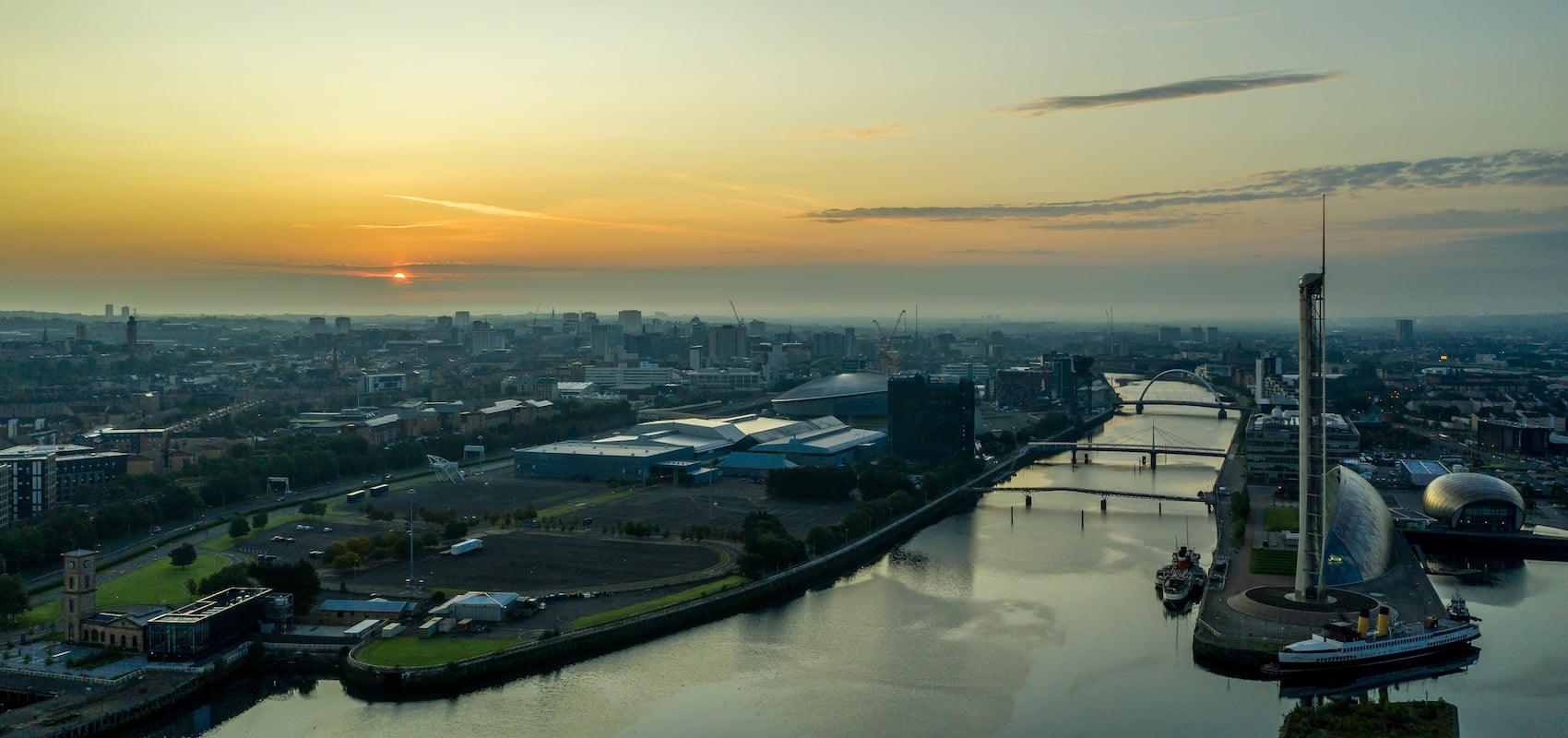
Image by Ian Dick via Creative Commons. Image cropped.

YOU MIGHT ALSO LIKE
Today’s Global Witness of Christian Martyrs
Within just one week, two massacres of Christians took place that went almost unnoticed. In Jordan, nine…
The Gospel, Not “Listening,” Is the Message
Toward the end of the recent Roman meeting to discuss the Church’s twenty-first-century mission to marriage and…
The Myth of St. Francis
At the beginning of his 2020 encyclical, Fratelli Tutti, Pope Francis speaks of “an episode in the…
