
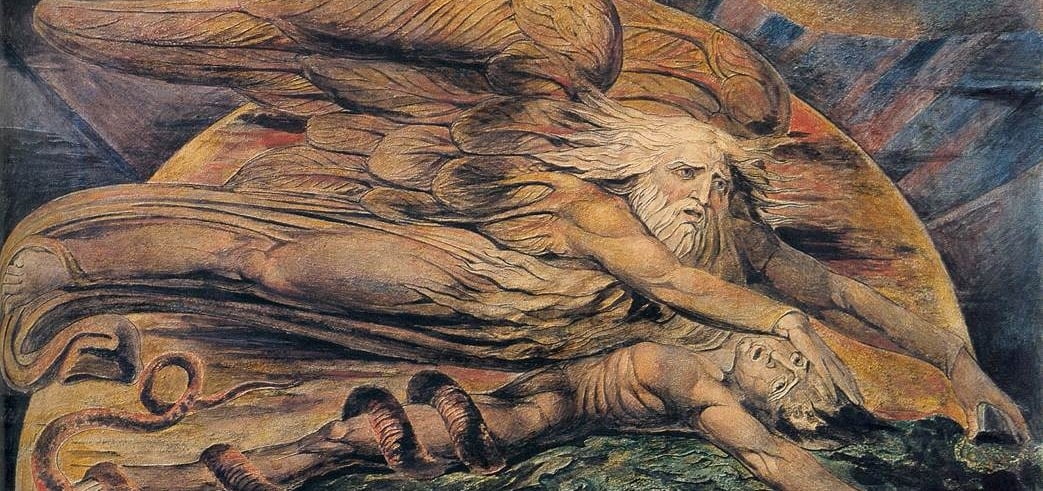
Nearly forgotten today, The Martyrdom of Man was once considered a substitute Bible for secularists. Published in 1872 by the Scottish adventurer William Winwood Reade, the volume had Winston Churchill, George Orwell, A. A. Milne, and Sherlock Holmes among its admiring readers. For Reade, humanity progresses but only along the way of the cross, painfully escaping the physical prison of war and the intellectual prison of dogmatic religion to enter a bright, well-lighted world of reason, freedom, and never-ending progress.
Along the way, Reade gave rapturous expression to the scientific transhumanism that had been percolating in European culture during the previous two centuries. Our bodies are contemptible, no better than those of the “lower animals.” But there’s hope. “Science will transform” our bodies in ways we can’t grasp, any more than a savage understands electricity or steam power. Future “blessed ones,” the “pure and radiant beings” who will come after, will regard their ancestors as pathetic meatsacks, “poor savages, grubbing in the ground for our daily bread, eating flesh and blood, dwelling in vile bodies . . . tortured by pains, and by animal propensities.” For the moment, “Nature . . . yet holds us in her bonds,” but the day is coming when we’ll wriggle free of the chrysalis, spread our wings, and rise to become we know not what. All proof, I suppose, that neither transhumanism nor purple prose is an especially recent development.
Christians instinctively, and rightly, protest. Our bodies are cunningly designed and, as Carl Trueman has insisted, they aren’t raw material to shape to our whims. We’re creatures, bounded and finite, necessarily limited in our knowing and acting. Any attempt to transcend that limitedness is hostile to humanity itself. Transhumanism is anti-humanist. It seeks the abolition of man.
Yet, like so many of our cultural values and aspirations, transhumanism perverts an originally Christian hope. In his Oration on the Dignity of Man, the pious, eccentric Catholic Pico della Mirandola imagines God speaking to Adam, a “creature of indeterminate image,” reminding him of his protean essence. “The nature of all other creatures is defined and restricted within laws which We have laid down,” the Creator says, but you, Adam, since you’re “impeded by no such restrictions, may, by your own free will, to whose custody We have assigned you, trace for yourself the lineaments of your own nature.” Of neither heaven nor earth, neither mortal nor immortal, Adam is the “free and proud shaper of your own being” who may “fashion yourself in the form you may prefer.” Two pathways remain open: “to descend to the lower, brutish forms of life” or “through your own decision, to rise again to the superior orders whose life is divine.”
A century and a half earlier, Dante had already coined the word transumanar, when, gazing on Beatrice on the threshold of Paradiso, he’s transformed like Glaucus, the fisherman who “on tasting of the herb, which in the sea / Made him a fellow of the other Gods.” Dante cannot express this “transhumanizing” in words, but the “Love that rulest Heaven” knows “that with Thy Light didst raise me up.”
For all his emphasis on free will, Pico believed Adam’s capacity to “trace the lineaments of your own nature” comes to us as a gift of grace. Dante too knows he can transcend the limits of his humanity only by encounter with the Love that moves the sun and all the other stars. Renaissance transhumanism is a profoundly theistic transhumanism.
And it isn’t a Renaissance distortion of Christian orthodoxy. Addressing God, Gregory of Nyssa expressed the protean capaciousness of human nature: “In all the endless ages, the one running to you becomes greater, more exalted, ever growing in proportion to his ascent through the good.” David Bentley Hart glosses: Gregory sees the soul as “a vessel endlessly expanding as it receives what flows into it inexhaustibly.” Receiving God makes us “ever more capacious and receptive of beauty, for it is a growth into the goods of which God is the fount.” Desire thus “stretches out toward infinity, as if, per impossibile, to comprise it.” The more God dwells in us, the more room we have for God to dwell. How could it be otherwise? Surely no creature can limit what God wishes to make of him.
Behind all this stands the New Testament. “What we will be has not yet been made known,” John writes (1 John 3:2). We’ve become “partakers of divine nature,” Peter says (2 Peter 1:4). Hebrews glosses Psalm 8 by saying we were made “for a little while lower than angels” (Heb. 2:7–9), implying that our period of subordination ends with the exaltation of Jesus. Paul strains language to express the height of Jesus’s exaltation to heavenly places “far above all rule and authority and power and dominion and every name that is named” (Eph. 1:21–23), then seats us there with Jesus (Eph. 2:6). Ultimate transcendence comes at the resurrection, and it’s a bodily transcendence in which our “soulish” (psychikon) bodies will be transfigured into Spiritual (pneumatikon) bodies. Paul draws a botanical analogy: Our present bodies are seeds, our future bodies the plant (1 Cor. 15:36–37). Mortal bodies sown in dishonor and weakness will rise imperishable, bodies of glory and power (1 Cor. 15:42–44). If our present body is to the future body as seed to tree, if the difference is so great as between acorn and oak, will we, when what we will be is finally made known, even recognize ourselves as human? Yes, human beings have ends, but what are they? The New Testament demands a certain agnosticism: We don’t know, not yet.
Christians must strenuously oppose technological, secular transhumanism, but we can do it effectively, thoroughly, and lastingly only if we draw on all the resources of Christian anthropology, including the stunning promises and hopes that leave even Prometheus and Proteus agape.
Dear Reader,
Can I be direct with you?
War abroad. Socialists on the rise. AI upending human life. Endless uproar online. The modern attention economy doesn’t want readers — it wants users enslaved to the tyranny of the present.
First Things is the antidote: literary excellence, timeless truths, and a fixed point of reference in a culture that has lost its bearings.
But we can’t do it without readers like you.
Our goal: Raise $150,000 by November 1 to sustain First Things in the year ahead.
Your gift anchors readers in the permanent things.
Make your Fall Campaign gift now using the button below.
If you have any questions or would like more information, please contact Giovanni Del Piero, Director of the Editor’s Circle, at gdelpiero@firstthings.com or 212-627-1985.


YOU MIGHT ALSO LIKE
Why the Death Penalty Is a Sore Point for Papal Authority
Pope Leo XIV marked World Day Against the Death Penalty, observed on October 10, with the following…
The Myth of St. Francis
At the beginning of his 2020 encyclical, Fratelli Tutti, Pope Francis speaks of “an episode in the…
Job and Her
It is said that Job lost everything, but she has lost more. All her possessions—the money, the…
