
Democratic Socialists of America on the march. Angry MAGA voters. Shrill online extremism. Protesters who can’t name the river or the sea in their chants. University students demanding safe spaces. Why is our society so messed up? Aaron Renn recently offered an answer: We have a lousy elite. The people running the countries of the West are incapable.
Writing on his Substack (aaronrenn.com), Renn observes that our present system prizes “technical-professional and managerial-bureaucratic skills.” In themselves, these qualities are useful. We need capable engineers and competent managers. “But when those values colonize institutional leadership, no surprise we see a dramatic decline in trust in those leaders and institutions.”
Renn cites Vivek Ramaswamy’s notorious 2024 tweet, which criticized America’s priorities. The entrepreneur-turned-political-candidate wrote: “A culture that celebrates the prom queen over the math olympiad champ, or the jock over the valedictorian, will not produce the best engineers.” Perhaps that’s true, but truth be told, semi-autistic math geniuses are almost always terrible leaders, and academic grinds who perform well on tests often lack the personality traits that inspire others to trust and follow them. Put bluntly, a perfect SAT score offers no indication that someone possesses the qualities necessary for leadership.
The occasion for Renn’s reflection was an essay by Samuel Hughes, “Why were Victorian elites so effective?” published in Works in Progress. It’s a wonderful question, for their accomplishments were remarkable. As Hughes notes, the elites of Victorian Britain oversaw extraordinary economic growth. The country’s “huge navy reigned over the world’s oceans, and its tiny army won a long sequence of wars while keeping watch over an enormous empire.” More impressive still, the same Victorian elites and their Edwardian successors steered Britain through the social tumult of the Industrial Revolution “with none of the revolutions and civil wars that wracked continental Europe.”
How did they do it? And what lessons can we learn for our own troubled times?
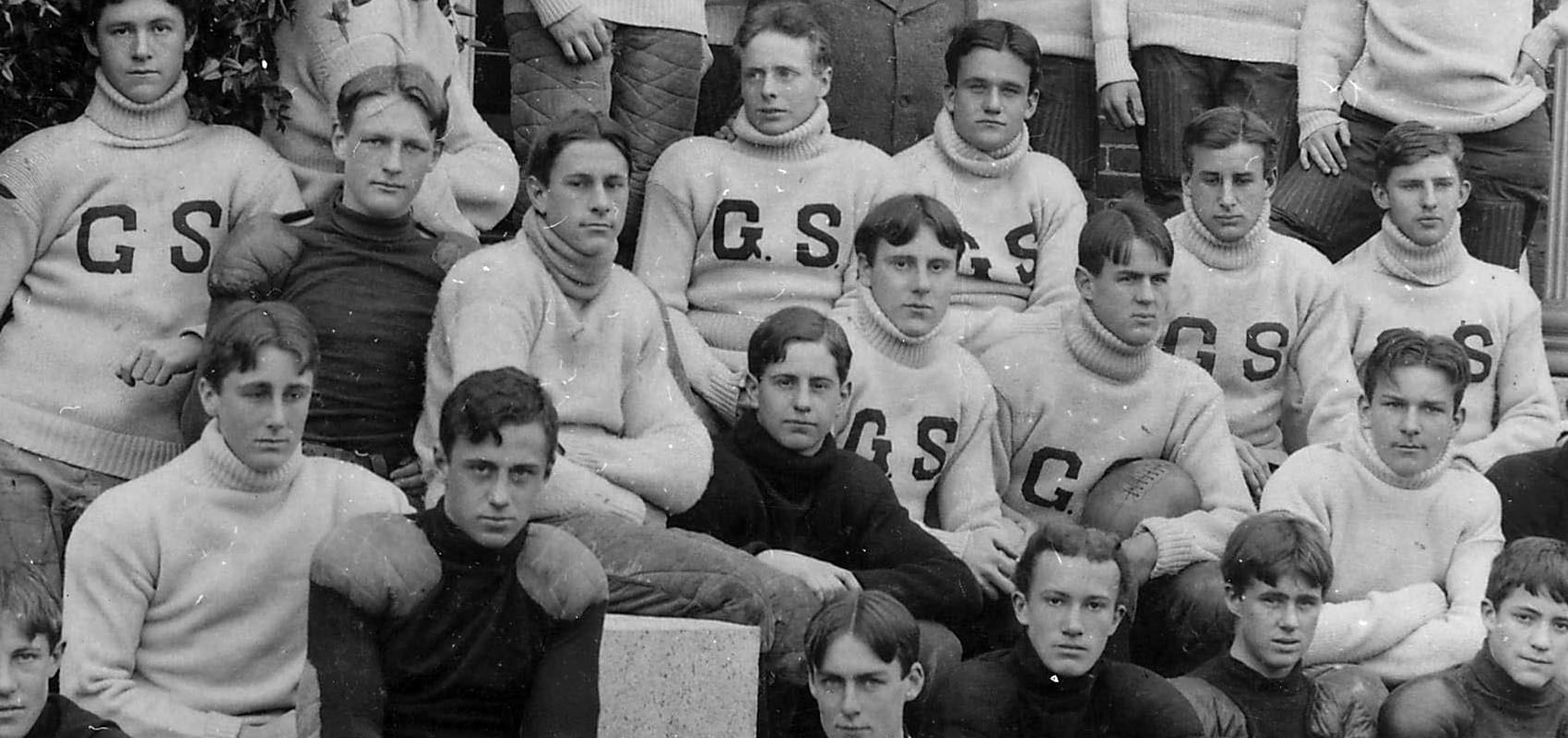
For starters, Hughes observes that Victorian elites succeeded not because they were math champs, valedictorians, and superstar engineers. On the contrary, “their schools and universities were not terribly academic and had very little STEM.” England had exclusive “public schools” such as Eton and Winchester. Latin and Greek were curricular mainstays, but the focus fell more on character formation than on classroom performance. Here’s Thomas Arnold, the famous headmaster of Rugby School: “What we must look for here is, first, religious and moral principles; second, gentlemanly conduct; thirdly, intellectual ability.” Another educator from this period offered a similar list: “First—character, second—physique, third—intelligence, fourth—manners, fifth—information.”
These priorities were largely upheld at American elite schools well into the twentieth century. One of my PhD mentors, George Lindbeck, began teaching at Yale in the early 1950s. I recall asking him what the biggest change had been during his long career. He replied without hesitation, “The demise of the gentleman C students.” And what did those students represent? Some were lazy or incapable, or both. But Lindbeck observed that most were scions of Connecticut gentry, perhaps the grandson or great-grandson of the founder of an insurance company in Hartford or the inheritor of some other source of wealth and social standing. Intuitively following the dictates of Thomas Arnold, these young men applied themselves to Yale’s varied social life and many student organizations, to the relative neglect of class assignments.
In this regard, the gentlemen who earned Cs in mid-twentieth-century Ivy League schools were like the Victorian elites. Hughes notes that most nineteenth-century Oxbridge undergraduates were “pass men,” following a track of study that was famously undemanding, allowing them more time for rowing, parties, and competing for social status. This pattern of life continued. “As adults, they got up late, drank a lot, and spent a remarkable share of their waking hours partying.”
Even among the scholarly set, Oxbridge discouraged academic professionalism. Robert Jenson taught at Oxford in the mid-1960s, a time at which most of the tutors still had received only an MA. Jenson (who earned a doctoral degree from Tubingen) told me that they would say that a PhD “ruined a man.” The ideal was one of refined amateurism. This, too, was carried over in the American context. Boston Brahmin and Harvard president A. Lawrence Lowell established (and personally endowed) the Society of Fellows at Harvard for the express purpose of protecting the brightest graduate students from what he regarded as the flattening effects of doctoral study—“the mass production of mediocrity,” as he put it.
Although Hughes does not use the term, the main emphasis of elite formation in Victorian England (and its imitators in the United States, as Renn notes) was the development of social virtues: self-assertion balanced by loyalty, congeniality leavened by an individualized sense of taste, competitiveness guided by social responsibility, competence without narrowness, grandeur without hauteur, and, in all things, good manners.
It’s easy to mock the system that encouraged these and other qualities. In The Great Gatsby, F. Scott Fitzgerald portrays the character of Tom Buchanan, the Yale football star who inherited his wealth, as a shallow and arrogant man, as no doubt were others who shared his background. It was an insular WASP world, the last remnants of which I glimpsed during my youth. (Renn cites the work of E. Digby Baltzell, who regarded insularity as a dangerous weakness of America’s mid-twentieth-century leadership class.)
Even as we advance legitimate criticisms, we must allow that the old system and its priorities produced the men who led America to global pre-eminence in the twentieth century. Think what you wish about the policies advanced by Franklin Delano Roosevelt; one cannot deny the largeness of the man and his remarkable ability to steer the ship of state. FDR won no math competitions. He was not an impressive student. Perhaps that was to his advantage. Biographers note that as an undergraduate FDR applied his intelligence and ambition to attaining membership in Harvard’s most exclusive student organization, the Porcellian Club. Although he failed in that endeavor, I daresay that the enterprise—making friendships, burnishing his social reputation, beguiling allies, and more—was better training for political leadership than an advanced class in economics or computer science.
Geoffrey Kabaservice wrote a fine history of the last generation of WASP elites, who led the country through the disruptions of the 1960s. The title of his book, The Guardians, echoes Plato’s ideal of selfless service and reflects Kabaservice’s admiration for the men who understood that from those to whom much has been given, much is expected. We are not going back to the WASP elite of the last century, and we certainly cannot recreate the world of the Victorian elites. But we might learn something from the way in which they were educated, not least the poverty of our present system, which combines narrow intellectualism with the crude social engineering of DEI, both of which disintegrate the rich (and varied) social cohesion necessary for elite formation.


YOU MIGHT ALSO LIKE
Nature’s God is Not Enough
In the Republic, Plato writes that unless liberated by philosophy, by the awakening of the divine part…
There Is a Season
This brutal winter, ice, and snow, / deer, once again, assault the holly, ...
Time to Ban AI Companions
Imagine a friend who is awake whenever you are, never grumpy, and always interested in what interests…
