
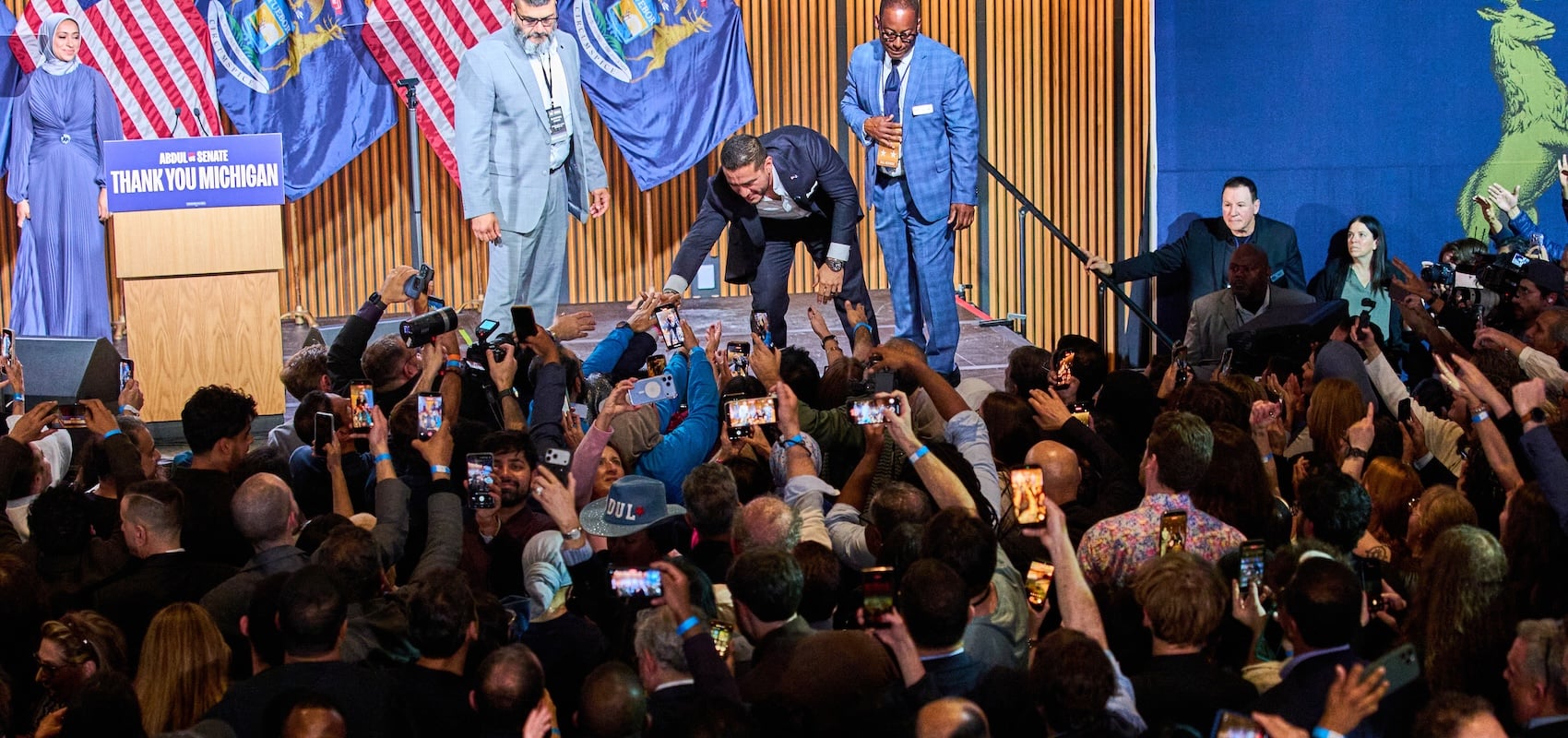
If you only look at the numbers, the midterm results were not remarkable. Voters often rebuke presidential administrations at the midway point. But we rightly sense that this election revealed more than the usual back-and-forth of political parties. In some states, including ones won by Trump in 2024, hardcore progressive Democrats won. Some Republican strategists had imagined that the public would be spooked by the specter of socialism. It turned out that, rather than recoiling, swing voters either overlooked the extremism or—and this is my view—were willing to take a flyer.
Throwing caution to the wind: That attitude characterizes the past decade of electoral results. In 2016, voters were told that Donald Trump was beyond the pale. He won (narrowly) anyway. Ousted from power in 2020, Trump continued to attract the most extreme denunciations from our establishment. Fascist. Authoritarian. A threat to democracy. He won again, this time decisively. Voters were willing to ignore “responsible” opinion and take another flyer on the Donald.
They had many good reasons to rebuke the present administration by flipping Congress and sending Republicans like Susan Collins into retirement: inflation; cost of living; war in the Middle East; the unseemly self-enrichment pursued by the Trump family and its close associates; the increasingly tiresome Trumpian braggadocio, to say nothing of the wild contradictions—threatening to nuke Iran one day, tweeting that the war is won the next.
But I see a deeper frustration, in large part because I feel it myself. Voters recognize that things are not working well in America. Our schools are lousy. It’s not just marriage that wobbles; at every level, the peaceful dance between men and women has broken down. The housing market is hostile to young people. Career paths have become uncertain. Government spending careens unchecked, and scams to siphon off funds run in the billions.
I could go on. But my point is this: Voters are unhappy with the dysfunctional twentieth-century political decisions, norms, and governing mentalities that make us unable to meet the challenges of the twenty-first century—mass migration, a globalized economy, a dispirited and sour national culture. They want change, deep change. MAGA appealed in 2024 because it employed a rhetoric of bold measures to effect big changes. There were four pillars: stop rapid demographic change driven by immigration; reindustrialize America; drain the swamp; and reorient American foreign policy away from endless, fruitless wars.
But rhetoric is not a plan. True, the first months seemed charged with new political energy. Then Elon Musk lost interest, and DOGE changed very little. Trump closed the border, but the deportation theater produced more spectacle than results, and he made no effort to go after the magnet that draws illegal immigrants to our shores: employers who want their labor. Tariffs are fitting tools for reindustrialization, but Trump’s approach was chaotic and ever-changing. Drain the swamp? This administration has done the opposite, making Hunter Biden look like a piker. And of course, we’re at war in the Middle East.
To be sure, the Trump administration has done some good things these past two years. But the results fall short of the transformation MAGA promised. A gleaming White House ballroom is utterly irrelevant to the real challenges facing the country, challenges voters elected Trump to meet.
The Republican Congress has done even less. Aside from rollbacks of green energy subsidies, the Big Beautiful Bill amounted to little more than a frail, senescent echo of the Reagan-era tax changes. A bill to ensure voter eligibility and sane election procedures went nowhere.
I understand the limitations of getting things done. Courts strike down executive orders, while the Senate is constrained by the filibuster. But voters are not stupid. They could see that there was little sign of any sincere desire to make fundamental changes. Trump’s White House did not draft a model bill to replace the immigration system established by the Immigration and Nationality Act of 1965. Yes, such a bill could not have been passed by the 119th Congress, but it would have signaled seriousness of purpose.
Moreover, Trump’s method of governance in many instances seems to amount to gathering some billionaires for an afternoon discussion. These men embody the status quo, which, again, voters sent him to the White House to overturn.
To sum up: Voters took a flyer on Donald Trump and the Republican Party because they saw that the country has big problems that require big changes. After nearly two years, they concluded that either Trump and his party aren’t competent to effect those changes—or they don’t want to. (To show my hand: I think it’s both.)
Perhaps the failure of the bet on Trump was inevitable. In the twentieth century, the Democratic Party was the engine of regime change, with Republicans playing the role of moderating and checking excesses. For this reason, I foresee the Democrats will seize the present moment. Voters ache for deep change, and Democrats will give it to them. Consider Andy Beshear, the governor of Kentucky, who is far from a paid-up member of the Democratic Socialists of America. He is a normie Democrat who called for a “fix the darn government” constitutional amendment—abolish the Electoral College, ban partisan gerrymandering, and overturn Citizens United—a model example of the moderate-radical fusion that establishment liberals do so well.
Republicans may be tempted to rush to the defense of the FDR-LBJ-Clinton regime—our current arrangements—against the next progressive-led regime change, which is already being theorized and test-marketed. The only way to resist this temptation is to frame a conservative-led regime change. Trump, whatever his failures, showed in 2024 that such a venture can win.
Image by Julia Demaree Nikhinson via AP. Image cropped.


YOU MIGHT ALSO LIKE
White Martyr Family
Imagine yourself seventy-eight, diabetic, falsely convicted in a sham trial of threatening national security, imprisoned for over…
Inside the Roman Mind
It is seven years since the publication of Dominion by Tom Holland, the much-discussed book in which…
The Politics of Dissidence
In the latest installment of the ongoing interview series with contributing editor Mark Bauerlein, Scott Greer joins…
