
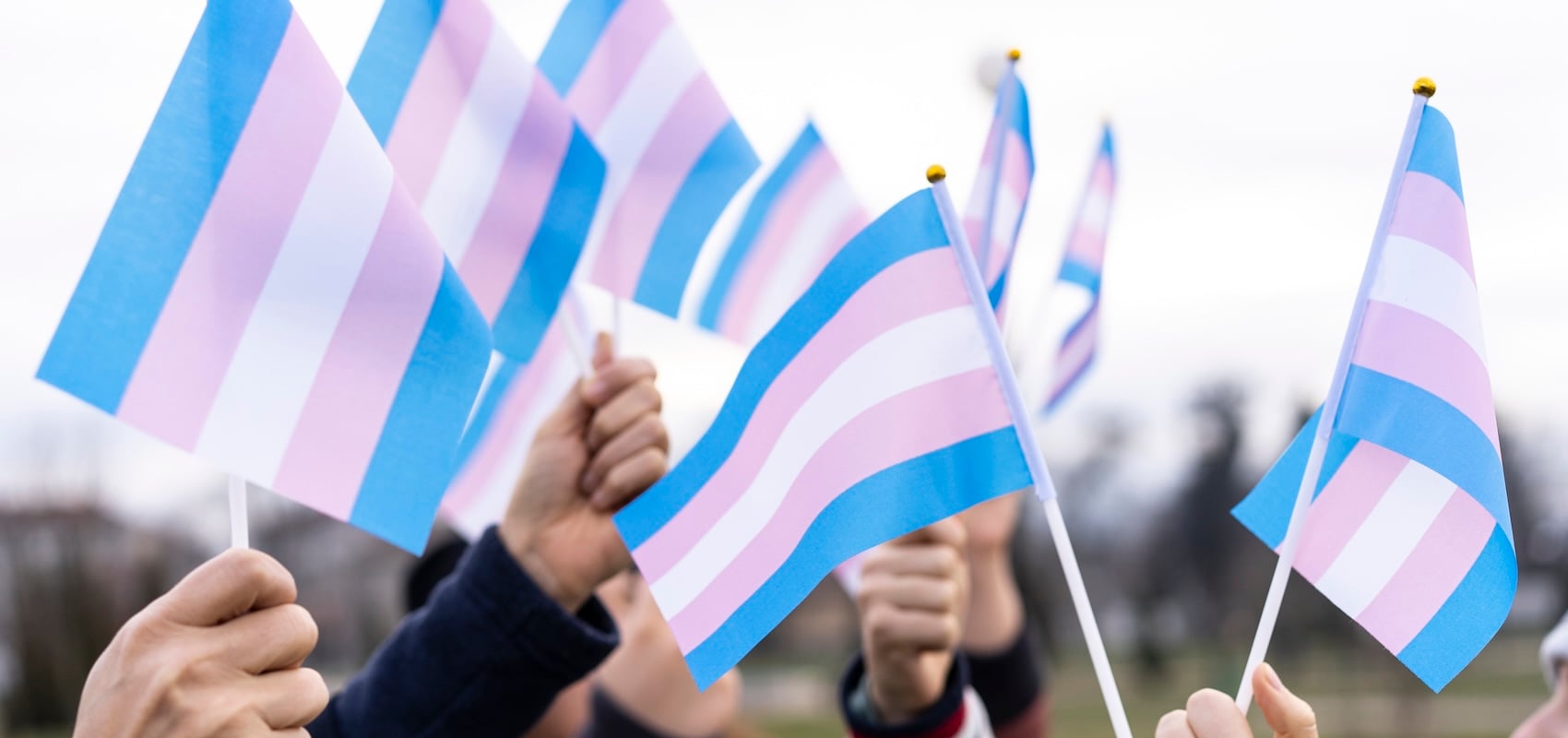
Prior to the November 2024 election, transgender issues loomed large for many parents, who feared the erosion of parental rights regarding their children’s “gender identity.” The phrase “They are coming to trans your kids” carried rhetorical power because it spoke to what many saw as a very real threat—one that would materialize if politicians beholden to the queer lobby prevailed. But since the election, the tide seems to have turned. Many have asked me recently whether I find the return of sanity on the issue encouraging.
The short answer is, “Yes.” Five years ago, my answer to whether transgender ideology could be defeated was a qualified one: Sanity would prevail but probably not in my lifetime. One can, after all, only make an idiotic and nonsensical notion of the human person a central principle of social organization for so long before reality bites back. And under the current administration, gains have been made in terms of women’s sports, the emerging influence of detransitioners, and the increasing number of public figures willing to speak up for sanity.
Yet for all of the gains of the last few years, I am not ready for a victory lap. First, transgenderism is supported by organizations that are both wealthy and shrewd, such as the Human Rights Campaign. It has also given birth to militant action groups. In the U.K., the emergence of Bash Back, a militant pro-trans direct action group, is significant. It has issued a guide to violent resistance of “transphobia” while claiming to be “nonviolent.” Perhaps this is merely another application of its paradoxical philosophy of body and gender, with its self-identification directly contradicting its reality. Certainly the balaclava-chic of its publicity material is consistent with that of paramilitary organizations. Perhaps the emergence of groups like Bash Back is a hopeful sign—were they winning the culture war, they would not need to adopt the strategies of a guerilla war—but it is still emblematic of a problem that is not disappearing any time soon.
Second, the trans lobby still enjoys the compliance of significant sections of the media, whether those who openly push for trans nonsense or those useful idiots who use the preferred pronouns of killers who happen to be transgender. Such writers never seem to consider the transgender nature of the perpetrator to be at all relevant, as if doing so would commit them to the non sequitur that all gender dysphoric people are mass murderers waiting to happen.
Third, however, is a less obvious but more insidious threat. For most people, transgenderism is simply part of the LGBTQ+ political lobby. In practical terms, that is correct. But that isolates it from its wider philosophical context. That context is transhumanism, the term used to describe a family of philosophies that share an impatience with human bodily limitations—for example, physical strength and mortality—and a commitment to ways of transcending and overcoming these. Such ambitions are alive and well, not least in the form of the very man who helped steer the Trump administration in the right direction on the transgender issue: Elon Musk.
The transgender issue was always set to have a public relations problem because of its consistent collision with the intuitive aesthetics of what may be one of the last moral principles upon which most people in our therapeutic world still seem to agree: fairness. It is one thing for queer theorists to trot out their rebarbative cliches in postgraduate seminars or for grotesque misogynists in “dragface” to prance through the streets in Pride marches every June, but they cannot compete with the intuitive revulsion many feel at the sight of an obviously male swimmer towering over his diminutive female opponents on the victory podium. Such a picture is indeed worth far more than a thousand words when it comes to refuting the likes of Judith Butler in the court of public opinion.
By contrast, there are forms of transhumanism that suffer from no such cultural disadvantage. Rather, they promise things that resonate deeply with the desires formed by our therapeutic culture: endless life, perfect designer babies, limitless strength, breathtaking intellect. None of these will ever be achieved but it is quite possible that humanity could well be dismantled in the process of trying. Therapeutic utopianism appeals to that basic human desire to be like God and to do anything necessary to achieve that ambition. Transgenderism is floundering because it seems so unfair; transhumanism will flourish because it promises to fulfill what many consider to be their Promethean birthright. And the political class, including those of its members who currently hold power, is committed to enabling the people in Silicon Valley to pursue that endeavor.
The sober conclusion we should draw is that “they” are still coming to “trans” your kids, not so much in terms of their sex (although that fight is not yet over) but at the much deeper level: that of their very humanity. We may be winning the trans battle, but if we are not careful, we may just lose the trans war.

YOU MIGHT ALSO LIKE
Roger Scruton’s Eternal Youth
In this episode, First Things senior editor Dan Hitchens joins R. R. Reno on The Editor’s Desk…
Henry Hyde, A Pro-Life Hero
In 1976, a freshman congressman from Illinois named Henry Hyde attached a single sentence to the annual…
Lindsay Clancy and America’s Canadian Future
On September 4, the judge declared a mistrial in the Lindsay Clancy case, the result of one…
