
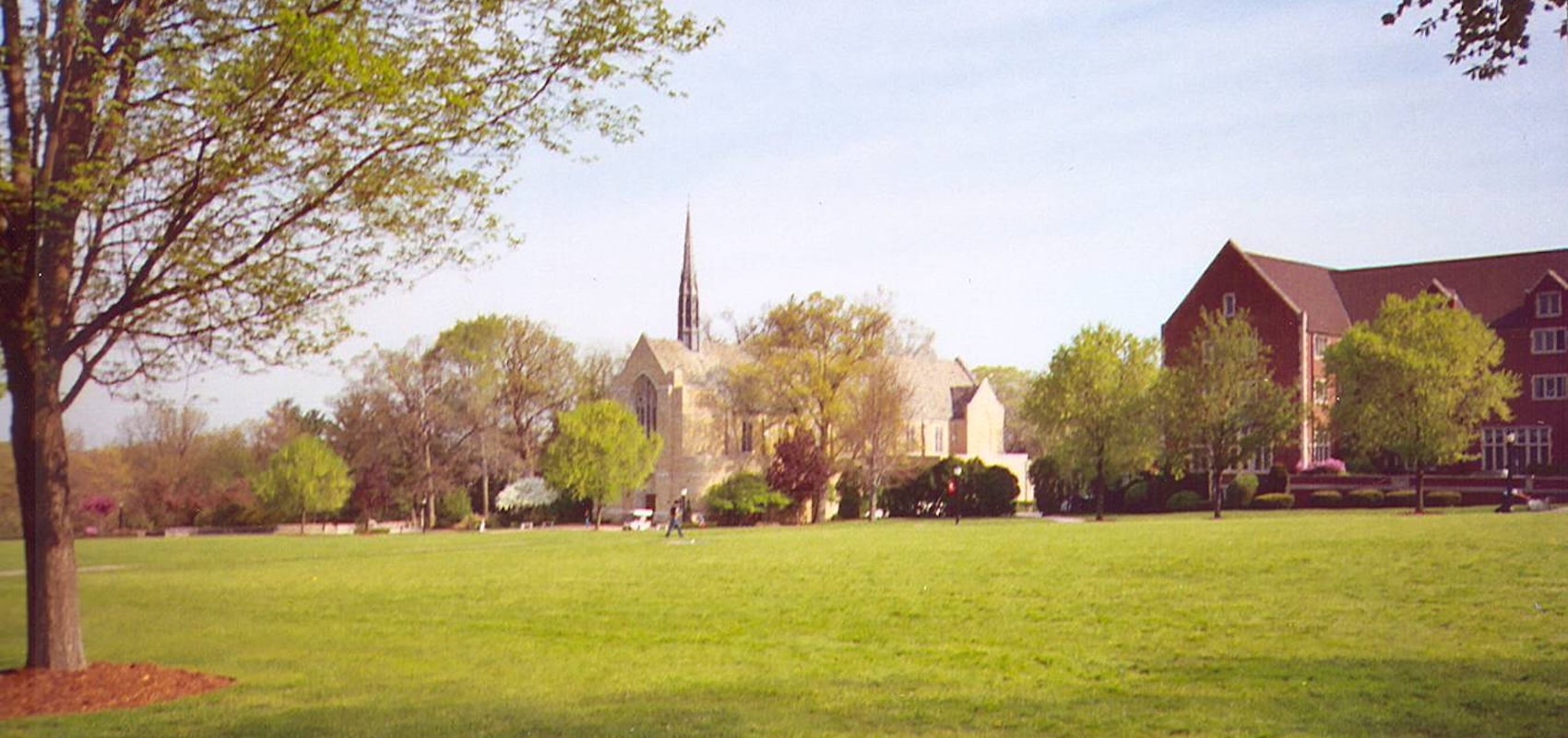
Although I have been on loan to Notre Dame at the Center for Citizenship and Constitutional Government this year, I returned to Grove City College to take part in the annual commencement ceremony. You might think that not having to attend would be one of the perks of leave, but for me graduation is a time to honor and say au revoir to those students whom I have come to know not simply as bodies in a class but as individuals who have visited my home.
As always, there are two major speeches at the ceremony, one by a distinguished guest, the other by an outstanding student. This year the former was delivered by Sen. Rand Paul, the latter by Ashley Van Dixhoorn. And as is often the case, the student speech was arguably the highlight.
Sen. Paul offered a fine challenge to the students: to be optimistic amid the much-touted darkness of our cultural moment. His focus was on AI, and his warning was that the fear of the economic annihilation of human work was far-fetched and overhyped. He pointed out that great technological innovations have often carried with them fear of an employment apocalypse. But what has typically happened—as with the arrival of automation—is that societies have adapted, economies have shifted, and the workforce has been restructured. His point was well made. Neither the printing press, nor the cotton gin, nor the factory production line destroyed work or created vast amounts of leisure time.
But there are other fears—more substantial and more dangerous—surrounding developments of AI, fears that Sen. Paul did not have time to address. The question of security—both personal and national—has been raised in an acute form through the development of software capable of finding points of vulnerability in computer programs. And then there is the problem of how AI will not so much transform as degrade human agency. In higher education, this is most obvious in the use of AI to write papers, to do the research and thinking for the student. AI-generated classwork makes education a joke—unless, of course, education, like the workplace, reconfigures itself to take account of the new technology.
That is where Van Dixhoorn’s speech made a significant contribution. With a nod to C. S. Lewis in her speech title, “No Ordinary People,” she offered an account of her time at college that placed human agency at its heart. Casting the whole as a love story, she described how the classic architecture of campus had wooed her as a prospective student, then spoke to the importance of social interaction with real, embodied people in real time and real space, whether it was swing dancing or eating together with friends at mealtimes.
She spoke eloquently of the powerful example set by upperclassmen as she and her peers found their place at the college, and then of the importance of professors who taught her not only how “stuff works,” but how it all connected to notions of beauty and creativity. She concluded that God uses ordinary means to achieve extraordinary ends.
Nowhere did she use the term “personal agency,” but it was behind every sentence. To be human is to be made in God’s image; to be embodied and, within the bounds of creatureliness, to be a free agent, one who acts with intention. We are creative as we freely echo in our actions and relationships the God who created us, as we move toward our God-given end. And that involves other people, other agents. We grow and develop through the friction of our ongoing encounters with them.
What was so clear in Van Dixhoorn’s speech was that in-person education is so important. College is not merely, or even primarily, the classes taken or the grades achieved. Yes, on paper, students pay for professors to teach them. But in reality they pay to sit next to peers in the lecture theater, to forge lifelong friendships in the dining and residence halls, to chat with professors during office hours and even in their own homes—in short, to interact as real people with real people in real time and real places. Online interaction can never offer more than a simulacrum of that, reducing education to passive reception and the regurgitation of information. That model can easily be replaced by AI, for it really takes all of the friction-laden agency—all of the humanity—out of the educational process.
Graduation this year therefore offered a helpful warning not to panic about any impending collapse of the job market. But it also provided a vision of what education should be. And therein is a useful lesson as we move toward the future. Yes, we must address the problems presented by AI-powered cheating. But we must also think about how education truly humanizes us, lest we allow AI to set the terms by which we understand not only intelligence but our own nature. We can only critically use AI for our good if that understanding is in place at the very start. Van Dixhoorn may never have offered a definition of what it means to be human, but her positive account of what had mattered to her at college indicated that she has a strong, intuitive grasp of it. And she knows from whence, or rather from whom, this comes, as her closing words indicated: “Thank you, Lord, for making even the ordinary things of life extraordinary blessings.”
May her tribe continue—and increase.


YOU MIGHT ALSO LIKE
SlutCon’s Emotional Void
The tech-rationalist phenomenon “SlutCon” caused quite a stir online, perhaps predictably. SlutCon was a multi-day retreat and…
The Boys on the Brink
In the latest installment of the ongoing interview series with contributing editor Mark Bauerlein, Leonard Sax joins…
Serial Liar, Serial Comma
How would you write a public letter that you know will become front-page news? Would you write…
