
We wish that we could pass this play over, and say nothing about it. All that we can say must fall far short of the subject; or even of what we ourselves conceive of it.” So William Hazlitt, in Characters of Shakespeare’s Plays, registered his awe at King Lear, unapproachably sublime and unbearably terrible. From the rashness of an old man evidently not in his right mind anymore, there erupt rebellion and war, in which the suffering and death of Lear and his daughter Cordelia stand out in their ghastly pathos, not to say horror. The body count of principal agents, however, extends to the evildoers as much as to their victims. Edmund, Goneril, Regan, and Cornwall all die like the dogs they are, so that there appears some measure of earthly justice in this world of torment. Yet the torment remains the essential fact here.
One can understand then the appeal of Nahum Tate’s 1681 revision of the play, in which Lear and Cordelia survive and she marries Edgar. This Hollywood prototype replaced the original on the stage until 1823, and even Samuel Johnson liked it that way; he could not endure reading of the death of Cordelia and habitually skipped that part, until he got the job of editing the work and duty won out.
King Lear has seen a number of excellent modern stagings and cinematic renderings, and one of the best is the 1971 film Korol Lir, directed by Grigori Kozintsev, with his screenplay based on Boris Pasternak’s translation and with music by Dmitri Shostakovich. Born in Kyiv in 1905, Kozintsev made Leningrad his base of operations and took exuberant part in what he called the artistic carnival of the early days of Bolshevism, cofounding the Factory of the Eccentric Actor (FEKS) in the 1920s, with Nikolai Gogol as the presiding spirit.
The avant-garde festivities were brought crashing to earth, however, by the ever more oppressive and merciless Stalin regime, which imposed socialist realism as the sole approved mode of creation, and with draconian penalties for defiance made producing serious art an extremely hazardous business. Kozintsev persisted as a prolific writer and director, nevertheless, and made his Shakespearean mark with a 1941 stage production of King Lear and a 1953–54 Hamlet, its hero touted by an observant later critic as “a brother-in-arms” in the struggle of Soviet society “to liquidate Stalin.” Fortunately, Stalin had died just before the play was produced, and his wicked reign was being replaced by the more moderate Khrushchev regime. (Moderate is, of course, a relative term; Khrushchev’s attempt to introduce ballistic missiles with nuclear warheads in Cuba nearly led to cataclysmic war.) Kozintsev’s Hamlet on film was released shortly before Khrushchev was deposed, and it was judicious in its daring but bold nonetheless.
As Soviet censors rarely proscribed Shakespeare or chopped him into messes, poet-translators such as Pasternak and theatrical artists such as Kozintsev had more room for maneuver with his plays than they did in original works of their own: Prudence was still required, but they could subtly offer a contemporary political subtext to old plays about foolish kings or audacious usurpers or vicious tyrants. In his book King Lear: The Space of Tragedy, Kozintsev declares that to be a good man in Russia, you have to loathe the right things and the right people, and he extols the virtuous example of Shostakovich: “In Russian art goodness does not exist without a fierce hatred of everything which destroys a man.”
Kozintsev’s film opens, unlike Shakespeare’s text, with the masses in a millipede procession making their torturous way over a forbidding lunar landscape. Bare feet trudge over sharp stone; a legless woman on a makeshift cart paddles vehemently along; a mournful flute or recorder pipes a repetitive eerie figure, brilliant simpleton’s music—the Fool’s, one learns later. The pilgrims’ destination: King Lear’s fortress, first seen from the multitude’s point of view, the massive wall impressive as a mountainside. Knights on horseback keep the populace from coming too near. After Lear has divided his kingdom between two cormorant daughters and banished the insufficiently sycophantic Cordelia, he ascends to the top of the wall and presents himself before his humblest subjects. The people fall to their knees at the sight of him.
And what a sight he is. This Lear is a tiny old man with unruly white locks. His raging seems pitiable rather than fearsome. The Estonian actor Jüri Järvet, who plays the role, bears a startling resemblance to Solomon Mikhoels, a Jewish actor who starred in a 1930s Yiddish Lear of enduring fame. Stalin had Mikhoels, who was active in Jewish political causes, killed in the 1948 anti-cosmopolitan purge. The studied physical likeness, and implicit moral likeness, would have been patent to Russians who took an interest in such things—of whom there were more than one might think. (One learns about this connection, and much more, in Kozintsev’s Shakespeare Films: Russian Political Protest in Hamlet and King Lear, an invaluable source of lore and insight by Tiffany Ann Conroy Moore.)
Lear must go quite off his head in order to learn his true condition as a man among men. Madness leads him to clarity. In a lucid moment he famously says to Edgar, who is feigning madness as poor Tom, and whom Lear encounters in the hovel where they both seek refuge from the maniacal storm: “Thou art the thing itself; unaccommodated man is no more but such a poor, bare, forked animal as thou art.” The furious elements represent what Kozintsev calls “the eternal quarrel between man and the universe,” and what Edgar with poetic concision deems “persecutions of the sky”: The hurricane-force winds whip Lear and his companion the Fool so violently that they hold tight together for dear life and fall down one atop the other. This world of punishing storm, physical and metaphysical, accommodates no man. Lear discovers his kinship with the unwashed and unhoused when there are no knights on guard to maintain a cordon sanitaire between majesty and masses. These least of men were his subjects, to whom he paid no serious mind; now they are his fellows, and he is close enough to smell them. Like his own hand, they smell of mortality.
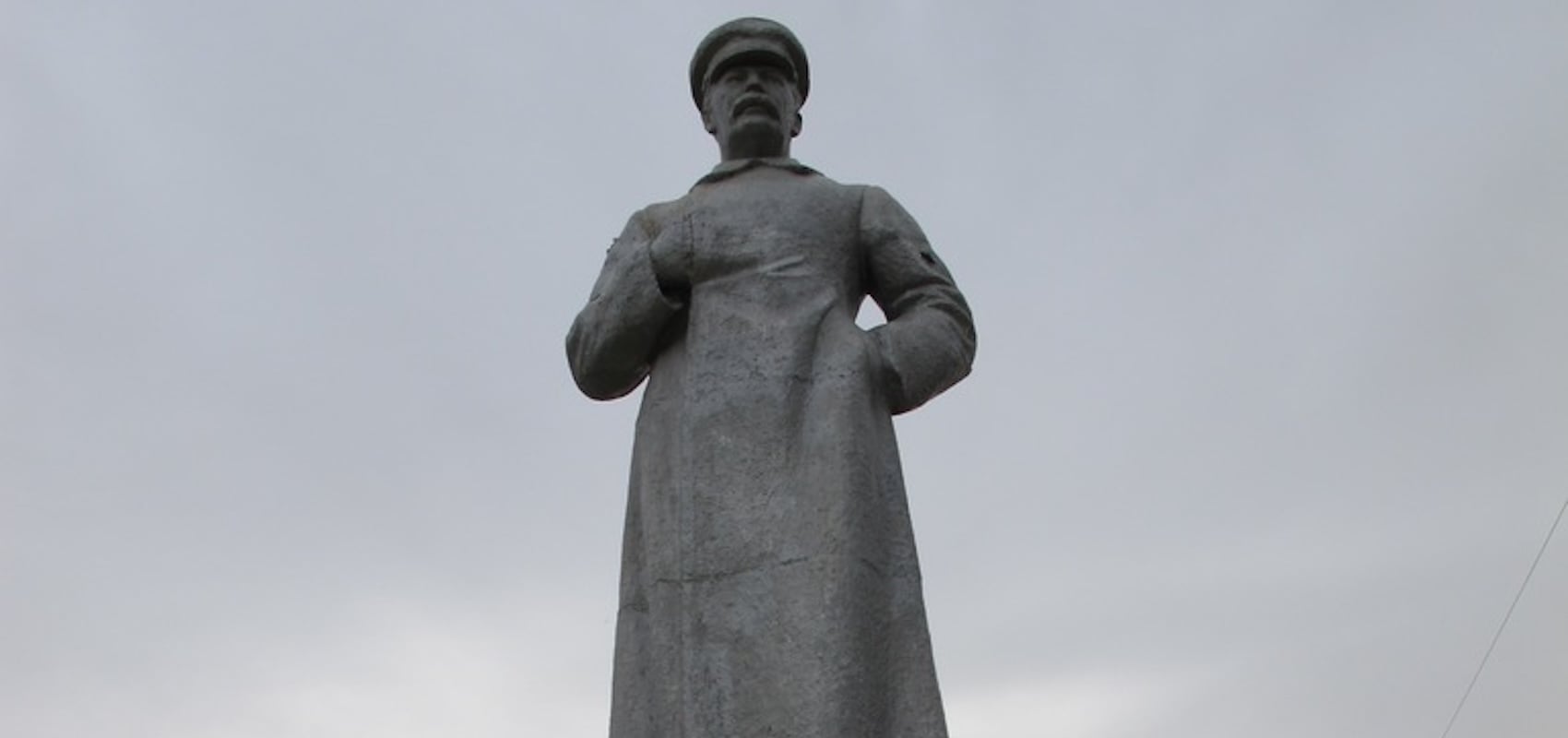
Image by Галашова Ольга Алексеевна via Creative Commons. Image cropped.
Dear Reader,
Can I be direct with you?
War abroad. Socialists on the rise. AI upending human life. Endless uproar online. The modern attention economy doesn’t want readers — it wants users enslaved to the tyranny of the present.
First Things is the antidote: literary excellence, timeless truths, and a fixed point of reference in a culture that has lost its bearings.
But we can’t do it without readers like you.
Our goal: Raise $150,000 by November 1 to sustain First Things in the year ahead.
Your gift anchors readers in the permanent things.
Make your Fall Campaign gift now using the button below.
If you have any questions or would like more information, please contact Giovanni Del Piero, Director of the Editor’s Circle, at gdelpiero@firstthings.com or 212-627-1985.

YOU MIGHT ALSO LIKE
A Culture of Parricide
I learned a new word the other day: déploration. It’s the French, directly from the Latin, for “lament.”…
The Chariot Burials
Wheeling through the clotted earth, / Bronze, bone, and leather clumped in clay...
William of St. Thierry
“Where love and understanding join, hearts are tranquil, / They rise above the turmoil of this world…
