
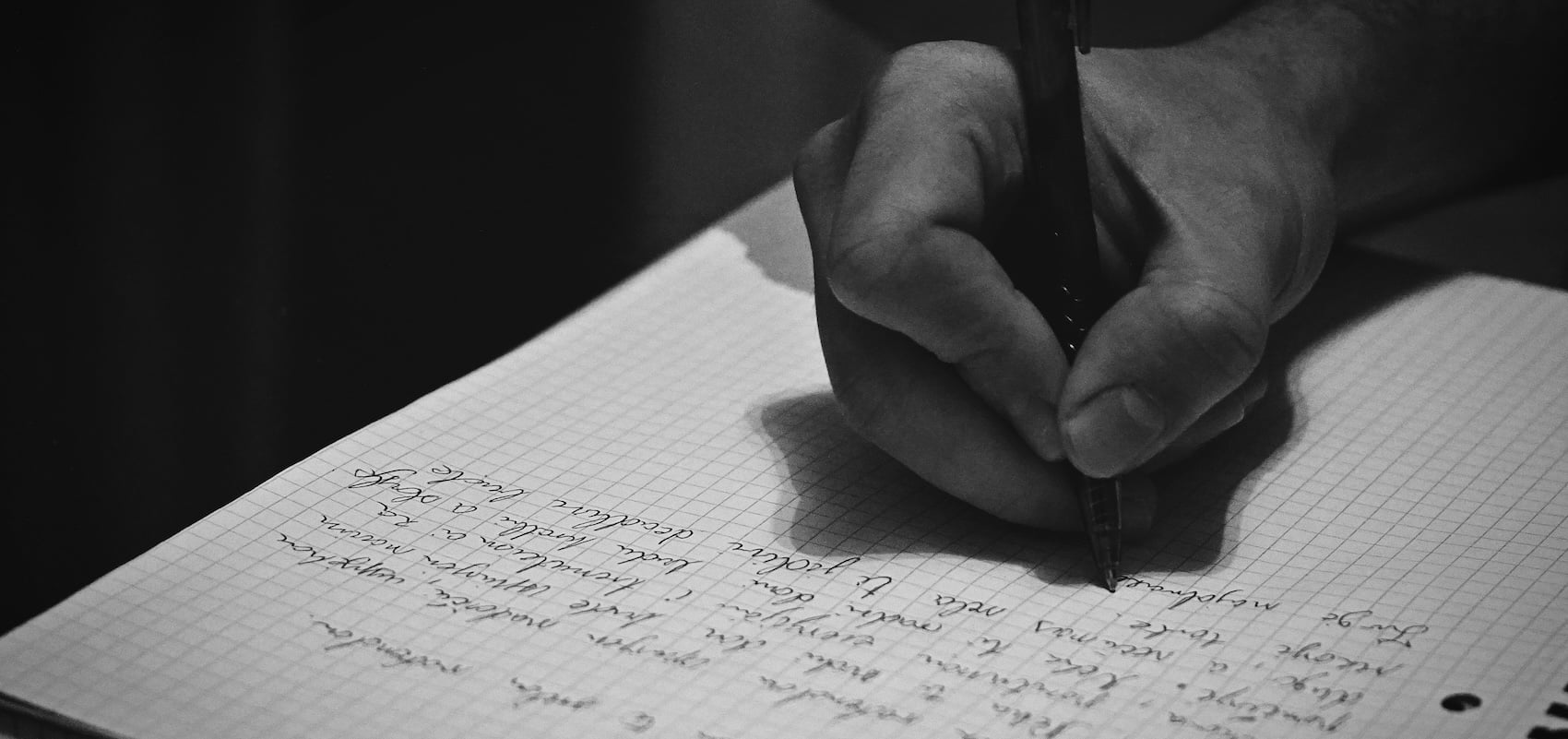
How would you write a public letter that you know will become front-page news? Would you write it yourself, or would you have a team of lawyers or a public relations firm write it for you? Or would you entrust the task to artificial intelligence?
The plagiarist and fabulist Jason Arday, who died, presumably by his own hand, on August 14, nine days after stepping down as professor of sociology of education at the University of Cambridge, must have asked himself these questions before issuing his letter of resignation on the website of the (seemingly misnamed) Good Law Project. And it is difficult to imagine that he didn’t think especially hard about whether to use his own words since his documented willingness to purloin the language of others had made him the object of derision around the world.
Hours after Arday resigned, social media users flagged his letter as AI-generated. A day later, The Times of London reported that it had run the letter through four detection programs, with two “deem[ing] the text 100 per cent AI-generated,” one “assess[ing] it at 94 per cent AI-generated,” and one giving it “a mark of 68 per cent AI.” The style of the letter bears little to no resemblance to other publicly available examples of Arday’s writing, so I take for granted that Arday did not produce his words in what one might call his customary manner. The letter doesn’t even sound much like Arday’s “memoir,” which Simon & Schuster released as scheduled on August 11. But Great and Unfortunate Things was written “with” someone named Eve Claxton, and I am not alone in believing that the accurate preposition here is not “with” but “by.”
That said, we do not know the genesis of the letter: whether it was composed entirely by AI, whether Arday put any work into the wording himself, or whether it was written, in whole or in part, by another person. Two years ago, in an article in these pages (“To Catch a Plagiarist”), I stated that I consider plagiarism to be a moral failure as well as an intellectual one. But I also wrote that it was unclear to me—as it still is now—“whether what might be called conventional plagiarism is fundamentally the same as using AI to do what is supposed to be one’s own work.”
What is clear to me is that it is morally wrong for anyone in a position like Arday’s to use words and phrases generated entirely or substantially by someone else—especially by something else—for a document that should be a personal expression of human emotion. Of course, Arday’s letter is shockingly devoid of mea culpa, feeding the sense many already had that its putative author—God rest his troubled soul—had not earned the pity one might ordinarily feel for a fellow sinner.
The Arday affair has received extraordinary coverage in the Anglophone press, but one aspect of it has gone unnoticed. Though of minor importance to our understanding of the man’s behavior, it holds lessons for how we view ourselves in the age of AI.
My concern is the use of the serial comma. Also known as the Oxford comma, it is the second punctuation mark in an English construction of the form “A, B, and C” or “A, B, or C.” The house style of First Things demands it, which I appreciate, while the New York Times and most other newspapers reject it, except when “a sentence would be awkward or confusing without it.” I can hear your dismissive scoff. But bear with me—the matter is not trivial.
Arday’s letter, which is only 606 words long, contains an astonishing eleven triads and one tetrad (“A, B, C, and D”), all of them employing “and.” Here, for example, are two consecutive sentences that between them contain three triads, the last a triad inside another triad:
(1–3) Thousands celebrated not simply my appointment, but what it represented: that talent, perseverance and hope can triumph over even the greatest adversity. It has been the privilege of my life to teach my students, to learn alongside them, and to witness their curiosity, kindness and ambition.
The reader will notice immediately that the first and third triads do not have a serial comma, whereas the second one does.
Five other triads in Arday’s letter lack a serial comma:
(4) The relentless accusations, speculation and public commentary
(5) Your brilliance, compassion and determination
(6) I have tried because of my students, my colleagues and the countless people who have written to tell me that my journey gave them hope
(7) I want to reclaim some peace, some privacy and some semblance of an ordinary life
(8) I will return stronger, wiser and with the same determination that has always defined my journey
Four others have it:
(9) I believe deeply in the values of higher education, in rigorous scholarship, and in the transformative power of universities.
(10) For my own wellbeing, for my family, and for those who have stood by me throughout this difficult period
(11) I ask only for understanding, for compassion, and for the space to begin again
(12) To my colleagues and to the many thousands of people, from every corner of the world, who have supported me, defended me, written to me, and believed in me
What are we to make of this? If there were no method at all, I would bet against the exclusive use of AI to draft the letter. A foolish consistency may be the hobgoblin of little minds, but AI does not have a mind. As it happens, though, there does appear to be a pattern of sorts. Examples (1), (3), and (4–8) link three nouns (for instance, “talent, perseverance and hope”); three noun phrases (for instance, “some peace, some privacy and some semblance of an ordinary life”); or, in one case, two adjectives plus a closing prepositional phrase (“stronger, wiser and with the same determination”).
By contrast, examples (9–11) link three prepositional phrases (for instance, “for understanding, for compassion, and for the space to begin again”). And examples (2) and (12) link three or four verb phrases, whether with infinitives (“to teach my students, to learn alongside them, and to witness their curiosity”) or with finite forms (“have supported me, defended me, written to me, and believed in me”).
Not all English style guides demand consistency, a matter that Bryan A. Garner addresses all too briefly in his characteristically excellent entry “serial comma” in Garner’s Modern English Usage (5th edition, 2022). But I know of no language maven, past or present, who has suggested that the serial comma should be applied differently to nouns and adjectives, on the one hand, and verbs and prepositional phrases (not at all a natural grammatical pairing), on the other. The 58th edition (2026) of The Associated Press Stylebook covers most of the bases:
Use commas to separate elements in a series, but do not put a comma before the conjunction in most simple series: His grandchildren are Vera, Chuck and Dave. He would nominate Marquez, Bedi, Lyman or Wong. She goes to school, plays league soccer and takes private dance lessons.
As for Arday, there is no reason to believe that he had any opinion about the serial comma. His 2015 PhD dissertation, which contains an incorrect apostrophe in the title (!) and demonstrates little command of the use of commas of any sort, sometimes employs serial commas and sometimes doesn’t. In a single-authored article titled “‘More to Prove and More to Lose’: Race, Racism and Precarious Employment in Higher Education” (2022), Arday does not use the serial comma, either in the title or elsewhere—not surprising since that is the house style of the British Journal of Sociology of Education. Curiously, however, a single-authored article published the very same month in Educational Review presents a comma-mess. The abstract alone contains the noun phrases “primary, secondary, and tertiary education providers” (with the serial comma) and “the teaching, learning and research triangle” (without it), as well as the verb phrase “was deprioritised, delayed or cancelled” (without it, unlike in the letter of resignation). As for Great and Unfortunate Things, which was surely at least partly ghostwritten, it appears to use the serial comma consistently—without fetishizing triads.
To return to the letter of resignation of August 5: If Arday was directly responsible for the punctuation here, or if one or more other humans were, it would be interesting to know how he or they arrived at this distribution. But more striking still would be if the punctuation did indeed come from AI. What human input behind the algorithm’s velvet curtain would have led to this?
The rise of AI is testing the human tolerance for error. Although we appreciate a machine that produces a summary of War and Peace in four seconds and knows the optimal next moves in a game of chess, it turns out that most people would rather discuss books and play games with fellow, fallible humans. There is a reason weavers deliberately insert a so-called Persian flaw into their rugs: They wish to show that only God is perfect.
I am not saying that I would prefer that Arday’s letter contained inconsistencies or blatant orthographic or grammatical errors. But if it did, one might imagine that he had taken a large part in writing it.
Ah, but: One might imagine. Faced with a widening gulf between artificial perfection and natural imperfection, enterprising people are generating artificial imperfection. A striking example is “Sinceerly” (sic). A web plugin for Chrome released in April by Ben Horwitz, then a student at Harvard Business School and now an employee of OpenAI, this brilliant but perverse creation takes users’ emails and makes them appear more human by removing phrases that have come to be associated with AI and introducing typographical errors. As far as I know, Sinceerly does not remove useful commas and add them where they do not belong, but may we expect an epigonic plugin to do so soon?
Alexander Pope tells us that to err is human, to forgive divine. It is not our job to pass ultimate judgment on Jason Arday. But his undoing presents a multifaceted cautionary tale of human error, and resolving the matter of the serial comma in his letter of resignation may help us understand something of the sad state of linguistic practice toward which we appear to be hurtling.
Dear Reader,
Can I be direct with you?
War abroad. Socialists on the rise. AI upending human life. Endless uproar online. The modern attention economy doesn’t want readers — it wants users enslaved to the tyranny of the present.
First Things is the antidote: literary excellence, timeless truths, and a fixed point of reference in a culture that has lost its bearings.
But we can’t do it without readers like you.
Our goal: Raise $150,000 by November 1 to sustain First Things in the year ahead.
Your gift anchors readers in the permanent things.
Make your Fall Campaign gift now using the button below.
If you have any questions or would like more information, please contact Giovanni Del Piero, Director of the Editor’s Circle, at gdelpiero@firstthings.com or 212-627-1985.

YOU MIGHT ALSO LIKE
Foucault’s Idol of Nothingness
Today marks the 100th anniversary of the birth of Michel Foucault. He was influential in his lifetime,…
A Culture of Parricide
I learned a new word the other day: déploration. It’s the French, directly from the Latin, for “lament.”…
The Chariot Burials
Wheeling through the clotted earth, / Bronze, bone, and leather clumped in clay...
