
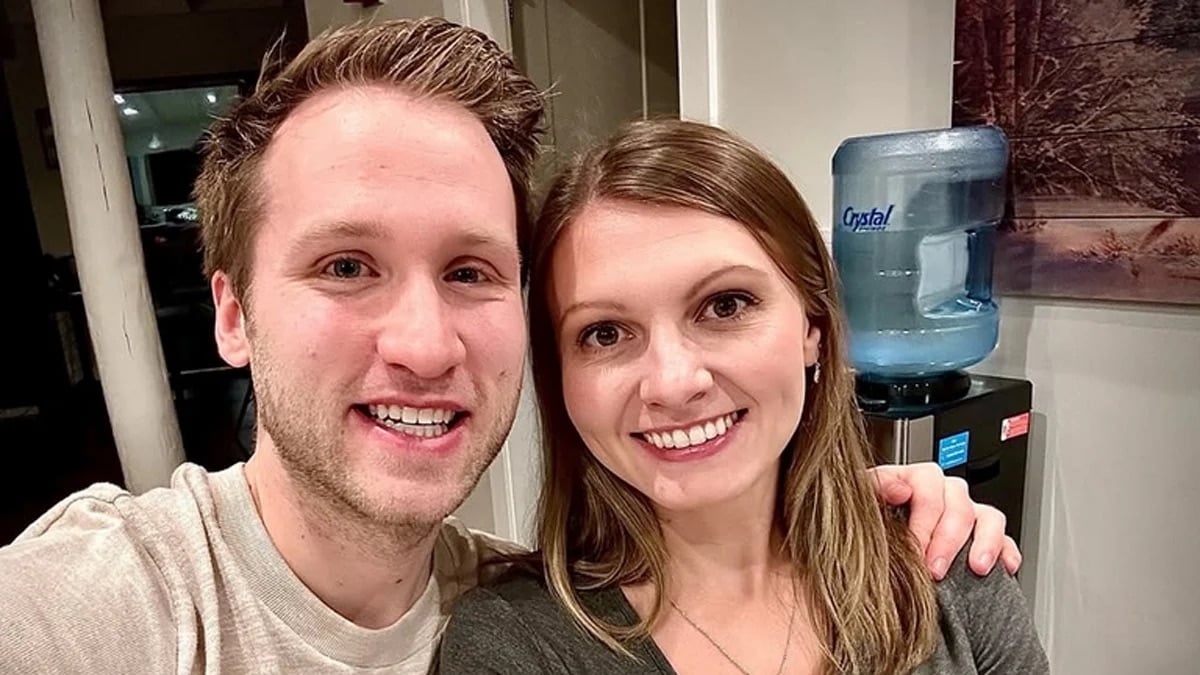
On June 3, a debate about the silent genocide of unborn children with Down syndrome exploded on social media. The unlikely catalyst was an X post by YouTube influencer Jesse “McJuggerNuggets” Ridgway. For months, the Ridgways had been producing and posting news of their pregnancy for a massive online audience, including their pregnancy announcement on March 29, a gender reveal (a boy), ultrasounds, and finally, a disturbingly personal video of the grief-stricken couple finding out their baby likely had Down syndrome.
The journey culminated in Ridgway’s announcement that the couple had decided to abort the baby at twenty-one weeks. (Last year, a preemie born at twenty-one weeks in Iowa survived.) Ridgway listed the health problems his son might have suffered from—heart defects, hearing challenges, learning disabilities, decreased lifespan—and concluded: “Down syndrome isn’t a ‘blessing.’” He assured his “fans” with autism and Down syndrome that “we appreciate you,” but said that the abortion “will be beneficial for our family” and that “thankfully, we had a choice.”
The post has been viewed over 24 million times and has garnered 18,000 mostly negative comments. Many were livid at Ridgway’s openly eugenic justification for having his unborn son destroyed; hundreds posted stories, photos, and videos of their loved ones with Down syndrome, expressing their gratitude for their love, lives, and contributions. The photos put faces to society’s most endangered population—as Ridgway pointed out in his post, around 90 percent of babies diagnosed with Down syndrome are killed in the womb.
Many prominent figures responded to the post, most notably Speaker Mike Johnson. “When a culture devolves to the point of depravity where ‘influencers’ can go online and so casually dismiss the deliberate murder of their own precious child, the survival of that culture itself is at risk,” he wrote. “God have mercy on our nation as we pray and work for an end to this evil, for hearts and minds to change, and for a renewed understanding of the self-evident truths and the sanctity of all human life.”
Ridgway was stunned by the response; on June 4, he wrote a follow-up post calling the condemnations of their decision “disturbing” and evidence of “the depravity of people online,” adding that “I’ve never seen such hate and vitriol for two people grieving the loss of their unborn child and making an impossible decision.” He noted that some had reached out with support, and that he was confused as to why aborting a baby with Down syndrome, which is “the most common outcome for Trisomy 21,” was even newsworthy.
Ridgway’s observation that targeted destruction is “the most common outcome” after a Down syndrome diagnosis is accurate. Up to 90 percent of babies with Down syndrome are aborted in America; in Denmark, it’s more than 99 percent. Most Western countries have similar abortion rates. In Iceland, it is close to 100 percent. “Babies with Down syndrome are still being born in Iceland,” Hulda Hjartardottir of the Prenatal Diagnosis Unit at Landspitali University Hospital told CBS in 2017. “Some of them were low risk in our screening test, so we didn’t find them in our screening.” In other words: We missed them.
Ridgway claimed that people stay silent for fear of public shaming, but the reality is that some governments have gone to great lengths to ensure that couples are not shamed for eugenic abortions. In 2016, France’s highest administrative court confirmed a ban on a video called “Dear Future Mom,” featuring children with Down syndrome telling mothers who have just received a Trisomy 21 diagnosis not to worry—that her child will love life, and love her. Abortion is not mentioned in the video.
Nonetheless, the Council of State stated that the video could “disturb the conscience of women who, in accordance with the law, have made personal life choices.” The faces of children with Down syndrome were banned from TV, just as they are being erased from our societies.
It is frankly repulsive to see Ridgway claiming that he and his wife were “grieving the loss of their unborn child.” They did not lose him. They deliberately decided to have him killed at twenty-one weeks—when he could feel pain, suck his thumb, hear voices, and stretch—while recognizing that he was, in fact, an “unborn child.” Many of Ridgway’s online defenders missed the point entirely when they insisted that Ridgway and his wife had made a “deeply personal decision.” It wasn’t. The baby boy’s short life and death were publicly documented for public consumption—all except for the gruesome details of his death.
Influencers like Ridgway produce “deeply personal” content in order to provoke a public reaction and earn clicks and income. Ridgway ensured that millions of people knew that his son existed, and that millions were informed when he did not. Because these children are usually destroyed silently, he did not expect a backlash. That it came is a grim silver lining to this story. That the destruction of a child with Down syndrome has provoked such a broadly negative reaction is not only good, but deeply necessary. It indicates that our public immune system with regard to eugenics is not yet dead—but like people with Down syndrome, it may soon be completely wiped out.

YOU MIGHT ALSO LIKE
Reflections on a Diamond Jubilee
I am not usually given to apocalypticism, but I think I got the imagery exactly right when,…
SlutCon’s Emotional Void
The tech-rationalist phenomenon “SlutCon” caused quite a stir online, perhaps predictably. SlutCon was a multi-day retreat and…
The Boys on the Brink
In the latest installment of the ongoing interview series with contributing editor Mark Bauerlein, Leonard Sax joins…
