
The New Dark Age:
Why Liberals Must Win the Culture Wars
by nigel biggar
polity, 192 pages, $25
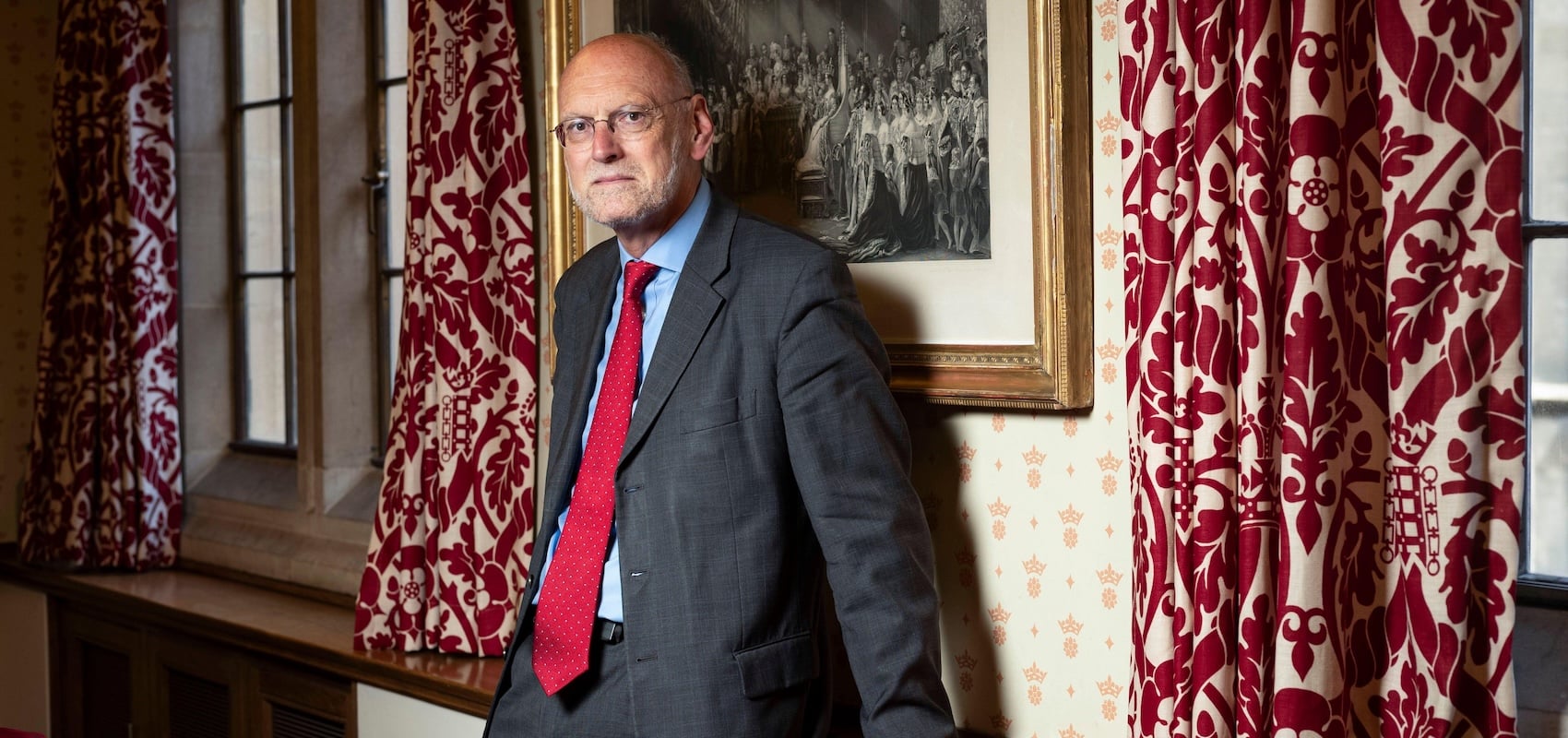
Professor Nigel Biggar, Emeritus Regius Professor of Moral Theology at the University of Oxford, is a nine-year veteran of the culture wars. He was first dragged into the fray when a research project of his, entitled “Ethics and Empire,” came to the attention of Dr. Priyamvada Gopal of Cambridge University. “OMG,” Gopal tweeted. “This is serious shit. . . . We need to SHUT THIS DOWN.”
That was 2017. La lotta continua. Late last year, Biggar was due to speak about free speech at a secondary school in Dublin. His two signature historical contentions—that the British can find cause for both pride and shame in their nation’s colonial past, and that imperial rule can sometimes be legitimate—are always likely to receive a bracing reception in Ireland. But this time the points could not even get aired: Biggar was disinvited the night before he was due to talk.
What did Dublin miss out on? In the sound and fury of the culture wars, Biggar comports himself like a sniper, coolly picking off the fatuous arguments of “academivists.” In his latest book, The New Dark Age, he deploys multiple data sources to confound claims that Britain is grossly and systemically racist. His style is pithy, laconic: “Listening to people who have not been much heard before is a good idea, but agreeing with whatever they say is not”; “Accurate diagnosis of the cause of an unfair disadvantage is the prerequisite for effective relief”; “A single visible cancellation causes multiple invisible self-cancellations.” The book teems with aphorisms for our times.
Biggar is a reluctant combatant, though, fighting more to protect than to conquer. The homeland he defends is “the liberal temper” where people respond to alien viewpoints thoughtfully and civilly. In this spirit, and despite his general outlook on history, he concedes the need for “decolonization” in at least three respects before eventually drawing a thick red line: “a certain Eurocentricity in British education is entirely justified. Britain is not Anywhere. It is located in north-west Europe, has a particular history, and has developed particular institutions and traditions.”
Similarly, he recognizes that postmodernism is a partly understandable response to both the arrogant rationalism let loose by the Enlightenment and the lethal totalitarianisms of the twentieth century. However, the effect of its truth-questioning tendencies has been to remove the prospect of an objective court of appeal where, rationally and peacefully, differences can be resolved, and consensus—however tense—achieved. In the absence of such a court, we see retrenchment to cherished positions and narratives, and to the exercise of raw power in settling disagreements (power, in our time, meaning the power to cancel).
More’s the pity. A well-functioning court of appeal would, of course, expose weaknesses in evidence that both sides—Biggar and his adversaries—advance. There are a handful of questionable assertions and omissions in The New Dark Age: For instance, it appears to proffer in different places three conflicting estimates of the importance of the slave trade to the British economy (each one backed by expert opinion). Biggar’s chronology of the composition of Yeats’s masterpiece “The Second Coming” in relation to Irish history is faulty and comes at the expense of relating the poem to much greater global cataclysms. And he could do more to acknowledge how someone like Frantz Fanon was able to signal the follies and dangers lurking in his own convictions.
Yet I doubt whether Biggar’s opponents would notice or even search for such weaknesses. Their tactics are different, and we glimpse them here and there. When, for instance, Biggar—baffled by the tendency among progressives to want the worst to be true of their own nation—cries out, “What’s going on here, psychologically, even spiritually?” his exasperation is revealing. Might this not be the ultimate weapon of the woke? Not to engage in an actual back-and-forth in search of what is true, but instead to lure the reasonable, over and over, into a kind of Sisyphean torment, repeatedly shattering the instruments of reason on that which cannot be reasoned with?
Biggar records certain statements that read as if they have been fine-tuned to break the minds of anyone trying to engage with them in good faith: He reproduces, for example, a pronouncement by Edinburgh University social anthropology students that apparently tries to articulate something noble and essential about the purpose of their studies but reads more like the flyer of a campaign group. How exactly does one engage with an argument based on a category error sitting behind a wall of vaunting moral self-confidence?
Wisely then, Biggar attempts ultimately to rise above the heat of battle with a diptych of concluding chapters on the virtues and vices between which the modern university is caught. The vices—pulling rank, evasive omission, setting up straw men, and so forth—are those that can destroy a university’s capacity to fulfill its raison d’être, that is, “the discovery of truth through critical testing.” The virtues that university staff should try to cultivate and exemplify are temperance or self-control, humility and docility, patience, courage. (This list begins to sound like it’s made up of not-very-distant cousins of the gifts of the Holy Spirit.) “If we are to have light rather than heat,” Biggar concludes, “the holiday from cultivating the virtues must end.”
After I put down The New Dark Age, two Catholic thinkers came to mind, full, I think, of explanatory power.
First, I thought of G. K. Chesterton. In Orthodoxy, he wrote that “The modern world is full of the old Christian virtues gone mad. The virtues have gone mad because they have been isolated from each other and are wandering alone. Thus some scientists care for truth; and their truth is pitiless. Thus some humanitarians only care for pity; and their pity (I am sorry to say) is often untruthful.” Nigel Biggar has traced the internet-enabled, early-twenty-first-century outworkings of the phenomenon Chesterton identified 120 years ago. Wokeness is pity made answerable only to itself. Yet pity, or compassion, and the love of truth must somehow walk hand in hand again: caritas in veritate.
And then I thought of John Henry Newman. In his Apologia, Newman, accounting for the rapid growth of the Oxford Movement, turns first to the influence not of a theologian or a philosopher or a church historian, but of a poet and novelist, Sir Walter Scott, “who turned men’s minds in the direction of the middle ages” and who “re-acted on his readers, stimulating their mental thirst, feeding their hopes, setting before them visions, which, when once seen, are not easily forgotten, and silently indoctrinating them with nobler ideas, which might afterwards be appealed to as first principles.”
While The New Dark Age is a stirring appeal for the reunification of the true and the good in our universities, perhaps, for ultimate efficacy, this cause needs somehow to make room for the beautiful as well.
Dear Reader,
Can I be direct with you?
War abroad. Socialists on the rise. AI upending human life. Endless uproar online. The modern attention economy doesn’t want readers — it wants users enslaved to the tyranny of the present.
First Things is the antidote: literary excellence, timeless truths, and a fixed point of reference in a culture that has lost its bearings.
But we can’t do it without readers like you.
Our goal: Raise $150,000 by November 1 to sustain First Things in the year ahead.
Your gift anchors readers in the permanent things.
Make your Fall Campaign gift now using the button below.
If you have any questions or would like more information, please contact Giovanni Del Piero, Director of the Editor’s Circle, at gdelpiero@firstthings.com or 212-627-1985.

YOU MIGHT ALSO LIKE
Foucault’s Idol of Nothingness
Today marks the 100th anniversary of the birth of Michel Foucault. He was influential in his lifetime,…
Forget Odysseus. Aeneas Is the True American Hero.
Who is our Odysseus? Or more precisely, who is the most Odyssean hero of American film? Matt…
The Last Statesmen?
In the latest installment of the ongoing interview series with contributing editor Mark Bauerlein, Steven B. Smith…
