
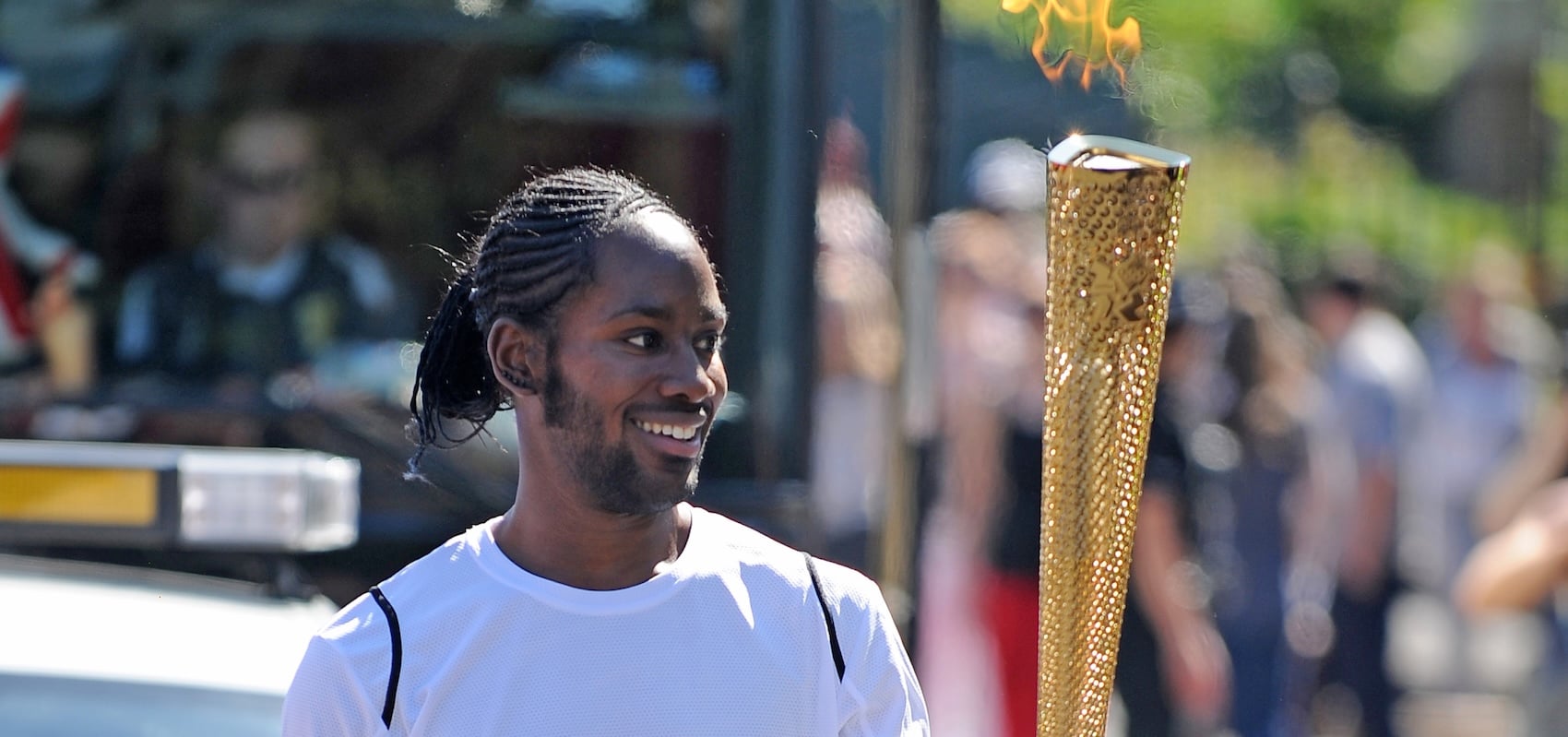
Who is Jason Arday? Until last week, the man at the center of the biggest recent scandal in Anglo-American higher education was professor of sociology of education at the University of Cambridge and a professorial fellow at Jesus College. These are among the most prestigious positions in not only British but global academia. U.S. News & World Report ranks Cambridge the fifth best university in the world. Unlike in the U.S., the title “professor” in the U.K. is restricted to the highest rank, held by only 10–15 percent of a university’s academic staff. Being a professorial fellow put Arday on the governing board of one of Cambridge’s top colleges. For most academics, these are appointments received in the prime of a long and illustrious career. Arday accomplished all this by the age of thirty-seven and a mere eight years after receiving his PhD. He rose to such heights because he was “the best in the world” in the field of race, inequality, and education, according to Prof. Hilary Cremin, head of the faculty of education at Cambridge at the time of his hire in 2023. He was “an exceptional scholar,” according to Prof. Bhaskar Vira, the university’s pro-vice-chancellor for education. In the words of the university press release announcing Arday’s appointment, he was a “renowned sociologist” and “the youngest Black person ever appointed to a professorship at Cambridge.”
Today, Jason Arday is neither a professor nor a fellow. Three years after arriving at Cambridge, he resigned these positions within hours of a public announcement from the university that it had opened an investigation into its star scholar’s “academic qualifications and honorary appointments.” Arday’s tremendous fall from grace came after an intense two weeks of public scrutiny into his academic and personal record. Well-supported charges of plagiarism and academic fraud, some dating back to 2023, are the most serious. But it is the fantastical details of his personal life involving multiple incidents of medical tragedy and triumph, astounding athletic feats, and terrifying racial harassment that fueled media attention. Arday’s life story and the sheer volume of improbable events in it are so incredible as to be literally incredibilis, not to be believed. How one of the great fabulists of our times won the accolades of so many news organizations, publishers, and universities tells us a great deal about our institutions and culture. Jason Arday operated within a professional field and a society obsessed with identity and self-construction. In such a world, the fabulist walks through an open door.
Arday is hardly the first academic to get ahead on a sham biography. Several well-known cases of so-called “racial fraud” within American higher education have occurred in recent years, including Rachel Dolezal (now Nkechi Amare Diallo), Jessica Krug, and Andrea Smith. Yet none of these former academics crafted a life story as colorful and improbable as Arday did. The outline is well known to anyone who has followed this story as it wended its way through the news: diagnosed with autism and global developmental delay at age three; limited to sign language and unable to speak until age eleven; illiterate until age eighteen (yet somehow passing two academic qualification exams at age sixteen). As if overcoming such stunning adversity was not enough, Arday also claimed to have: developed epilepsy after being physically attacked as a teenager; been in a car accident that caused him to spend three months in a coma during which time he suffered “locked-in syndrome”; developed a brain tumor while writing his PhD dissertation; had a mini-stroke just before his dissertation defense that caused total short-term memory loss; suffered an epileptic seizure during a marathon that led to a hairline fracture in his fibula; and run thirty marathons in thirty-five days, nine of those on the fractured leg.
His athletic prowess goes further. Arday claims to have run six hundred miles between Edinburgh and London in six days (later clarified to six hundred miles in twelve days) as well as to have played for the Crystal Palace under-eighteen soccer team. His world-class amateur running career allowed him to supposedly raise £5.5 million for over eighty U.K.-based charities (later clarified to have been raised by a syndicate of one hundred people, which Arday claimed he could not identify because he had signed a non-disclosure agreement). This tremendous success sadly brought on horrific racial harassment, he claims. Arday alleges that he was threatened twice by a masked intruder on campus, received a bullet and a banana on separate occasions through campus post, was mailed a severed pig’s head at his parents’ home, and received multiple rape and death threats. Believe it or not, these stories are only the highlights. There is so much more.
Why did so many people in positions to judge Arday both in academia and the media simply accept his improbable claims as true? A simple answer is that Arday either intuited or researched market demand and then supplied it. Depending on the person, the demand was for a traditional parable of triumph over adversity, a cutting-edge neurodiversity success story, or an eternal tale of perseverance in the face of racial oppression. This answer is not wrong, but there is a more compelling one.
Identity is central to contemporary Anglo-American therapeutic culture, our dominant mode of thought and behavior. Within the therapeutic there is nothing more important to the wellbeing of the individual and society than being who you are and in turn having that be affirmed by others. The academy is a hotspot for this culture. Entire fields of study are premised on identity claims around race, ethnicity, gender, sexuality, body size, and physical/mental ability. Narratives of oppression and inequality (defined as the same thing) are essential to them. Storytelling around “lived experience” (even “autoethnography”) and “naming one’s reality” is a key methodology not only in the so-called “grievance studies” but in less obvious cases like sociology and education, the disciplines in which Arday excelled. “Critical” fields like these are primed by their very constitutions to adopt and elevate fabulists.
The academy’s traditions of professional autonomy and peer evaluation multiply the impact of therapeutic values. A nine-person panel dominated by professors of education and the sociology of education hired Arday at Cambridge. Media reports indicate that their decision was unanimous, with one newspaper reporting that the panel simply “went through the motions” of evaluation because they had already singled out Arday for the position. These professors were granted the power to judge. If they said he was good, then he was good by definition. Any internal mechanisms to correct misuses of such power are weak and undermined at every turn by norms of collegiality, professional deference, and sensitivity to identity claims. In Arday’s instance, the corrective mechanisms went into complete reverse. In under two years following his appointment to Cambridge, Arday collected five honorary doctorate degrees from five different British universities. In each case, his life story was featured far more prominently than his scholarship.
Thanks to the international storm of media attention, Jason Arday’s academic conduct will finally be rigorously reviewed by the institutions that granted him his degrees and distinctions. His purported life story and the role it played in his career advancement are unlikely to receive a similar analysis. What may be better scrutinized is the power that not simply Cambridge but ultimately the British state and society have granted to departments, schools, and centers of education and sociology. Jason Arday’s real life story may be exceptional, but what it reveals about the academy is quite mundane. Arday was the predictable accident waiting to happen.
Image by Joe Giddens via AP

YOU MIGHT ALSO LIKE
SlutCon’s Emotional Void
The tech-rationalist phenomenon “SlutCon” caused quite a stir online, perhaps predictably. SlutCon was a multi-day retreat and…
The Boys on the Brink
In the latest installment of the ongoing interview series with contributing editor Mark Bauerlein, Leonard Sax joins…
Serial Liar, Serial Comma
How would you write a public letter that you know will become front-page news? Would you write…
