
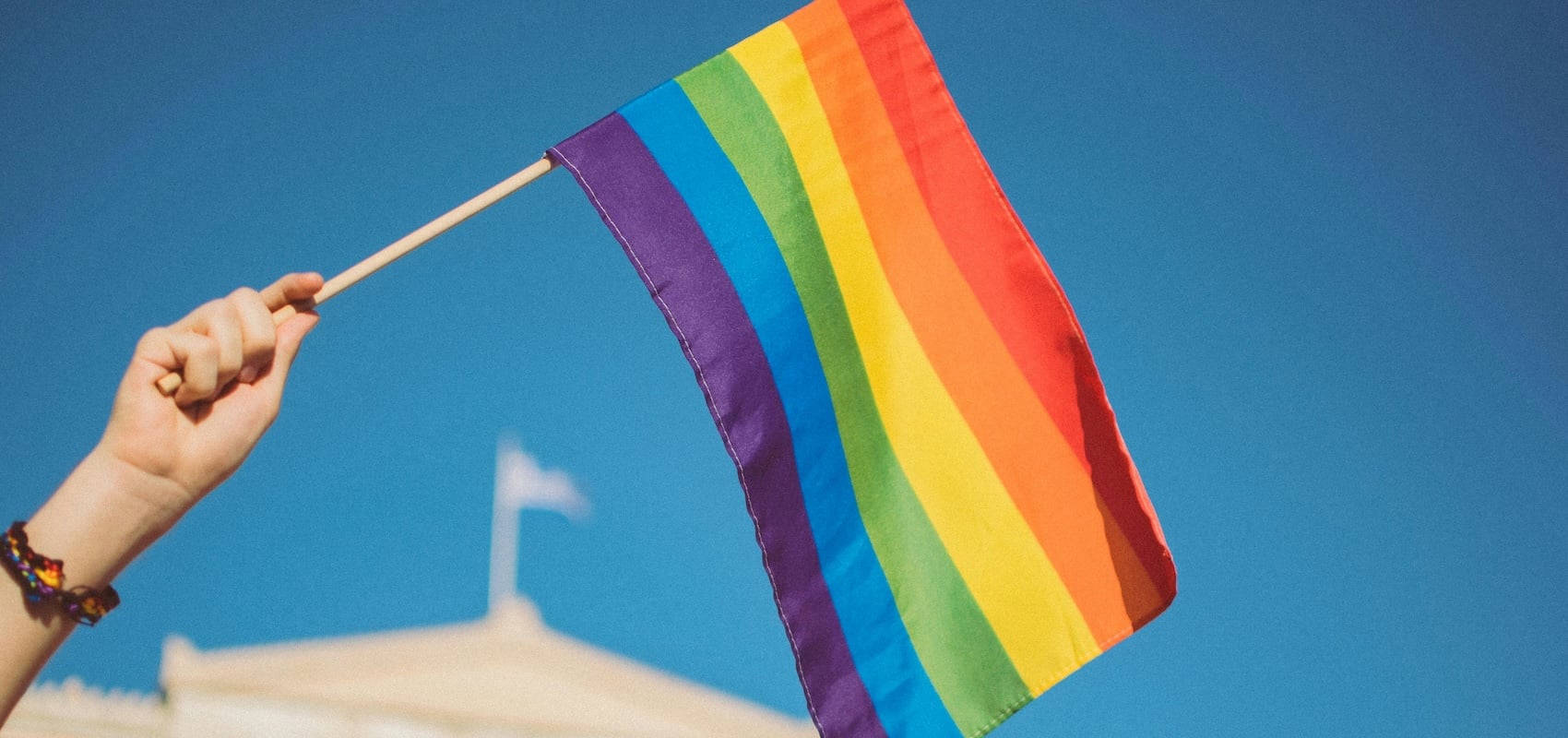
An old platitude of the cultural left is that sexual identity is innate. In vintage early-2010s style, people are simply “born this way.” Social science tells us otherwise. Data released last month from two major national surveys show that sexual identity across cohorts of young Americans is highly variable, not only over the course of decades but even from year to year. And contrary to another liberal platitude about the “arc of history,” change doesn’t go in one direction only. After fifteen years of growing LGBTQ identification, young Americans may be trending heterosexual for the first time since the Woke Era began. Recent headlines proclaiming a “free fall” in gay and bisexual identity are an excessive reading of the data, however. Particularly among elites and young women, it’s far too early to say that heterosexuality is staging a comeback.
To get a sense of how much sexual identity in America has changed under the tutelage of wokeness, consider that in 2014, about 7 percent of Americans age eighteen to twenty-four identified as gay, lesbian, or bisexual. In 2022, the figure was nearly 20 percent. Over roughly the same period, U.S. ninth- to twelfth-graders went from 8 to 18 percent non-heterosexual. An unexpected drop in non-heterosexual identities in the most recent period has caught the attention of observers, however. From 2023 to 2025, among high schoolers, both boys and girls showed marked declines in identifying as gay, lesbian, or bisexual, with the larger falls among the younger students. This was even true within the same cohort; 2023’s tenth-graders had slightly higher LGB identity levels than 2025’s twelfth-graders, while the freshmen of 2023 showed a noticeable fall as they became the juniors of 2025. Among eighteen- to twenty-four-year-old men, declines in both gay and bisexual identities were also recorded from 2024 to 2025.
Readers should not rush to conclusions, however. Just as claims that American culture passed “peak woke” some years ago proved premature, reports of the collapse of homosexual, bisexual, trans, and all manner of queer identities may be greatly exaggerated. Young women are still increasing in their adoption of non-heterosexual identities; in 2025, both bisexual and lesbian identification among eighteen- to twenty-four-year-old women were at all-time highs. Declines in LGB identities among both high-school-age boys and eighteen- to twenty-four-year-old men are probably better interpreted as plateaus. Even the rather large drop among high-school-age girls should encourage a “wait and see” attitude, particularly in light of their older sisters’ continued path away from heterosexuality.
An appreciation for the social basis of identity can help us understand the data we see today. Variability in sexual identity is rooted in the social nature of all identities. To “identify” as gay, lesbian, bisexual, queer, transgender, or even heterosexual is to assert membership in a social category and adopt a group label. Even if the qualities or traits defining a category (such as the experience of same-sex sexual desire) are perceived to be rooted in the individual, society interprets those qualities and experiences and gives them meaning. All our labels around sexual identity, desire, and behavior are of very recent vintage. Even “heterosexuality” in our current usage is less than a century old.
Thus we shouldn’t be surprised that as social meanings change, identities, experiences, and behaviors change. The quadrupling of college-age nonbinary and related “genderfluid” identities since 2015 and their plateauing since 2022 fit the pattern of a wave of social contagion. The boom (and possible bust) of non-heterosexual identities is likely rooted in similar social processes. Such an interpretation becomes more plausible with a closer look at the data.
The tremendous growth in non-heterosexual identities since the early 2010s has three signature characteristics. First, non-heterosexuality is strongly female. In 2025, among eighteen- to twenty-four-year-old Americans, nearly 30 percent of women claimed a lesbian or bisexual identity, while only 11 percent of men identified as gay or bisexual. The same pattern exists among high schoolers; in 2025, about 22 percent of girls but just 7 percent of boys identified as lesbian, gay, or bisexual.
Second, bisexuality is the mechanical cause of the non-heterosexuality boom. In 2021, at the peak of female high-school-age LGB identification, an incredible 26 percent of ninth-grade girls identified as bisexual while only 4 percent identified as lesbian. Among eighteen- to twenty-four-year-old women today, four times more identify as bisexual than as lesbian. Among the youngest girls, the 2025 crash in LGB identity has been a crash in bisexual identity; among ninth-graders, bisexual identification fell from 22 percent in 2023 to 13 percent in 2025.
Third, non-heterosexuality skews elite. Research by University of Buckingham political scientist Eric Kaufmann has found that the more elite the educational institution, the higher the levels of LGBTQ identification. In 2022, heterosexual identification at Phillips Academy, one of the most prestigious boarding prep schools in America, was a mere 63 percent. The figure was the same among the eight Ivy League universities in 2024. At leading research universities measured in the annual Foundation for Individual Rights and Expression (FIRE) campus survey, the recent low was 68 percent, while across a more representative swath of American higher education, as measured in the Higher Education Research Institute (HERI) survey, the low was 77 percent. In short: the more elite, the less heterosexual.
As woke values and practices are strongest in elite and female social loci, we shouldn’t be surprised to see non-heterosexual identities exhibiting the same pattern. And to the extent that wokeness was a COVID-induced phenomenon, we should expect to see a decline in non-heterosexual identities the further we are from the lockdown-induced social and cultural turmoil of the early 2020s. But just as a past Woke 1 implies a future Woke 2, it is premature to believe that young Americans’ return to normative heterosexuality is around the corner. Identities are political as well as social, and this is especially true for sexual identities. Kaufmann found through the 2020–21 FIRE surveys of American undergraduates that LGBTQ identities and political ideology were highly correlated. While 5 percent of “very conservative” students and 7 percent of “slightly conservative” ones identified as LGBTQ, the figures were 25 percent among “slightly liberal” students and a tremendous 49 percent among “very liberal” ones. Any strong backlash against Donald Trump and the Republican Party in the 2026 and 2028 elections is likely to recharge non-heterosexuality, particularly among aspiring elites and young women, as we have seen in the past. The continued retreat of young women from Christianity will undoubtedly play a role in the evolution of American sexual identity as well. Identities ride the waves of social change. This is the only constant of which we can really be certain.
Dear Reader,
Can I be direct with you?
War abroad. Socialists on the rise. AI upending human life. Endless uproar online. The modern attention economy doesn’t want readers — it wants users enslaved to the tyranny of the present.
First Things is the antidote: literary excellence, timeless truths, and a fixed point of reference in a culture that has lost its bearings.
But we can’t do it without readers like you.
Our goal: Raise $150,000 by November 1 to sustain First Things in the year ahead.
Your gift anchors readers in the permanent things.
Make your Fall Campaign gift now using the button below.
If you have any questions or would like more information, please contact Giovanni Del Piero, Director of the Editor’s Circle, at gdelpiero@firstthings.com or 212-627-1985.

YOU MIGHT ALSO LIKE
Virginia’s Ballot Puts Caesar Over God
"Father, I don’t think you should bring politics into religion.” That’s a line I’ve heard a lot…
Same-Sex Marriage and the Degradation of European Law
Until recently, Poland’s definition of marriage as a union between a man and a woman seemed inviolable,…
The Trans War Is Not Over
Prior to the November 2024 election, transgender issues loomed large for many parents, who feared the erosion…
