
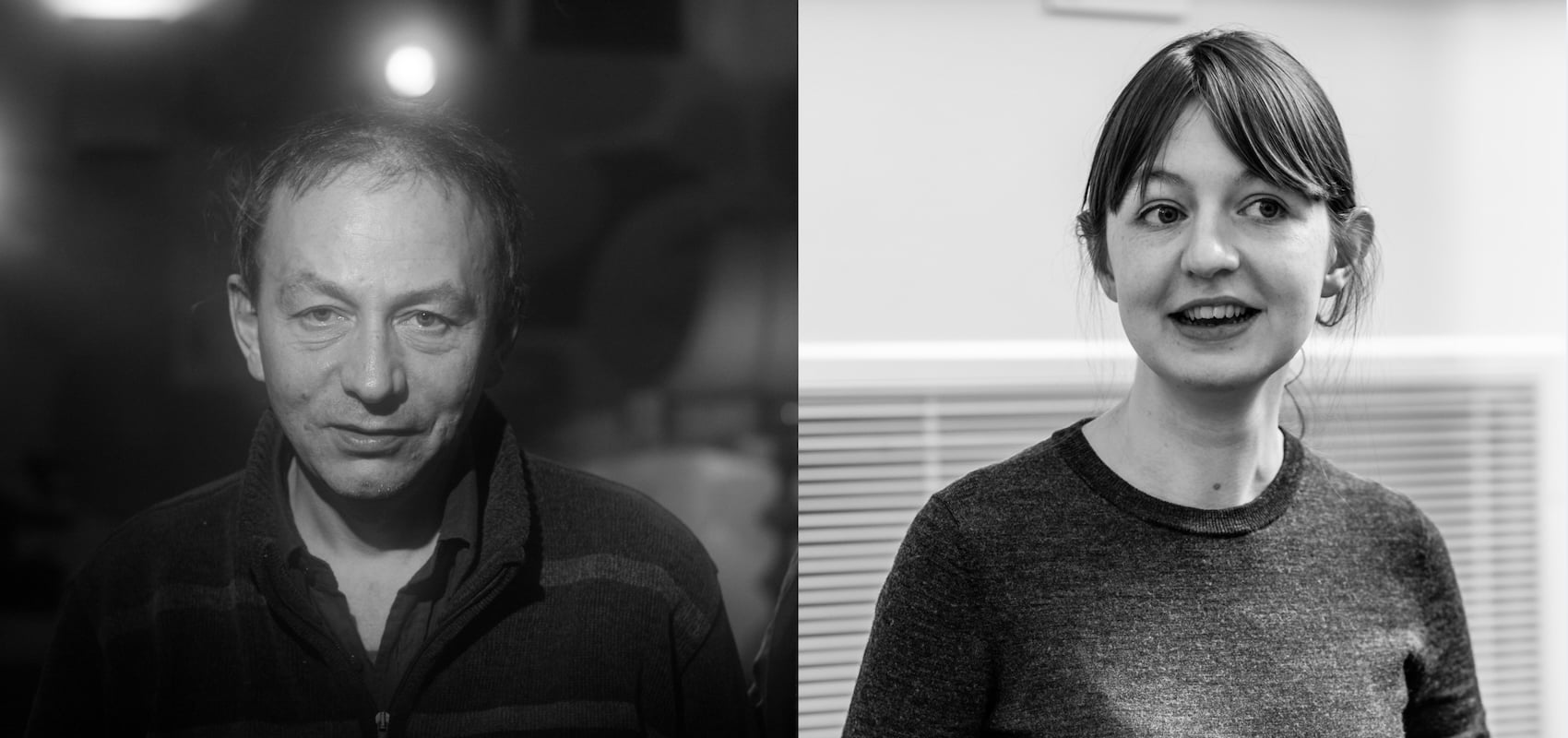
In Nanterre, France, Michel Houellebecq has been formally placed under criminal investigation for “complicity in incitement to discrimination, hatred or violence,” accusations that arose over the author’s 2022 remarks about Islamic immigration in an interview with Michel Onfray for Front Populaire.
In that conversation, Houellebecq addressed the long-term consequences of Muslim immigration for France, elaborating on the themes of cultural and ethnic crises that animate the author’s fiction. He said that “when entire territories come under Islamist control, I think acts of resistance will take place. There will be attacks and shootings in mosques, in cafés frequented by Muslims—in short, Bataclan in reverse,” referencing the 2015 Bataclan Islamist terror attack on a concert hall. Houellebecq, the author of Submission, a book about a near-future, thinly fictionalized France facing a democratically elected Muslim government, is no stranger to thinking about assimilation—or lack thereof. In the interview, he treated the “great replacement” of European whites as a statistical fact rather than a theory.
This isn’t Houellebecq’s first run-in with French courts over speech. In 2002, he was tried and acquitted on charges of inciting racial hatred after calling Islam “the dumbest religion.” The current proceedings treat a social critic’s pessimistic analysis of cultural and demographic trends, however clumsy in presentation, as potentially criminal in what appears to be a straightforward misuse of state power.
The investigation arises roughly a month after a different literary controversy, involving an author on the other end of the political spectrum. In mid-October, the publisher Faber announced it would no longer sell Sally Rooney’s books to U.K. retailers. Rooney, whose dry wit and sharp class critique have captured a certain millennial literary sensibility of privileged malaise, had publicly affirmed her material support for Palestine Action after the group was proscribed as a terrorist organization under the U.K.’s Terrorism Act of 2000. The July 2025 decision to ban the group was newsworthy in itself, but Rooney’s support for it, despite its record of break-ins and sabotage of defense sites, made headlines of its own, especially her stated intention to continue channeling her novels’ royalties and other earnings toward the group.
In a statement, Faber said: “To sell a writer’s work and not be able to pass on earnings is an unconscionable situation for a publisher. As such, and in full agreement with Sally, we have taken the decision that we can no longer supply her works in the U.K. in any format.” Existing stocks of the books are salable; the U.K. has not banned their sale for content, and thus they will continue to be read and sold at least through third parties.
Many of Rooney’s admirers and various left-wing and free-speech advocates framed the episode as government repression of pro-Palestinian expression. That narrative substitutes one issue for another: Rooney was not prosecuted for her opinions. She chose to have her publisher stop supplying her books to avoid legal consequences for herself or her publisher—not for speech, but for directly funding a group that the British state has designated a terrorist organization. Unlike in the case of Houellebecq, free-speech rhetoric functions as a deflection mechanism for Rooney. It replaces her concrete commitment to Palestine Action with the flattering narrative of literary martyrdom.
Whether one regards the proscription as overbroad or wise, that is a legal debate, if a narrow and tedious one. Recasting it as a free-speech fight is more flattering, and it turns the author into a martyr. Ian Leslie in The Ruffian puts it well: “Who wants to have that rather tedious and confined argument when we can ride the high horse of artistic expression?” Rooney’s agreement with her publisher to pull her books is less admirable as political action when read in light of its effect: It signals to her fans that engagement with her books requires pseudo-principled support for the legal protection of a terrorist organization. Palestine is not the question; Palestine Action is.
Unlike Houellebecq, whose investigation pertains to demographic observations, perhaps vindicated by the ongoing protests in Paris that have been fueled by the very forces he contends with, Rooney represents a safe form of artistic expression in which opinion is detached from existing political stakes. As Leslie points out, where authors like Aleksandr Solzhenitsyn and Salman Rushdie faced actual persecution for their work, Rooney has taken persecution upon herself. But the real literary martyr is Houellebecq, whose provocative ideas have long been the substance of his fiction.
Image of Michel Houellebecq by Евгения Давыдова via Creative Commons. Image cropped.
Image of Sally Rooney by Chris Boland via Creative Commons. Image cropped.

YOU MIGHT ALSO LIKE
The Devils and the Liturgy of Liberalism
In 1971, critics called Ken Russell’s The Devils a “grand fiesta for sadists and perverts” that “might…
Nature’s God Is Not Enough
In the Republic, Plato writes that unless liberated by philosophy, by the awakening of the divine part…
A Verse Epic for a Post-Christian England
For all those who feel that something in our art is missing, that we cannot create as…
