
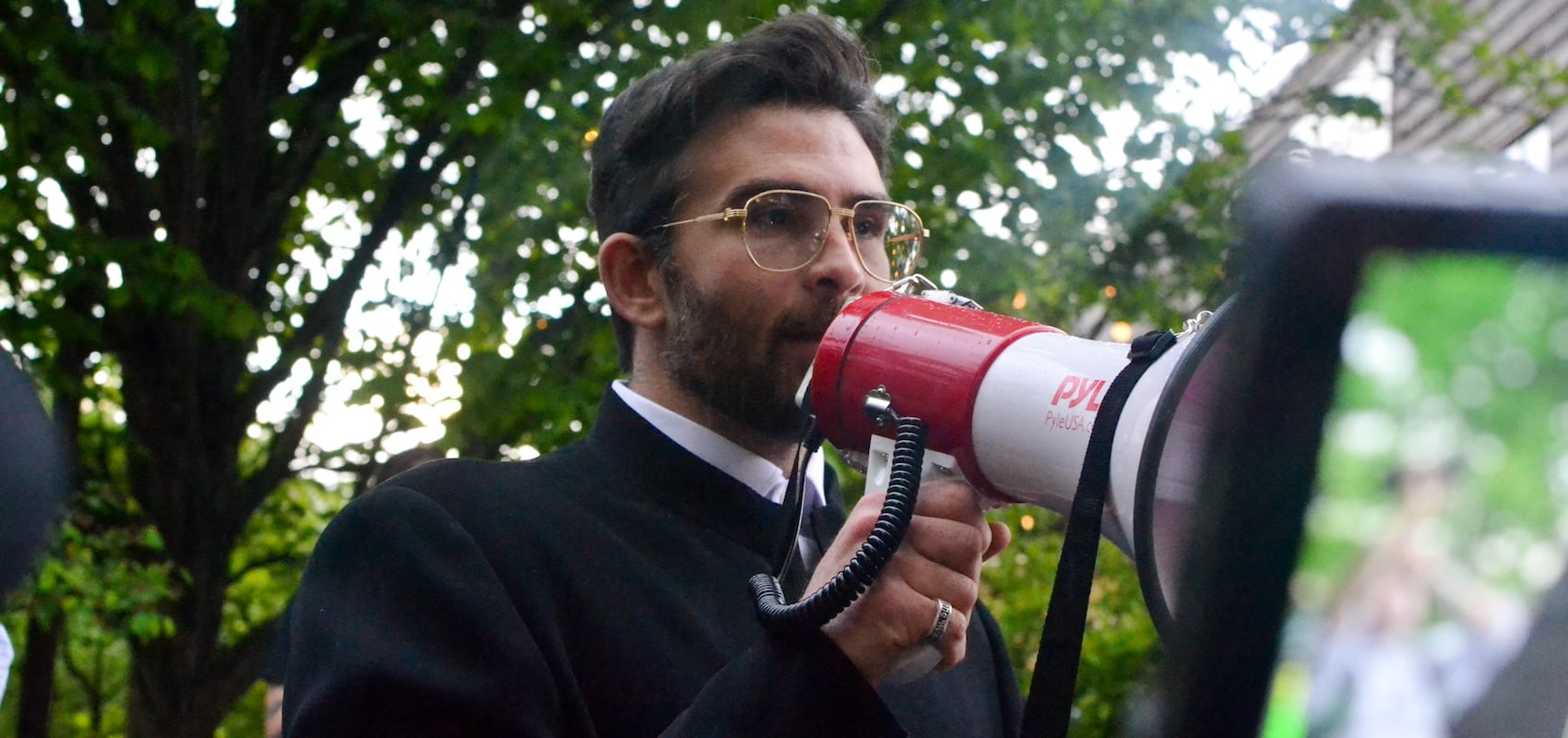
As Abdul El-Sayed celebrates his election as the first-ever Muslim U.S. senator, the GOP and president scramble to assign blame, and progressives prime themselves to take control of their party’s agenda, a quieter shift is transforming the very nature of our politics and cementing the power of a new and chaotic interest group. El-Sayed earned his spot among the many decisive Democratic winners after a well-funded and grueling primary. In that primary, he relied on campaign support from controversial social media influencer Hasan Piker. Piker—whose impact on the race, if any, was hotly debated throughout—is a jarring example of the ever-decreasing distance between powerful political campaigns and social media influencers. His rise, and that of other online figures, echoes the rise of the nineteenth-century party boss, who shaped popular political preferences with lasting consequences.
The historical concept of the party boss evokes notions of dishing out jobs to degenerate friends, blatantly influencing elections, and orienting political action toward one’s own personal gain. Think William “Boss” Tweed, whose Tammany Hall machine bled New York City of millions in the late 1860s. Hasan Piker and his mutuals, both on the left and the right, appear primed to reach such levels of political influence thanks to their online ecosystems and our very online democracy. Every social media–infected political spectacle, from the hashtag era of #BlackLivesMatter and #MeToo to the Epstein saga and weekly data center debacles, has been amplified by influencers capable of inciting mass demand for the political system to take action.
Influencers build online communities that offer virtual solidarity to those who can’t find it in the world around them. Free from any sort of constraining political correctness clamping down on other commentators, influencers foster parasocial relationships through big personalities and bold takes, blending entertainment with commentary on world affairs. That intimacy lends them an air of credibility that keeps vast audiences returning for more. The rise of influencers and social media as news sources comes at a time of near-record rates of distrust in politicians and institutions competing with these online figureheads for attention and influence.
Piker, who boasts 3.1 million followers on Twitch, has demonstrated over the course of this race just how far an influencer’s reach can extend, even when it incites backlash that commands significant attention of its own. Conservative pundits and politicians condemn him for wild, sometimes ultra-violent, always anti-American comments, from saying America deserved 9/11 to mocking a congressman’s war injury. But his critics lack the online community he has built over years of producing content. The right has its own online provocateurs, from the legions of Trump boosters to Nick Fuentes. Though Republicans may find Fuentes more liability than asset, he, too, commands a sizable online audience.
Online personalities are increasingly seen as essential allies by desperate politicos of the left and right seeking to win otherwise unmotivated voters. The footprint of influencers in the 2026 midterms and the 2024 presidential election is undeniable, from the DNC’s Influencer and Creative Partnerships program to online movements such as “barstool conservatism” and “brat summer,” in which influencers fused popular trends with the promotion of political attitudes and preferences. The Biden and Trump administrations have even invited influencers to briefings or roundtables, as they would established interest groups. Whether or not online stars make a real difference in campaigns like El-Sayed’s Senate run, the previous two presidential races, or both parties’ midterm efforts, the growing belief that they are necessary presences on the campaign trail concedes a certain power to such figures over a candidate’s political fortunes.
If the broader electorate adopts the consumption habits of the chronically online, it isn’t far-fetched to imagine influencers adopting party boss–like roles, trading influence for personal enrichment. Their ideological commitments change on a daily basis; the only constant is the outrage and gimmickry they sell to viewers for profit.
Max Weber notably observes in Politics as a Vocation how the self-interested behavior of party “officials and bosses” impacted the American political regime of his time. They, too, controlled what politicians needed—in their case party organizations and votes, rather than attention—and traded it for personal gain. The rise of Piker and his mutuals encapsulates our technologically enhanced, outsider-infused iteration of mankind’s everlasting political “struggle,” adding much to what principled politicians must navigate. Weber distinguishes between those who live “for” politics, serving a cause, and those who live “off” politics, treating politics as a source of income. Influencers fall into the latter category, and mass democracy rewards them for it; social media facilitates it. What remains unclear is how principled politicians can endure such hyperpartisan, hyper-online environments and keep moving forward.

YOU MIGHT ALSO LIKE
Tangled Up In Blue
The editors discuss the blue wave in the midterm elections, the 39th Annual Erasmus Lecture, and Bob…
Voters Want Regime Change
If you only look at the numbers, the midterm results were not remarkable. Voters often rebuke presidential…
Civics Education Is Survival
In the latest installment of the ongoing interview series with contributing editor Mark Bauerlein, Paul O. Carrese…
