
For decades, Sweden had perhaps the most open immigration policy and the strongest commitment to tolerance and multiculturalism in the West. That changed in 2015, when the Sweden Democrats (SD), once treated as political pariahs, pulled Sweden’s major parties—including the Social Democrats and the Moderates—toward a far more restrictive immigration policy. What was once radical became mainstream.
For a decade, almost everything went SD’s way. The party pressed its advantage and demanded stricter assimilation, calling for an end to multiculturalism, a ban on wearing the hijab in public, and a new emphasis on remigration. In 2022, SD won 20.5 percent of the vote and seventy-three seats in the Riksdag. Permanent residence permits for asylum-related stays were abolished. Citizenship became harder to obtain. The government began to offer financial incentives to immigrants who voluntarily return to their countries of origin.
Many Swedes agreed that the country needed to slam on the brakes after years of almost unchecked immigration. But it appears that that course correction may have come too late. By the end of 2025, 2.94 million of Sweden’s nearly 11 million inhabitants were foreign-born or born in Sweden to two foreign-born parents. About 65 percent of the foreign-born are Swedish citizens and can vote. In the September 13 election, SD lost 3 percentage points, falling to 17.48 percent—its first setback after years of spectacular growth. The right-wing government lost its majority: The left won 176 seats against 173 for the outgoing bloc.
In 786 electoral districts where at least half the population was foreign-born or had two foreign-born parents, the center-left gained some 73,000 votes compared with 2022. That shift alone exceeded the roughly 50,000-vote margin between the two blocs nationwide. In Rinkeby, one of Stockholm’s best-known immigrant suburbs, around 94 percent voted for the center-left, while turnout rose by about 10 percentage points. In an extraordinarily close contest, immigrant-heavy districts demonstrated that they are no longer electorally marginal. They have acquired democratic power.
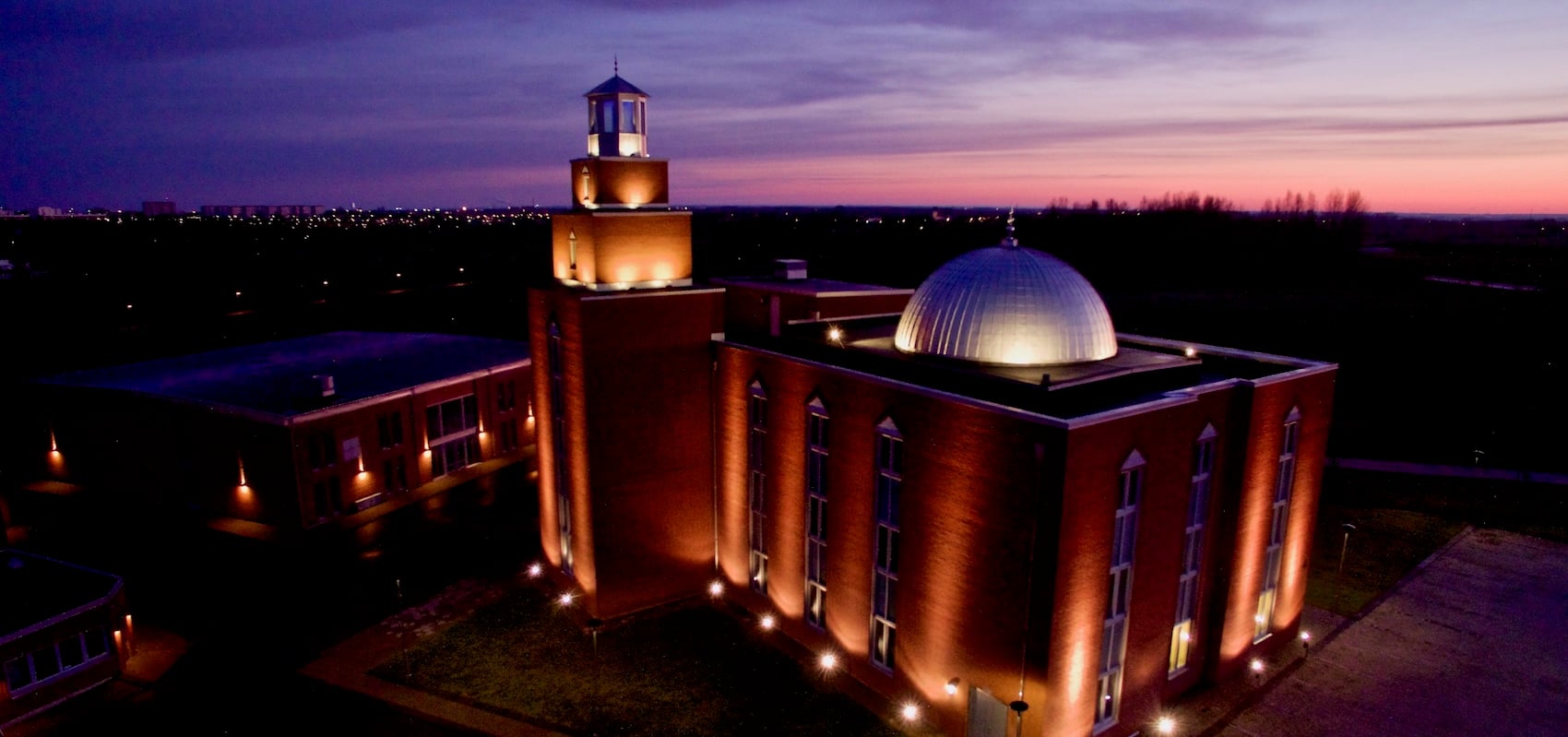
SD’s own party secretary, Mattias Bäckström Johansson, acknowledged after the election that the proposed hijab ban and the push for remigration may have mobilized immigrant voters. Muslim voters responded in the one language Swedish democracy cannot ignore: their votes. Mosques in several Swedish cities began teaching democracy in the run-up to the election. Uppsala’s mosque held a “voting school.” Gothenburg’s deployed election ambassadors and published its own voting guide, with sections on the hijab and religious schools. The Islamic Association in Malmö worked to raise turnout in Rosengård.
In one sense, this was exactly what integration experts had dreamed of for years. But many of these voters are not secular liberals who merely happen to be Muslim. They vote as Muslims, seeking to protect their Islamic way of life.
For Sweden, this marks a new phase. The question is no longer how to stop immigration, but what these Muslim voters want. Other countries offer a hint. A 2015 Danish survey found that 40 percent of Muslims believed Danish law should at least partly be based on the Qur’an, while a British survey found that 23 percent of its participants supported Shari’a law in parts of Britain.
Until now, Swedish parties have competed largely for native-born votes with promises to crack down on immigration. This year, the Social Democrats and the Left Party evidently sensed the sea change and began producing campaign material in Arabic. The Left Party warned that tougher citizenship rules threatened immigrants’ future. In Sörmland, the Social Democrats ran an Arabic campaign highlighting the fight against racism and Islamophobia, as well as easier family reunification in humanitarian cases.
Parties may soon discover that votes can be won by accommodating religious demands over schools, dress, and family life—precisely where traditional Islam collides with secular Swedish norms. No Islamist party is needed. Existing parties simply want to win elections.
In Michel Houellebecq’s dark satire Submission, Islam does not conquer France by force. The establishment gives way to a Muslim movement because it needs the votes and wants to keep its opponents out of power. Islam advances through democracy itself. Democracy bends to demography.
Sweden’s election may be the canary in the coal mine. What happened there can happen in any Western democracy with a large immigrant electorate. The secular liberal democracy many thought untouchable may become a peaceful route to power for a faith that shows little interest in retreating into the private sphere, as proponents of multiculturalism would have hoped.
Sweden has spent half a century defining itself by what it tolerates, and almost never by what it believes. When Christianity retreated into the private sphere, it left a vacuum—and, as the old Aristotelian dictum has it, nature abhors a vacuum. Houellebecq’s France submitted because it believed in nothing. Sweden has until its next election to decide what it believes.
Image by Fateh Shams via Creative Commons. Image cropped.

YOU MIGHT ALSO LIKE
The Last Statesmen?
In the latest installment of the ongoing interview series with contributing editor Mark Bauerlein, Steven B. Smith…
De Gaulle Triumphant
The Second World War left Europe invaded and ruined, divided between Soviet and American occupations. Hitler’s defeat…
New Founders Wanted
It’s now 250 years since America declared her independence and embarked on the experiment of fashioning a…
