

Whitepill:
The Online Right and the Making of Trump’s America
by scott greer
passage, 264 pages, $34.95
There have been many books written about the online right and the Trump movement, most by people who are, to put it mildly, critical of them. This book is different. The term alt-right has been characterized and categorized in various ways over the years. But under even the most stringent definition, Scott Greer was once a part of it, having served as an editor at Radix Journal, an online publication of the infamous white nationalist Richard Spencer. He is well-placed, then, to give the first serious insider account of the phenomenon and its role in the rise of Trump.
Whitepill covers two broad currents. First, Greer tells the story of Trump’s rise, fall, and return from the perspective of his own politics. Second, he narrates the origins and development of the online right, with a particular emphasis on the alt-right.

For the most part, the book’s account of the Trump era follows the standard contours: conservatism’s traditional three-legged stool, the failures of the George W. Bush administration, the ineffectiveness of the GOP against the leftist cultural push of Obama’s second term, Trump’s taboo-breaking 2016 campaign, his chaotic first term, Biden and the COVID pandemic, BLM and wokeness, and Trump’s incredible comeback in 2024.
What’s different in Greer’s account is that he is especially keen to convey the centrality of identity issues to the Trump movement. Many observers have used an economic and social lens to explain Trumpism. They see his appeal lying primarily in material factors such as the disappearance of well-paying blue-collar work, left-behind communities, and the opioid crisis. His voters’ resentment is thus understood as coming from being left behind as a class by successful elites. This is the implicit framing in JD Vance’s Hillbilly Elegy, the work of Chris Arnade and his division of the world into “front row” and “back row” people, and Oren Cass’s American Compass project. It leads to politics that seek to mobilize a “multi-racial working class.”
Greer rejects this framing. He thinks it is a convenient, politically correct fiction, one promoted by people who want to direct Trumpist energy in their own preferred direction. Instead, he argues that the appeal of Trump comes from identity issues: American identity, but also white identity. The primacy of these issues is most evident in opposition to immigration, but they are also manifest in a broader sense of being subjected to an intentional cultural displacement or dispossession.
To an extent, the notion of cultural dispossession is part and parcel of mainstream conservatism. The idea that the left is anti-American has a long conservative pedigree. There are endless exposés about anti-American school curricula, the 1619 Project, and so forth. More than a decade ago, conservatives warned that Barack Obama wanted to “fundamentally transform” the country. It’s a perennial conservative trope to say that the principles of the Founding or the Constitution are at risk. Socialism, it has been said for more than a century, threatens the American way of life.
What Greer does is racialize these claims about betrayal and dispossession, and he does so in a way that is anathema to the traditional conservative movement and GOP. According to him, American identity is tied to white identity, and American culture is predominantly white American culture. Hence, Trump’s popularity comes from his appeal to and representation of white interests—exactly what Trump’s critics on the left allege. The left says Trumpism is about white identity, and that’s bad. Greer agrees it is about white identity, but he thinks that’s good. Pre-Trump conservatism habitually denied that it was an identitarian movement; in its own way, establishment conservatism accommodated multiculturalism under the rubric of America as a “creedal nation.” In an era when—thanks to the left—politics was already increasingly racialized, the Trumpian appeal did not have to be spelled out. Trump, in Greer’s account, allowed white identity to come through implicitly in the way he talked about America, and by his championing of policies like immigration restriction.
Greer’s survey of the online right is informative, but it is so overburdened with names and subcultures, many of them obscure to the average American, that it is hard to summarize both fully and succinctly.
In his telling, the online right’s origins and center come from a group called the alt-right, short for alternative right. The alt-right garners the central position and the most attention in Greer’s account—too much attention, I would argue. The phrase itself is generally attributed to the paleoconservative political scientist Paul Gottfried in a 2008 address, “The Decline and Rise of the Alternative Right.” Gottfried protégé Richard Spencer became the person most associated with it by launching the website AlternativeRight.com.
“By the early 2010s,” Greer writes, the “alt-right” label
had come to encompass a loose constellation of tendencies—paleo-conservatives, race realists, identitarians, neo-reactionaries, and online “shit-posters”—united more than anything by their shared rejection of Con Inc. and the liberal order it upheld.
The alt-right rejected the Enlightenment, often democracy itself, and believed that there were significant biological (genetic) differences between races, not just the sexes. Rather than a reform movement within American conservatism, it effectively rejected much of the American political and cultural tradition in favor of a Continental-inspired right-wing vision, sometimes including actual Nazi elements.
At first, the alt-right was an almost purely online phenomenon, heavily—and, given their views, unsurprisingly—composed of people posting pseudonymously on blogs like Radix Journal and on social media. It was heavily influenced by nontraditional or revisionist understandings of the past, drawing on thinkers like Oswald Spengler and Julius Evola, or the European Nouvelle Droite. Some of its participants were white nationalists or at least sympathetic to them. They advocated an eclectic variety of futures, from neo-monarchy to Norse paganism. The alt-right was a mixture of highbrow argument with lowbrow memes, heavily transgressive, and humorous to many of the younger generation.
The coming of Donald Trump energized the alt-right and led to the emergence of a new, larger group called the “alt-lite,” pro-Trump MAGA influencers who were not motivated by the more extreme alt-right ideologies—they were not neo-Nazis, nor did they support white nationalism—but imitated its transgressive style. Greer includes figures like Jack Posobiec, Lauren Southern, Alex Jones, Ann Coulter, Steve Bannon, and Gavin McInnes (along with McInnes’s Proud Boys organization) as part of the alt-lite. Conspiracy theories like PizzaGate came out of this world.
The alt-right imploded after it attempted to turn its online community into a real-world political force, believing that the public was ready for white nationalism. Two events embody this failed attempt. The first was a conference held two weeks after Trump’s first election by Richard Spencer’s “think tank,” the National Policy Institute. Spencer led a toast—“Hail, Trump! Hail, Our People! Hail, Victory!”—to which many of his supporters responded with Roman (Nazi) salutes. The second was the August 2017 Charlottesville rally and tiki torch march, during which marchers chanted, “Jews will not replace us.”
Greer was not involved in either event, though he did end up doxxed and canceled for being a former editor at a Spencer-run site. But in his telling, the destruction of the alt-right was ultimately a blessing in disguise: It allowed identitarian issues to enter the GOP mainstream shorn of Nazi or white nationalist associations. The alt-lite carried forward some of the central alt-right concerns about identity. Tucker Carlson’s show on Fox News took them and made them mainstream. Greer also notes the significance of Christopher Caldwell’s book The Age of Entitlement, which presented civil rights law as a rival constitution for the country. After 2016, questioning America’s civil rights regime and mentioning that DEI is explicitly anti-white were no longer taboo.
With the alt-right in eclipse, a new wave of “dissident right” influencers emerged, notably Bronze Age Pervert (BAP) and Nick Fuentes. The neo-pagan, Nietzschean BAP had a wide following among young Trumpian right-wingers. His book Bronze Age Mindset was discussed in the pages of establishment publications like the Claremont Review of Books and First Things.
Nick Fuentes is a charismatic Gen-Z influencer known for his anti-Semitic views and Holocaust denial; he has amassed a large fan club known as the “groypers,” a reference to a green frog meme character. Fuentes’s so-called “Groyper War” campaign against Charlie Kirk may have been one of the factors that pushed Kirk, originally a standard libertarian-inflected, young Republican type, rightward into Trumpism. (Kirk himself, it should be said, might well have denied this influence).
These new influencers survived a heavy censorship campaign due to the rise of alternative social media platforms like Rumble (a rival to YouTube). They also benefited from Elon Musk’s decision to buy Twitter and reverse its censorship policies. Simultaneously, the public tired of wokeness. The collapse of Bud Light’s sales after a disastrous marketing campaign involving a transgender influencer signaled to corporate America that it was time to dial back on its support of wokeness. With Trump’s victory in 2024, the floodgates opened. Now GOP candidates are lining up to support Trumpist themes, even if some of them are kooks like Lauren Boebert, Valentina Gomez, Royce White, and James Fishback. (Greer describes this segment of the GOP as the “insane clown party.”)
In internet slang, a “whitepill”—an allusion to the “red pill” scene in The Matrix—is a reason to be optimistic. The whitepill in Greer’s book title expresses his conviction that, whatever the struggles of the Trump movement today, Trumpism, including identity issues, is now firmly ensconced inside the GOP.
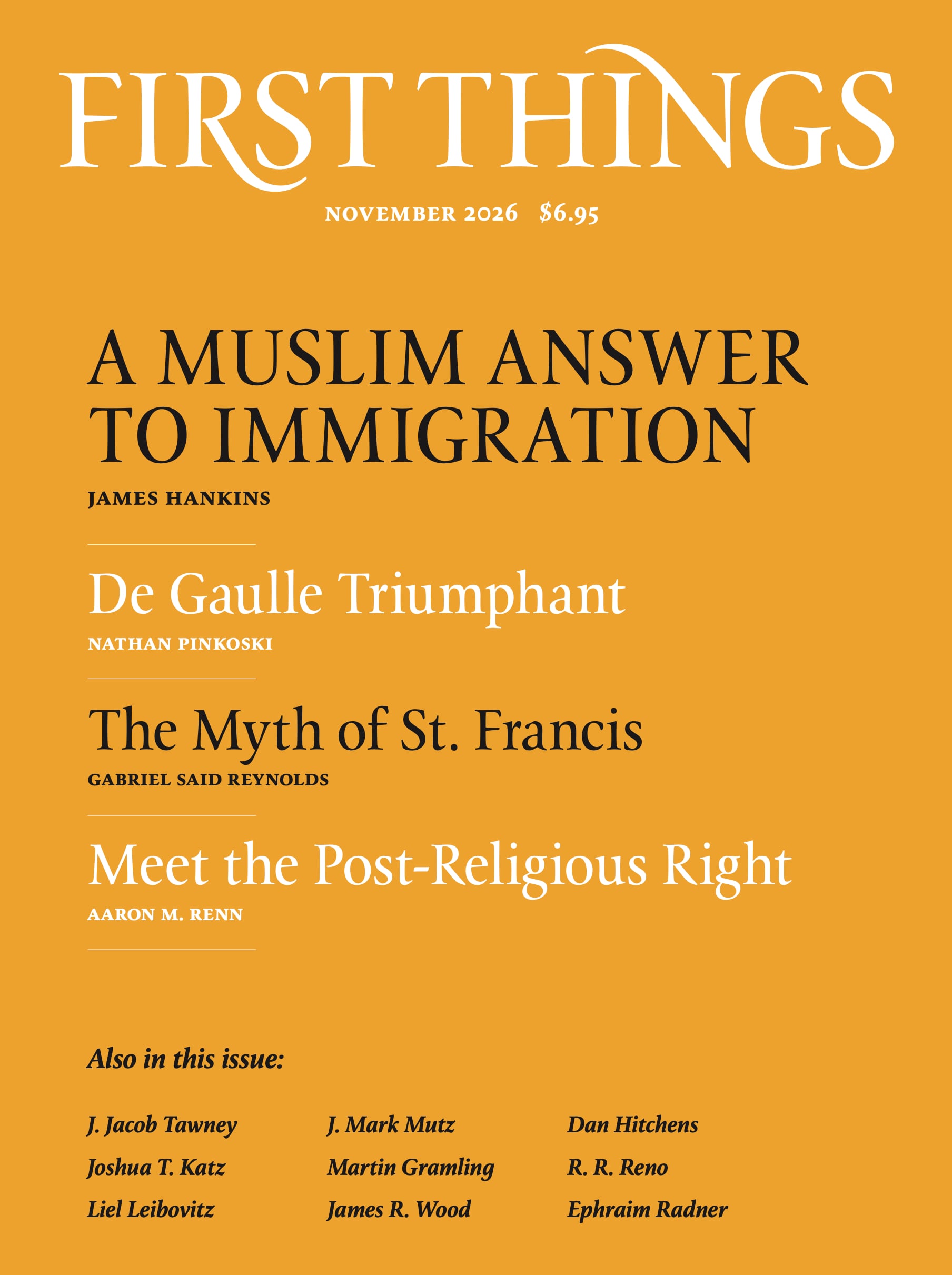
Reading Whitepill reminded me of Ross Douthat’s quip: “If you dislike the religious right, wait till you meet the post-religious right.” The people involved in the online right are overwhelmingly secular, with a few exceptions like the Catholic Nick Fuentes. Some of them, like BAP, are explicitly anti-Christian. Alt-right intellectual influences coming from the Nouvelle Droite are often explicitly anti-Christian as well. The few Christians who were part of the broader alt-right ecosystem—Greer labels them “trads”—tended to be very traditionalist Catholics or Eastern Orthodox who were far outside the mainstream of American Christianity.
Greer was raised in suburban Nashville and is intimately familiar with evangelical culture, but he appears to be irreligious. He has no interest in traditional social conservative moral issues such as abortion or marriage—and neither do most others on the online right. Their emphasis falls on culturally conservative issues, above all immigration. In Greer’s account, social conservatives (of the sort represented by First Things) are like neoconservatives: just another legacy faction in Con, Inc.
The alt-right and broader online right colonized the cultural space left behind by the retreat of Christianity in America, space the left had assumed was now theirs alone. Trump himself is a manifestation of the same phenomenon of Christianity’s receding influence, someone who could only have gotten elected in what I have called the Negative World.
Many Trumpist ideas are old American ones, long supported by Christians operating within the American cultural and political tradition. Eugene McCarthy, the Democratic politician who almost became a Benedictine monk, originally cosponsored the 1965 Immigration Act before turning against immigration later in life, saying it made America “a colony of the world.” Pat Buchanan and Ross Perot were serious Christians, as were many others who opposed immigration, free trade, and wars abroad. Their suppression by the Republican establishment ensured that those issues would re-emerge in a post-Christian America and be advanced by people with non-Christian ideas about identity, many of whom reject American political and cultural traditions.
Greer narrowly defines white nationalism as a phenomenon that is focused on a separatist white ethno-state, which he sees as something that can never succeed. He says he was a white nationalist at one point, but has since changed. He now calls himself a “right-winger” or a “conservative,” one focused on the identity issues of “curtailing immigration and antiwhite racism” that he believes are central to the Trump movement. (He has not, however, explicitly said he personally believes white nationalism is morally wrong.)
However, neither identitarianism, nor the alt-right specifically, should be taken to define the phenomenon of the online right. Greer gives only a brief treatment to the neo-reactionaries, a collection of maverick thinkers from the Bay Area “rationalist” milieu—such as Curtis Yarvin, who started his Mencius Moldbug blog in 2007 before the term “alt-right” was in use. Yet figures like Yarvin and Nick Land (who developed the influential idea of “accelerationism”) have had a significant impact, especially as Silicon Valley has moved right.
Greer also gives little attention to the manosphere, which was arguably the most important founding population of the online right. The manosphere was a collection of blogs and forums that grew out of the seduction (pickup artist) community about the same time as the alt-right and neo-reaction. This group was politicized as a result of controversy called Gamergate, an episode too baroque to explain here. The Gamergaters were largely male video gamers who didn’t appreciate feminists and left-wing journalists trying to mess with their subculture. Early progenitors of what Greer calls “FanDuel Americans,” they aren’t really conservatives in any conventional sense; they simply want leftist scolds to leave them alone to enjoy their sports, pot, porn, and video games. This manosphere-Gamergater-influenced ethos underlies a huge ecosystem of podcasters and influencers, and it is the dominant component of the online right and beyond.
The manosphere and related groups—which are notably racially diverse—don’t care much about the identity issues that matter to Greer. And while Trump himself was still primarily supported by white people, he has many non-white supporters as well.
Most Americans don’t have an explicitly race-linked conception of American identity. They care about “whiteness” only inasmuch as they are made to care by the left’s racialist politics. Greer’s own concept of FanDuel Americans—echoing the earlier internet meme about “grill Americans,” those who just want to be left alone to grill in the backyard in peace—explains the average Trump follower much more than alt-right identitarianism does.
Undoubtedly, concerns about belonging and group identity are part of what animates Trump’s supporters. But there’s no reason to believe these animating issues are fundamentally different from the ordinary concerns shared by basically every group. Low-income minorities in urban neighborhoods certainly don’t welcome demographic or cultural change where they live; hence the loud complaints about “gentrification.” Similarly, NIMBYism is a far more uniting cause than any kind of racial identity politics. Preserving familiar environments and sustaining shared ways of life are perennial concerns.
What makes Trump’s supporters care about race specifically is that they’ve been made to care—by a relentlessly racialized politics which originated on the left and has been enthusiastically embraced by America’s institutions. If that aggressive and divisive ideological project disappeared tomorrow, white identitarian politics on the right would as well. Since that doesn’t seem likely to happen, we should expect some level of racialized politics to persist on the right.
American identity has always been flexible and capacious. It has already undergone significant redefinitions. Perhaps the most important was the twentieth-century shift from a specifically Anglo-Protestant account of America to a generic Judeo-Christian and pan-European one, an enlargement necessitated by demographic changes brought by the large wave of immigration in the late nineteenth and early twentieth centuries. In light of a second wave of mass immigration that will not be reversed, a similarly revised and renewed account of American identity is needed. Rather than a morally dubious white identitiarianism, the most workable long-run solution to overcoming the left’s racialized politics is an expanded concept of American identity. For now, admittedly, the outlines of that identity remain obscure—in large part because the same racialized politics denounces as “racist” even the most tentative efforts to do so.
However it is framed, a plausible and effective consensus about American identity must lead immigrants to see themselves as part of America’s history and culture. And as with the earlier redefinition, it can only succeed if immigration, illegal and legal, is drastically reduced. We cannot reconsolidate around a new consensus if we’re buffeted by a relentless flow of newcomers. Unfortunately, this approach would please few today. But our history shows that it’s the time-tested, all-American solution to demographic change.

YOU MIGHT ALSO LIKE
De Gaulle Triumphant
The Second World War left Europe invaded and ruined, divided between Soviet and American occupations. Hitler’s defeat…
Letters—November 2026
We welcome letters to the editor. Letters appear two issues after the article to which they are…
No Place Like Home
Who is our Odysseus? Or more precisely, who is the most Odyssean hero of American film? Matt…
