
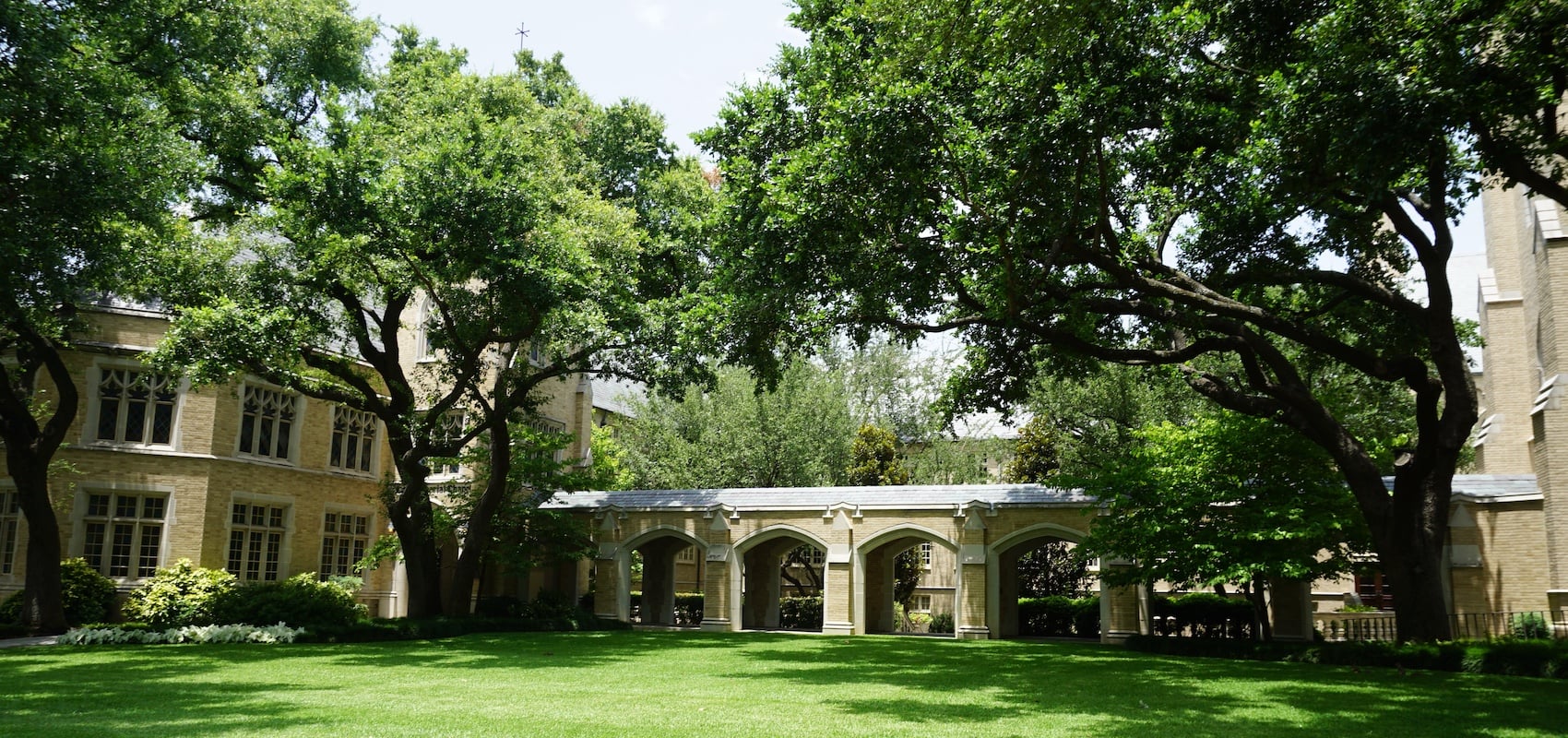
The dispute between Highland Park Methodist Church (HPMC) and the Horizon Texas Conference of the United Methodist Church (UMC) has entered the national conversation. Ruth Graham covered the story for the New York Times, while Ryan Burge suggested it “may be the juiciest one in religion in a very long time.”
The recent ruptures in the UMC, in which more than 7,000 congregations left the denomination between 2019 and 2023 amid a long-running split over authority and LGBTQ inclusion, catapulted the story into the spotlight. While this dispute may look theological, it’s really about ecclesiastical authority. It is another chapter in the new Protestant world of the megachurch, which increasingly claims spiritual authority of its own.
HPMC’s church council changed the church’s bylaws in November 2022, removing references to the Book of Discipline (the UMC’s book of church law) and altering the church’s legal name to Highland Park Methodist Church, while still doing business publicly as Highland Park United Methodist Church. After months of behind-the-scenes conversations, Ruben Saenz Jr., bishop of the Horizon Texas Conference, the UMC’s regional governing body for North Texas, filed a lawsuit in August to compel HPMC to reverse the changes because they were out of compliance with UMC law.
The church council filed a response in court at the end of September. In mid-October, it called for a congregational vote on a resolution to sever all ties to the UMC. More than 90 percent of the roughly 4,800 members who voted supported leaving. Saenz declared the vote invalid under church law and tried to remove senior pastor Matt Tuggle and his predecessor, Paul Rasmussen, from their posts. But HPMC said the bishop’s decision changed nothing.
For bishops overseeing large congregations, this conflict is a cautionary tale. Saenz took office in January 2023 under trying circumstances, after hundreds of churches in the region had left the denomination. He was tasked with uniting three conferences (North Texas, Central Texas, and Northwest Texas) into a new conference. Of the 748 congregations in the three conferences, almost half had disaffiliated. The Northwest Texas Conference in the Panhandle in particular was decimated, with over 80 percent of its churches leaving. Millions of dollars in lost financial contributions crippled the former conferences. Saenz guided the three into the new Horizon Texas Conference, which launched in January 2025.
The HPMC church council voted to change the bylaws just before Saenz took over, while Paul Rasmussen was senior pastor. It was a shrewd move. Mike McKee, the outgoing bishop of the North Texas Conference, to which HPMC belonged, had governed forcefully, and fewer churches left the conference as a result. McKee was also the brother-in-law of Mark Craig, HPMC’s senior pastor from 1995 to 2013. Craig was close to the Bush family and had preached at George W. Bush’s 1999 gubernatorial inauguration. As long as McKee remained in the bishopric, Rasmussen was likely limited in what he could do.
While HPMC took a centrist position during the ruptures over LGBTQ inclusion, choosing to remain United Methodist but not allowing same-sex ceremonies to be performed, the church council moved to protect its independence. It looked to a 2020 Texas Supreme Court decision, Episcopal Diocese of Fort Worth v. The Episcopal Church. That ruling let a breakaway diocese keep its property, in part because the diocese had amended its canons to revoke the “trust clause,” the provision holding local property in trust for the national denomination. After the U.S. Supreme Court declined to hear an appeal in 2021, the lesson was clear: A church that separated its legal identity from its denominational one could protect its property and autonomy.
As often happens in these conflicts, the new bishop underestimated the power of a megachurch. Matt Tuggle, who became senior pastor at the beginning of 2026, had served on staff under Rasmussen. The fact that HPMC did not look beyond its own ministers for Rasmussen’s successor revealed its power.
Not doing his homework, Bishop Saenz stopped dialoguing and started litigating. I have seen bishops make this mistake before when dealing with large congregations. They act like it’s the mid-twentieth century, when Protestant denominations were strong and episcopal authority was absolute, rather than recognizing the postdenominational world of the twenty-first century.
Saenz accused the congregation of not following established United Methodist guidelines, which require a church conference (in UMC parlance a “charge conference”) of voting members before changes to bylaws. HPMC countered that in 1998, the charge conference voted to empower the church council to make decisions. HPMC also incorporated that year as a Texas nonprofit with the blessing of the bishop and full knowledge of all UMC constituencies. It didn’t hurt that this was when Mark Craig had political connections to powerful Methodists.
Saenz’s next move was to declare that HPMC had concealed the bylaw changes. In their counterclaim to the court, HPMC lawyers set out evidence showing that all of the relevant UMC institutions had been informed.
This will not end well for Bishop Saenz. Despite the UMC’s trust clause, HPMC will most likely retain its property; its lawyers have placed the dispute under the neutral principles of Texas law rather than ecclesiastical law. As a nonprofit, HPMC already governed itself like an independent congregation, and Saenz’s rashness has most likely ensured that it becomes just that. If so, the floodgates could reopen in Texas, as more congregations elect to leave by changing their bylaws and establishing legal independence.
Image by Michael Barera via Creative Commons. Image cropped.

YOU MIGHT ALSO LIKE
Today’s Global Witness of Christian Martyrs
Within just one week, two massacres of Christians took place that went almost unnoticed. In Jordan, nine…
Does Evangelicalism Exist?
The controversial publication, withdrawal, and then republication by Christianity Today of an article suggesting Elisabeth Elliot was…
The Myth of St. Francis
At the beginning of his 2020 encyclical, Fratelli Tutti, Pope Francis speaks of “an episode in the…
