
During marriage prep, my wife and I had to take the “Five Love Languages” test, a pseudoscientific test through which people “discover” how they prefer to receive affection. The results were not very useful, and it seemed to me a lazy attempt to optimize the process of getting to know your spouse. The same can be said of getting to know someone through media. Nathan Fielder and Lance Oppenheim’s new documentary You Can See Everything shows that no amount of footage can do the work of knowing a person.
Elizabeth Holmes was convicted of fraud in 2022, having falsely claimed that her health technology company, Theranos, had developed a device that could run hundreds of accurate blood tests from one finger prick. Holmes and her fiancé, Billy Evans, invited Fielder and Oppenheim to document her final month before she began her eleven-year prison sentence, believing that it would allow people to get to know “the real Liz.”
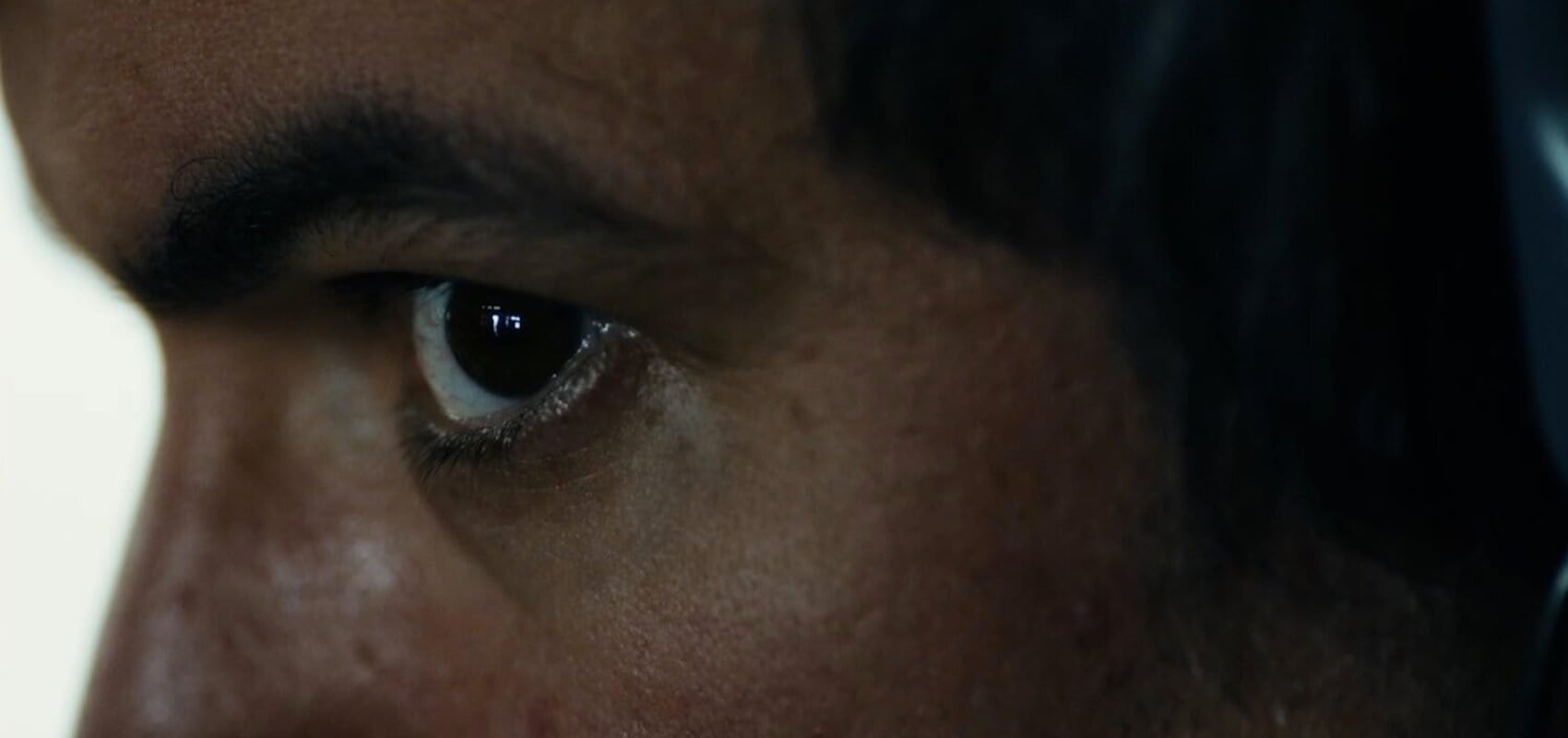
The Theranos scandal happened more than a decade ago; I couldn’t muster any interest in it then, and I certainly can’t do so now. Holmes herself is another matter. True to its title, the film shows Holmes breastfeeding, cooking, exercising, and everything in between. All barriers to the family’s private life are torn down; Fielder lies on the couple’s bed and swims with Holmes in the ocean, and at one point we see Evans completely naked. The film is also shot with extreme close-ups, so not a single micro-expression goes unnoticed. Few public figures who have given documentarians access to their private lives have committed to it as much as Holmes has.
The Elizabeth Holmes of You Can See Everything isn’t the one we’ve seen before, whether in glowing Forbes and New Yorker profiles, damning press coverage, or Amanda Seyfried’s portrayal in the hit Hulu miniseries The Dropout. She is seemingly—in spite of some attempts by the film to focus on her wackiness—a quite normal mother and wife. Is this “the real Liz,” however? Fielder isn’t convinced, and the film spends the next two directionless hours attempting to decipher Holmes as one would a puzzle. He tries to give her a lesson in truth-telling, but she insists, more than once, that she has never lied in her life.
In some scenes, Holmes seems unable to understand—let alone acknowledge—that she could have done something morally reproachable. What good is it to teach ethics in a world that discourages people from ever viewing themselves as evil? Thankfully, our legal system punishes people who break the law, regardless of their self-perception.
A large portion of the movie is dedicated to figuring out whether Evans is manipulating Holmes for his personal gain. Fielder suspects that he is, and at one point—to my theater audience’s horror—Evans claims that Holmes’s entire life’s purpose is to build “monuments of love” for him. This is taken as evidence that Evans is a manipulative and controlling fiancé.
Rave reviews and sold-out theaters reveal that critics and audiences are interested in Holmes’s interior life. Did she know what she was doing when she defrauded investors? Does she repent of her actions? Is she manipulating Fielder and the film’s audience to garner sympathy? After three hours, those who came seeking answers are left with an unsatisfying “Who knows?”
Fielder and Oppenheim seem to be aware of the futility of the film’s endeavor. In our impatient age, we want to understand people’s interior lives with the same ease, and through the same media, with which we communicate: film, short-form video, text, audio. At most, we hand people a personality quiz and call it knowing them. Reality works differently. First comes love, and then comes understanding, because only through love can we invest the time and effort that are required to truly know another. A camera can show us everything except what love sees. In a final subversion of audience expectations, Holmes admits to Fielder that her life’s purpose is indeed building “monuments of love” for Evans.
Perhaps the only people who know the real Elizabeth Holmes are the ones who love her.

YOU MIGHT ALSO LIKE
After Disenchantment
What does the phrase “disenchantment of the world” mean? Disenchantment is easy to identify and even easier…
Form vs. Monsters
The nature and aims of Catholic fiction have been a matter of debate for generations now. What…
Seeking God, Finding the Devil
On the wedding night of his second marriage, August Strindberg (1849–1912), the Swedish writer, painter, polymath, and…
