
In the future, everyone will know the grief of Garry Kasparov. The Russian grandmaster was bested by the chess-playing computer Deep Blue in 1997. No human competitor since then has made a plausible run at taking the title back.
In the past, when computers mastered a specific domain of human excellence, the response was often to think less of that domain, rather than to think less of ourselves. That pattern is less likely to hold when the breakthroughs come so quickly, in so many different domains, that it’s hard to keep track. AlphaGo besting the premier living Go player was worldwide news in 2016. An OpenAI system solving an open Erdős problem in 2026 was not. AI succeeding where almost all humans would fail has become a “dog bites man” story.
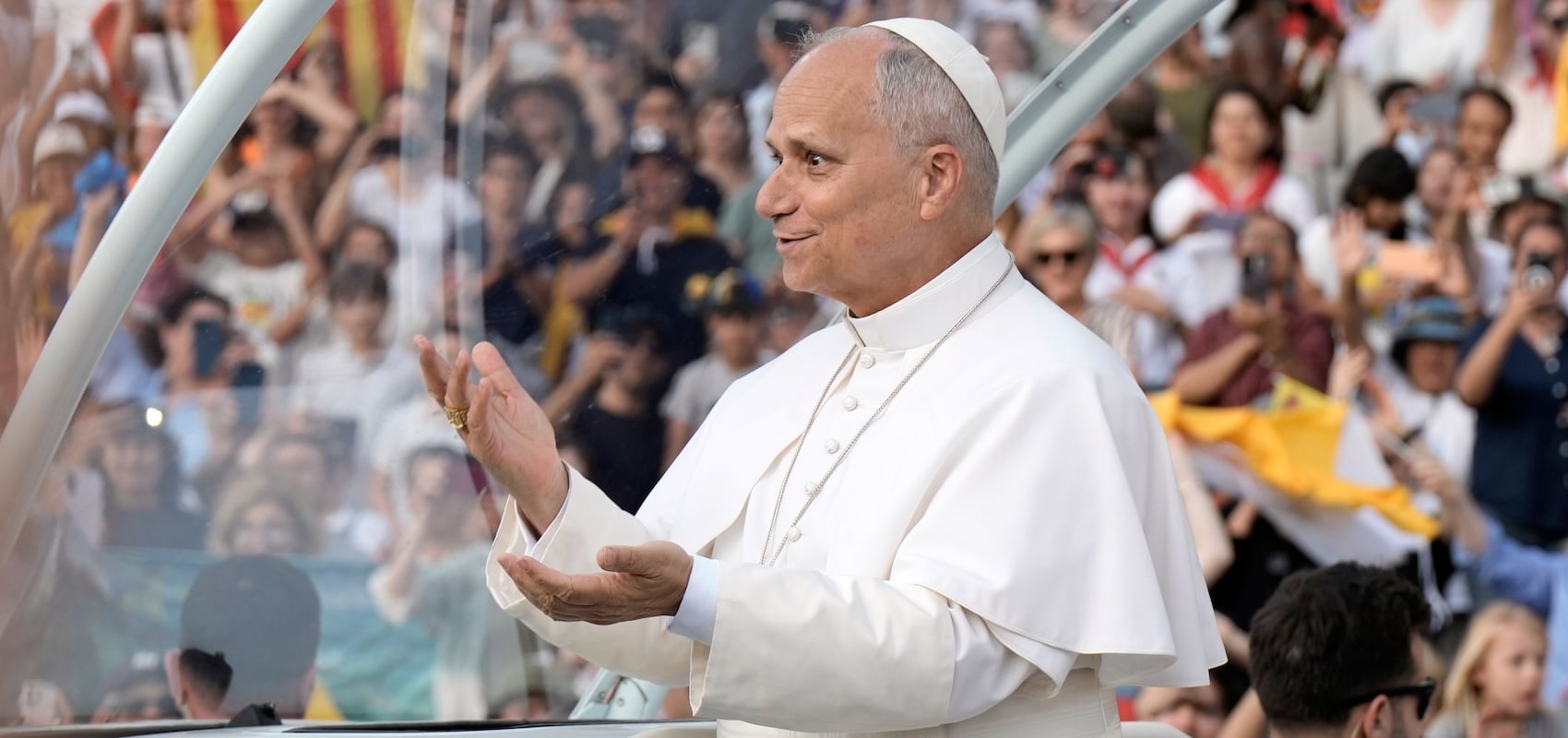
Pope Leo XIV’s encyclical Magnifica Humanitas has something to say to a world of Kasparovs. In the last days before the document was released, the pope met participants in the international conference “Preserving Human Voices and Faces” and told them, “the challenge we currently face is not technological, but anthropological.” Threaded through the encyclical’s consideration of the possibility of machine consciousness and the use of autonomous weapons are strong claims about what makes it good to be human. Twenty years from now, Magnifica Humanitas may be remembered as much as a pro-life encyclical as an AI one.
After all, the Church has been defending the worth of people who seemed superfluous for a long time. The child in the womb and the elderly person slipping into debility are two kinds of human beings that a growing number of countries believe it is licit to kill. The case against them is made by appealing to their lack of capacity. They cannot support themselves, feed themselves, speak for themselves. They cannot, at present, recompense their caregivers. They live on the losing side of a profound asymmetry.
In Magnifica Humanitas, Pope Leo singles out as “particularly insidious” the ideology that “suggests that every person must earn or justify his or her own worth.” This view—where the human person is born in debt, and eventually buys him or herself free—obviously puts the very young and the very old in danger. But now it imperils many others who fear they will not be able to justify their lives if their labor can be done more cheaply and speedily by AI.
The encyclical has advice about how to apply the principles of Catholic social teaching to blunt the economic turbulence anticipated over the next ten years, but it has much more to say about why people cannot be treated as interchangeable parts, easy to throw away. Most importantly, the Church sees human dignity as springing from our being, not our doing. As Pope Leo writes: “The dignity of every human being can be described as infinite . . . for two reasons: first, because the love of God, who calls us to friendship with him, is infinite; and second, his love is absolutely unconditional, in the sense that, even if we search endlessly, we will never find anything that can erase or deny it.”
In our earthly lives, we are strongly differentiated from each other by our particular capacities and talents. Some people develop into arresting vocalists; some people must communicate despite being unable to speak. Each of us is charged to be a good steward of what talents or crosses God has placed in our hands. But, in the heavenly economy, we are all clustered together as peers, all of us unable to win by our own efforts what we most desperately need.
In the economy of salvation, no one is able to buy himself out of debt. We are saved not by our own efforts but by accepting Christ’s gift of himself. We live on the lower side of an asymmetry that we cannot bridge by our own efforts. As Pope Leo writes, “an infinite disparity separates our finite nature from the life of God.” Our limits cast his love into sharp relief. Because God reaches across the gap to raise us to himself, “there is no moment or human situation that is not worthy of God.” Our finitude is not a cause for sorrow, but a reminder of our relationship with God who makes us sharers in his infinity.
The coming years will sharply remind everyone of their finitude, of the fragility of an identity grounded in our doing. For those who do not know God, what alternatives will be open to them? What other avenues are there to find an identity in our being, not our doing? If you set God aside, there are still parts of our identities that are received as a gift, not won as a prize. They are the marks of particularity—being born as a man or a woman, into a particular nation, as a member of a particular race. However, when these markers are the seat of someone’s self-worth, they lead to rivalry and attempts to establish hierarchy. As AI capacities surge, I would expect to see more of these fragmented identities attract populist energies. They offer a possible answer to the question of the coming years: “What gives you worth, if not what you can do?”
It is the Christian’s task to “always be ready to give an explanation to anyone who asks you for a reason for your hope” (1 Pet. 3:15). We must be prepared to convince the transhumanist that, as Pope Leo puts it, “building for the common good means accepting the limits and weakness of humanity without considering them an error to be corrected.” We can long to develop our talents and serve our neighbor, but we will not establish our worth by just adding new capacities. We must turn the identitarian outward, inviting him or her to “[intuit] a fraternity greater than ourselves” and a source of being that does not depend on exclusion. Most of all, we must offer counsel against despair, so that those who lose hold of their “doing” identity do not throw themselves away, exiling themselves into the category of “non-person humans” to which the unborn and elderly have already been unjustly condemned.
When our limits make it feel like the ground is giving way beneath us, these moments of danger are also, as Pope Leo puts it, “moments that we can discover a new wisdom.” Christian witness will look like offering a friendly hand for the leap to firmer ground.
AP Photo/Bernat Armangue
Dear Reader,
Can I be direct with you?
War abroad. Socialists on the rise. AI upending human life. Endless uproar online. The modern attention economy doesn’t want readers — it wants users enslaved to the tyranny of the present.
First Things is the antidote: literary excellence, timeless truths, and a fixed point of reference in a culture that has lost its bearings.
But we can’t do it without readers like you.
Our goal: Raise $150,000 by November 1 to sustain First Things in the year ahead.
Your gift anchors readers in the permanent things.
Make your Fall Campaign gift now using the button below.
If you have any questions or would like more information, please contact Giovanni Del Piero, Director of the Editor’s Circle, at gdelpiero@firstthings.com or 212-627-1985.

YOU MIGHT ALSO LIKE
Why the Death Penalty Is a Sore Point for Papal Authority
Pope Leo XIV marked World Day Against the Death Penalty, observed on October 10, with the following…
Candace Owens and the Sin of Anti-Semitism
According to the online Encyclopedia Britannica, Sir Moses Montefiore (1784–1885) was “an Italian-born businessman who was noted…
The Myth of St. Francis
At the beginning of his 2020 encyclical, Fratelli Tutti, Pope Francis speaks of “an episode in the…
