
Like models in a fashion show, gaudy but unfulfilling icons of femininity parade before the women of my generation: the tradwife influencer marketing herself and her nutrition products through clips of her babies and palatial farmhouse; the sleek, sequined singer broadcasting her emotions while attaining fame and physical perfection; the girlboss attesting that even the most manicured woman can and should achieve anything she sets her mind to.
Alternatives to modern icons of femininity abound. When I read Willa Cather’s My Ántonia as a teenager, I encountered one such alternative. Ántonia, along with many of the other prairie women of Cather’s novels, represents a feminine spirit at once vivacious and fruitful. Cather likens Ántonia, a Bohemian immigrant who settles in Nebraska with her family, to her employer Mrs. Harling, a mirthful homemaker in the novel’s prairie town, Black Hawk:
They had strong, independent natures, both of them. They knew what they liked, and were not always trying to imitate other people. They loved children and animals and music, and rough play and digging in the earth. They liked to prepare rich, hearty food and to see people eat it; to make up soft white beds and to see youngsters asleep in them. They ridiculed conceited people and were quick to help unfortunate ones. Deep down in each of them there was a kind of hearty joviality, a relish of life, not over-delicate, but very invigorating.
Likewise, Cather writes of her musical heroine in Lucy Gayheart: “Life seemed to lie very near the surface in her. She had that singular brightness of young beauty: flower gardens have it for the first few hours after sunrise.” In The Song of the Lark, singer Thea Kronborg’s pure, youthful ardor defines her. The strong-willed Alexandra Bergson of O Pioneers! successfully manages her family’s farm, delighting in “the joyous germination in the soil” even while cherishing a recurrent vision of “being lifted and carried lightly by some one very strong . . . the mightiest of all lovers”—a vision fulfilled, finally, in her marriage. Even in Cather’s Death Comes for the Archbishop, the radiant Doña Isabella makes an oasis out of a “rambling” building and takes joy in giving joy to her guests.
Because Cather never married, lived with her friend Edith Lewis for forty years, and relished several close female friendships, modern scholars claim her as a queer writer. But none of her work bears out this reading. Instead, her Christian faith and nostalgic, agrarian brand of conservatism shine forth.
Undoubtedly, Cather’s rich female characters reveal her close attention to the feminine. But it is a vision of the feminine that is decidedly “heteronormative” and even biblical: Her prairie women echo the book of Proverbs, wherein Wisdom is portrayed as a generous woman who presides over a feast, and the ideal woman is praised for her fruitfulness in every sphere of life.
Cather’s prairie woman, unlike the influencer or celebrity, is not performative. Her admirers fall into place not because she broadcasts herself but simply because they witness her character and excellence. The prairie woman is industrious—not, like the girlboss, for gain in the corporate world. Often, the main locus of her work is the home, but sometimes in Cather’s stories it is artistic endeavor. The prairie woman creates beauty and warmth around her. She complements the men of the “Old West” as Cather describes them in A Lost Lady: “great-hearted adventurers who were unpractical to the point of magnificence.” Magnanimity in its literal sense—greatness of spirit—marks her.
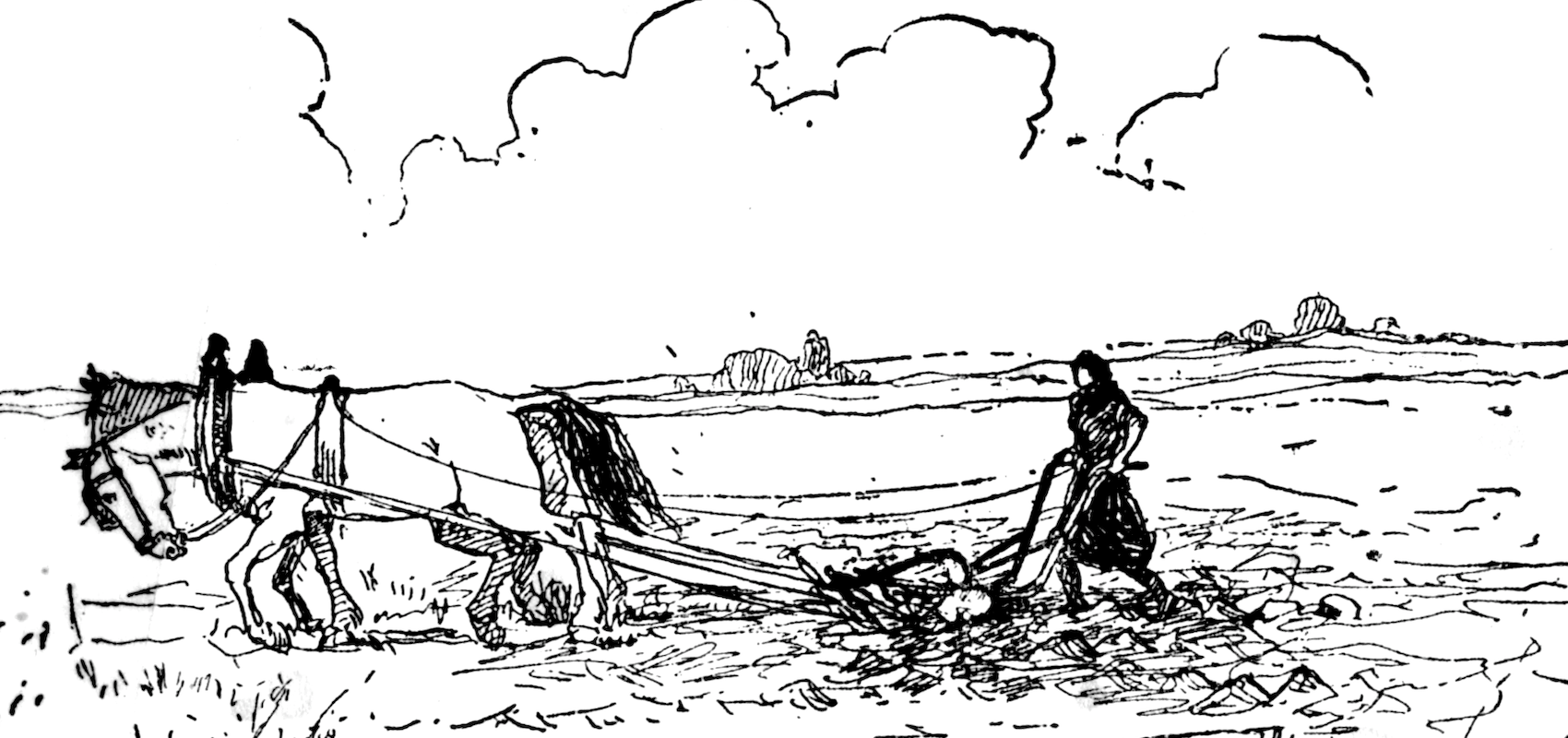
At first, Cather’s Ántonia is hardly magnanimous. Rather, she’s an eager girl: eager to learn English from and to adventure alongside her neighbor, Jim Burden, Cather’s narrator. As Ántonia and Jim grow up on the prairie, hardships, including her father’s suicide, continually afflict her family and shape her into the kind of woman who gladly gives herself away. Of Ántonia and her peers, Jim reflects: “The older girls, who helped to break up the wild sod, learned so much from life, from poverty, from their mothers and grandmothers.”
Jim eventually follows a certain version of the American dream, leaving the prairie to study law and losing touch with Ántonia, who seems to have temporarily ruined her reputation through an ill-fated relationship. Jim himself marries a woman not unlike the modern girlboss: a bold and distinguished New Yorker who throws herself into causes such as women’s suffrage and yet is reportedly “unimpressionable and temperamentally incapable of enthusiasm.” They have no children.
Twenty years pass before Jim visits Nebraska to find Ántonia remarried, missing her youthful charm and many of her teeth. And yet, she is prospering. Eleven children, whom Jim describes as a “veritable explosion of life,” tumble about on her family farm; they and her peaceful orchard illustrate a feminine spirit and a version of the American dream wholly unlike the one Jim has pursued:
She lent herself to immemorial human attitudes which we recognize by instinct as universal and true. I had not been mistaken. She was a battered woman now, not a lovely girl; but she still had that something which fires the imagination, could still stop one’s breath for a moment by a look or gesture that somehow revealed the meaning in common things. She had only to stand in the orchard, to put her hand on a little crab tree and look up at the apples, to make you feel the goodness of planting and tending and harvesting at last. All the strong things of her heart came out in her body, that had been so tireless in serving generous emotions.
How is this ennobling beauty formed? Through hardship, willing work at mundane tasks, and devotion to one’s foremothers and the common things of embodied, earthly life—or, as Thea puts it in The Song of the Lark, “the old things.”
Dear Reader,
Can I be direct with you?
War abroad. Socialists on the rise. AI upending human life. Endless uproar online. The modern attention economy doesn’t want readers — it wants users enslaved to the tyranny of the present.
First Things is the antidote: literary excellence, timeless truths, and a fixed point of reference in a culture that has lost its bearings.
But we can’t do it without readers like you.
Our goal: Raise $150,000 by November 1 to sustain First Things in the year ahead.
Your gift anchors readers in the permanent things.
Make your Fall Campaign gift now using the button below.
If you have any questions or would like more information, please contact Giovanni Del Piero, Director of the Editor’s Circle, at gdelpiero@firstthings.com or 212-627-1985.

YOU MIGHT ALSO LIKE
Foucault’s Idol of Nothingness
Today marks the 100th anniversary of the birth of Michel Foucault. He was influential in his lifetime,…
Meet the Post-Religious Right
There have been many books written about the online right and the Trump movement, most by people…
The Last Statesmen?
In the latest installment of the ongoing interview series with contributing editor Mark Bauerlein, Steven B. Smith…
