
Might Could
by anna lena phillips bell
waywiser books, 88 pages, $19
Might could” is a Southern expression meaning “maybe I could” or “I might be able to,” conveying tentative possibility in a way neither verb alone could. The title of Anna Lena Phillips Bell’s latest collection, winner of the twentieth Anthony Hecht Poetry Prize, tells the reader that this is a book of nuanced uncertainty and doubtful optimism.
In the title poem, Phillips Bell introduces this uncertainty with unconventional syntax, creating an echo, a bouncing back and forth of thought that never quite lands on an answer. But this convoluted word order mirrors the difficult way we come to understand difficult things: “What flowers do so well / we struggle to.” We read the first line and expect to be told what flowers do. Instead, in the second line, “we” becomes the subject. Echo-like, we are returned to the first line to find out—struggling for what? Reproduction, we find out, expressed in flowing list-like consonance, alliteration, and alternating trochees and iambs:
stamen, pistil, petal—
white-ruffled, yellow, wilder—
with style and stigma,
anther, answer
new to new to new.
The “we” interrupts the flowers again with that same awkward syntax, turning back on itself, looking for its verb: “Mostly they do / require, as we do, aid.” The reader must look backward to understand that the speakers require help in conceiving a child. The lines straighten out again for the flowers’ efficient pollination process, using rhyme, sharp t’s, and mellifluous l’s: “they orchestrate / the shift, the yellow freight / of pollen to and fro.” Finally, the couple learns from the flowers. They have their own lines: “We gather / ourselves, again.” They move forward, though with an echo of weariness, of going back, in that “again.” In a poem about an uncertain outcome, “Might Could” signals only the faintest of hope.
Phillips Bell intersperses “Bref Doubles for a Late Conception,” a crown of seven poems, throughout the collection. They mirror and circle each other, heightening this sense of possible possibility. The bref double is a French form, which comprises fourteen partially rhymed lines, similar to a sonnet. Each poem starts with the last line of the previous one, and the last line of the seventh poem becomes the first line of the first, completing the crown.
In the first pair, the couple’s difficulty in conceiving is expressed through contradictions and double negatives. (Another Southerner told me that “might could” also contains a dash of “no, but I’m too polite to say.”) The poem looks backward while it looks forward: a “New now that is not the last.” While sailing implies forward motion, the speaker would “like to sail back out / of you,” and the future is introduced by way of the past, “the future / I’d been accustomed to.” Double negatives describe the couple’s tired, dispirited energy—“would we be / not not juddering but not / so worn, weary?” The penultimate line’s inverted syntax, “What we were made to, let’s,” nudges us and the couple forward, but just barely. The poem ends with the word “latening,” which, while not invented, is unusual yet peculiarly apt in this situation, the opposite of a pregnancy’s hoped-for “quickening.”
The second bref double continues the paradox: The speaker talks to her own body, trying to relinquish control so as to have it do what she wants. Her body is “Not / a thing to be managed,” but to be loved and astonished by. She uses an invented syntax that sounds childlike and trusting: “If I say you / handsome vessel.” She tries to reassure her body and the life it could hold, ending the poem with “If I say you safe?” with its unspoken “might could”—unsure, tentative.
The third poem in the sequence contains the first hint of hope, ringing with l’s, whispering with s’s, alluding to the potential conception:
If I say you safe—
then bell, then ball
of cells, then coracle
of self-and-self-selecting swellat first so small
as to be indiscernible
Doubt and contradictions return in the sixth poem as the couple watches the progressing pregnancy. They must believe in the unknowable, look forward while fearing finding themselves back where they started:
To keep you, more than we know
must be true: more
than the fear we’ll be left
in the before.
Most movingly, they ask how they can be expected to both want and not want something at the same time:
that love no one
can describe to their satisfaction,
the kind we have been supposed
to want; too, supposedto go on from the want of.
The final poem of the crown, with its “quickened days,” heralds the successful conception. The future is there—unspooling, unclear, but there:
half revealed, fuller, most, none,
and in it us, awhiling throughthe quickened days, each one
a new now, not the last.
The last line—the first line of the first bref double—now has a different, more optimistic meaning, completing the circle while looking to the future. The crown’s structure echoes Phillips Bell’s unusual syntax, sending the reader back to the beginning to understand the present and the future.
Phillips Bell dives into the sound of language using lists—flowers, plants, bugs, and lists themselves—usually in loosely interpreted French forms. “Undoing” is a melodious monometer villanelle with consonantal rhyme repetends: “The list / won’t last.” A slant-rhymed rondelet is titled with a list: “Rondelet of beloved things remembered amid strong aversion to numerous other things, e.g. cruciferous vegetables, the smell of food left on a burner, the smell of scented trash bags or of sausages, the need of going to work.” While I might expect that a poet choosing to write in French forms would follow them more strictly, I have to admire Phillips Bell’s ability in “Rondine of things seen in a river” to work “chunks of Styrofoam” into a line and make it sound lyrical.
The love poem “List” captures a different meaning of the word. “Lean me to you,” it begins, using rapid alliteration, consonance, and rhyme to draw the words tightly together: “held in / tilt, in kilter.” Hyphenated line breaks connect the lines, creating a sense of shelter and safety: “let the space be- / tween you and me / be dry.” Phillips Bell returns to the repetition and dark l’s that signify ease and safety in her poems:
here I loosen,
list in to who
is who I’d over
ever lean to.
The “/ \” section headings, each one made up of two slash marks, leaning toward each other like a lean-to, are a subtle echo of the same “listing.”
Following Phillips Bell’s penchant for returning to the beginning in order to understand the end, I’ll end with the first poem, “Place Card,” about a table setting with a handwritten place card. Only three stanzas, it’s straightforward and literal until the end, when you
find
relief, near infinite—not everywhere is your place,
not every purpose yours.
Arrive, and be at rest:
not everyplace, just this.
The permission to rest, to just be, with the knowledge that you have a place in the world to claim as yours, is the quiet possibility of Might Could, which has claimed its own rightful place in the world.
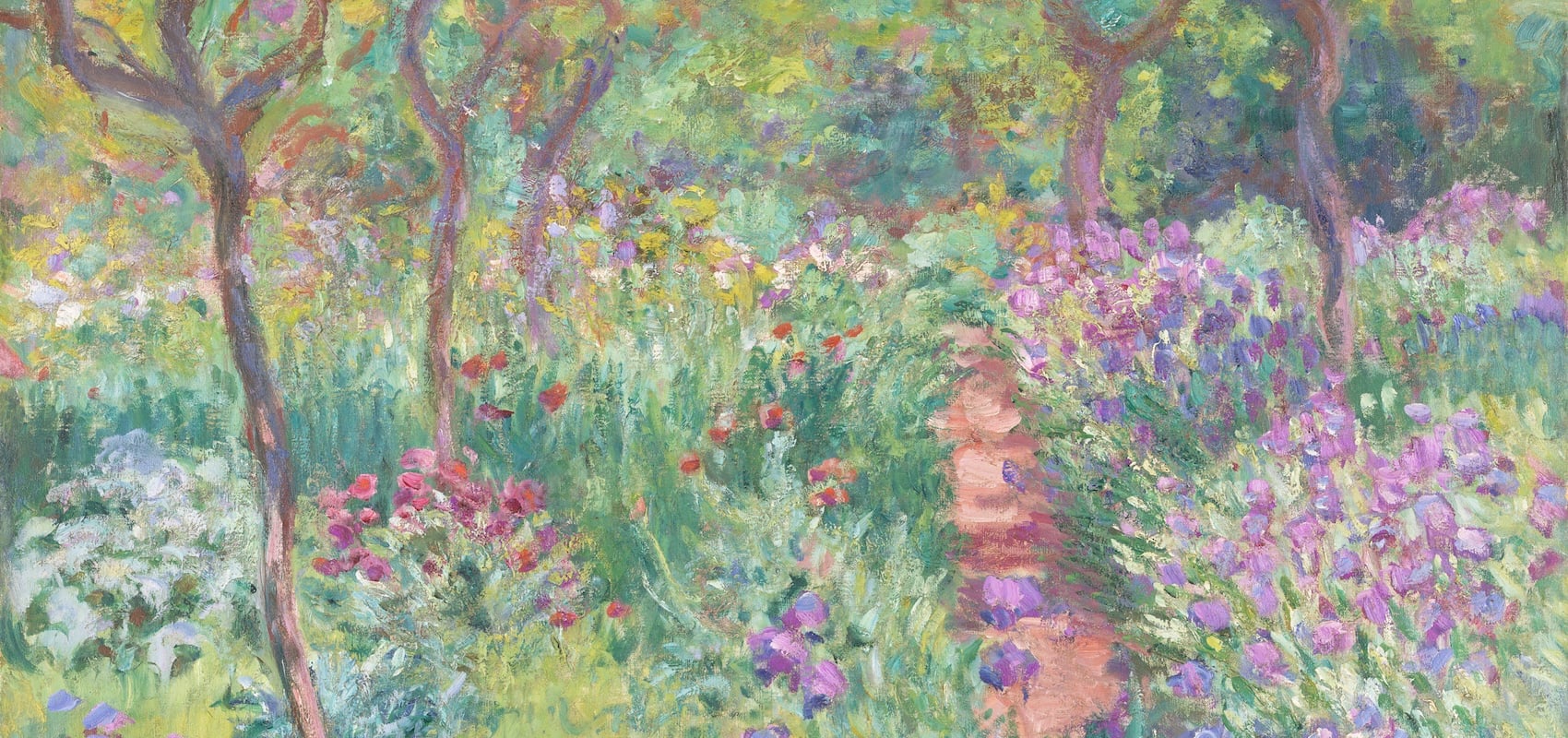
Image by rawpixel via Creative Commons. Image cropped.
Dear Reader,
Can I be direct with you?
War abroad. Socialists on the rise. AI upending human life. Endless uproar online. The modern attention economy doesn’t want readers — it wants users enslaved to the tyranny of the present.
First Things is the antidote: literary excellence, timeless truths, and a fixed point of reference in a culture that has lost its bearings.
But we can’t do it without readers like you.
Our goal: Raise $150,000 by November 1 to sustain First Things in the year ahead.
Your gift anchors readers in the permanent things.
Make your Fall Campaign gift now using the button below.
If you have any questions or would like more information, please contact Giovanni Del Piero, Director of the Editor’s Circle, at gdelpiero@firstthings.com or 212-627-1985.

YOU MIGHT ALSO LIKE
A Culture of Parricide
I learned a new word the other day: déploration. It’s the French, directly from the Latin, for “lament.”…
The Chariot Burials
Wheeling through the clotted earth, / Bronze, bone, and leather clumped in clay...
William of St. Thierry
“Where love and understanding join, hearts are tranquil, / They rise above the turmoil of this world…
