
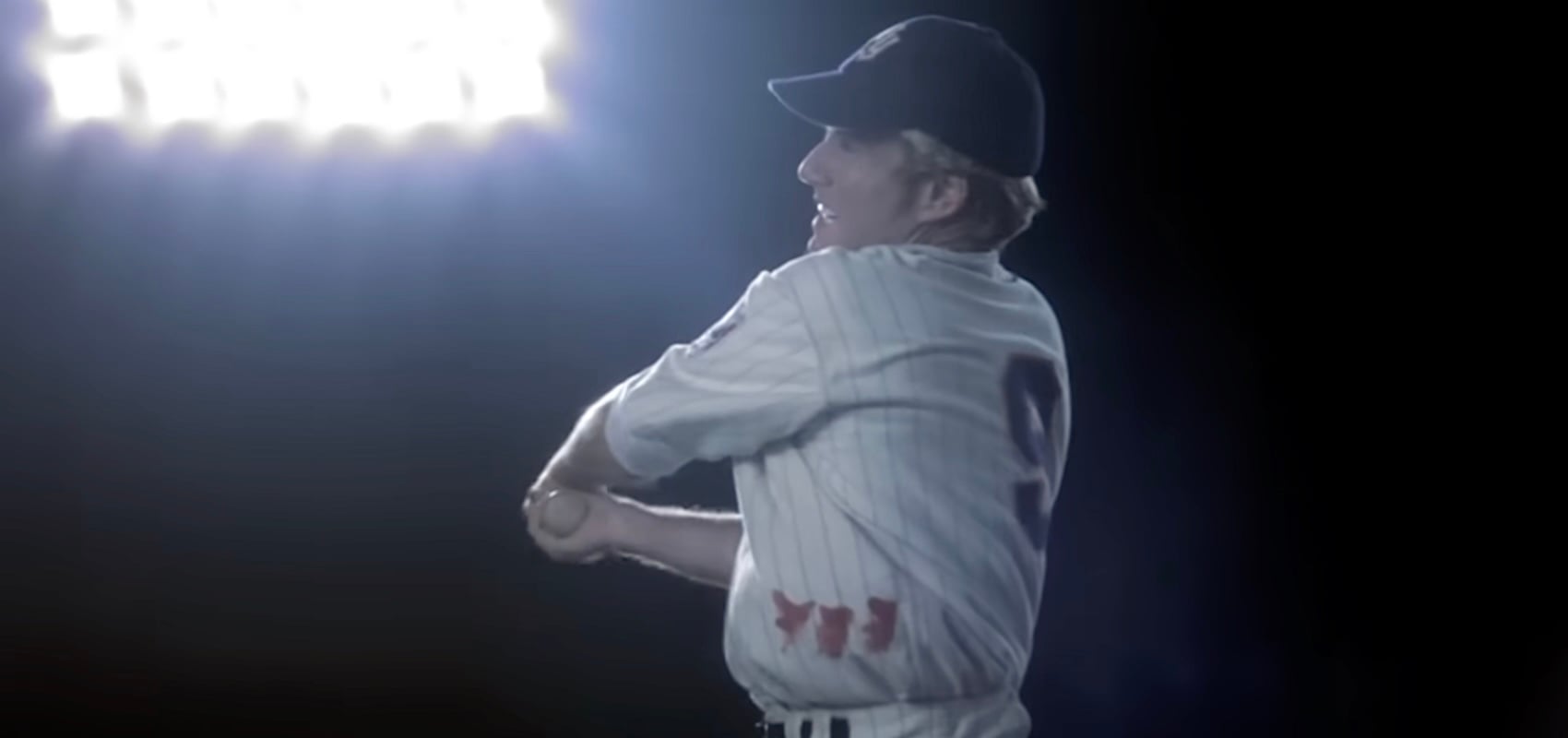
When Roy Hobbs digs his spikes into the clay—bottom of the ninth, two outs, down by two, blood seeping through his jersey from an old gunshot wound—the whole of his existence narrows to a single moment. I can’t get enough of that cinematic scene. I’ve watched Barry Levinson’s The Natural, starring Robert Redford, more times than any other movie by a long shot. Full disclosure: The Natural is a domestic problem in my household. I’ve forced my children to watch it multiple times, explaining to them the Odyssean quest for nostos integral to the plot. The mythical intermingles with the natural in that most glorious game, baseball. My kids’ response? “Whatever, Dad.” “You really want to watch it again, Dad?”
With another baseball season in the books, I’ll fill a good bit of my downtime this winter rewatching The Natural, especially since my Tampa Bay Rays ended their season in the World Series under the brutal, yet beautiful, buzzsaw of one of the best baseball teams I’ve seen in a stretch, the Milwaukee Brewers. Part of me regrets the Rays played the Brewers in the Fall Classic because it kept me from enjoying the incredible achievement that team is. At least the Rays got one more against them than the Dodgers, I tell myself. At least The Natural isn’t going anywhere.
The Natural is subtle, much like the game it portrays. Little things here and there require several viewings to notice. (See, kids!) For example, we’re back with Hobbs in the bottom of the ninth inning. The opposing team brings in a relief pitcher, a southpaw who has lightning in his arm. He’s young, handsome, brimming with confidence. This young stallion from Nebraska spits on the intensity of the moment. When Hobbs sees the new pitcher, he pauses amid the thunderous fans, lingering as he takes a hard and quizzical look at the southpaw. It’s the look of someone who recognizes a face but can’t quite place it. The scene is subtle but noteworthy. One broken bat and four pitches later, Hobbs hits his iconic home run, a moment made memorable by its blasting horns and pyrotechnic explosions. Who doesn’t love the romance of baseball?
In this culminating episode of Roy Hobbs’s life, he’s forced to see a form of his younger self that could have been but never was. The quizzical look, the searching stare at the young pitcher from the Midwest, is Hobbs’s recognition of himself on the mound, the mimetic reflection of what he had lost. Hobbs had all the makings of a great pitcher, perhaps en route to becoming the greatest the big leagues had ever seen. Earlier in the movie, he strikes out “The Whammer,” a Babe Ruth–like character, on three pitches. Greatness was his destiny. He wanted everyone to say, “Hey, there goes Roy Hobbs, the best there ever was.” He never became that pitcher. Harriet Bird, his Calypso, saw to that with a silver bullet.
The middle-aged might find some comfort in the quizzical stare of Hobbs. Agitation often comes with this season of life, when, in Arthur Brooks’s terms, we’re moving from striving to serving, from prophet to priest. At my own institution, I started as a twenty-nine-year-old over twenty years ago now. After a spate of recent retirements, I had a younger colleague tell me that I’m now the OG of our faculty. I didn’t even know what that meant, a tell in its own right.
Like Hobbs, most of us have to face that pitcher on the mound who reminds us of what might have been. Such is the arc of our lives, an arc that can lead some to despair or, more likely, the crotchety disposition of a Statler or Waldorf up there in the balcony. Roy Hobbs faced his unfulfilled self, stepped back into the box, and walked it off. Surely Hobbs offers us some metaphoric hope in the scene—not that we are destined to “walk it off” with horns blaring. I’ve read too much Calvin for such sentimentality. Maybe the horns of our lives play a quieter, more satisfying tune for our final scenes, signifying a contentment that emerges from resting in God’s providence and the deep joy of life’s simple yet profound things: Word and Sacrament, hearth and kin, birds and trees—and baseball.
The Natural leaves viewers with one final glimpse of Roy Hobbs. After the home run, after the fireworks, we see him playing a simple game of catch with his son. The Midwestern wheat glows in the setting sun, as does Roy’s Penelope watching the ritual from the ridgeline. The final scene is my favorite scene. Hobbs is home. Flutes overtake horns. No pyrotechnics, just Roy’s rapturous smile. I watch that scene and say, “Hey, there goes Roy Hobbs, the best there ever was.”

YOU MIGHT ALSO LIKE
Francis Bacon’s Tender Mercies
The most desperate and most heartfelt prayers are those begging God for mercy. Francis Bacon (1561–1626), one…
A Cautionary Tale for Methodist Bishops
The dispute between Highland Park Methodist Church (HPMC) and the Horizon Texas Conference of the United Methodist…
Today’s Global Witness of Christian Martyrs
Within just one week, two massacres of Christians took place that went almost unnoticed. In Jordan, nine…
