
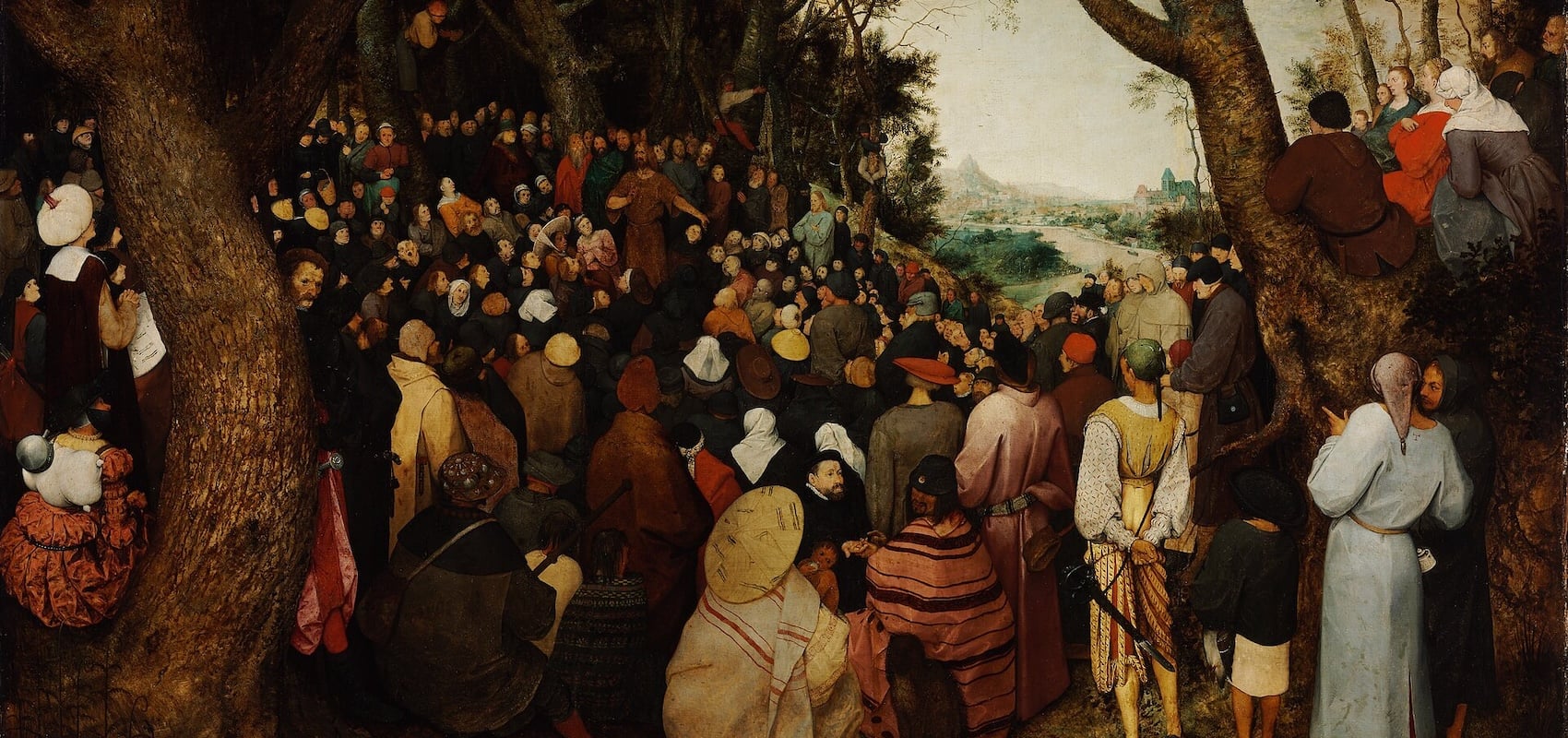
In 2026, three anniversaries coincide that together illuminate the enduring significance of religious liberty. Apart from marking 250 years since the founding of the United States and a political order premised on liberty of conscience, free from government compulsion, it will also mark three hundred years since the Swedish Conventicle Act was introduced, and 250 years since Adam Smith published The Wealth of Nations. Together, they expose both the dangers of state-enforced orthodoxy and the conditions under which freedom—religious as well as economic—can endure.
For centuries, it was illegal in Sweden to adhere to any confession other than the Lutheran state church. Blasphemy could be punished by death. State control over religious life was sweeping: Children were required to be baptized within eight days after birth. Church attendance was compulsory. Beliefs were scrutinized through household catechetical examinations. The parish priest functioned not only as a spiritual authority but also as a state official responsible for education, social welfare, and population registration.
When the Pietist revival gained strength with its emphasis on inward faith and personal conviction, the state responded with repression. In 1726, the Conventicle Act prohibited religious gatherings in private homes outside the supervision of the state church. The law remained in force until 1858 and helped earn Sweden a reputation as unusually hostile to religious dissent. Violations were punished with fines, imprisonment, and, in extreme cases, banishment.
One of those eventually expelled was Fredrik Olaus Nilsson, a sailor and the founder of Sweden’s first Baptist congregation in 1848. Reflecting later on his persecution, he wrote:
It has been my privilege, for the testimony of Jesus, to be dragged before both ecclesiastical and secular courts—even before the King of Sweden himself. Several times I have been beaten until I bled for the same cause. Armed men have lain in wait for me day and night along public roads, seeking to take my life.
Three times I was imprisoned in public jails for the confession of Jesus’ name . . . and, under the law then in force, lawfully sentenced by a court to be banished forever from my homeland.
Nilsson spent the remainder of his life in Minnesota.
The repeal of the Conventicle Act reflected the growing impossibility of sustaining the ideal of a unified national church. Yet full religious liberty came slowly. Only in 1952 were Swedes granted an unconditional right to leave the state church and hold public office without church membership. Even today, religious liberty remains one of the most misunderstood of Sweden’s fundamental rights. That the Conventicle Act now appears in Sweden’s official cultural canon is therefore revealing—not as an endorsement, but as an acknowledgment of the limits of state power over conscience.
Adam Smith offered a radically different vision in The Wealth of Nations. When multiple religious traditions are permitted to coexist, he argued, religion loses its political explosiveness. Pluralism, rather than coercion, proves socially stabilizing. Writing in 1776, Smith articulated an insight that remains strikingly relevant:
The interested and active zeal of religious teachers can be dangerous and troublesome only where there is either but one sect tolerated in the society . . . But that zeal must be altogether innocent where the society is divided into two or three hundred, or perhaps into as many thousand small sects, of which no one could be considerable enough to disturb the public tranquility.
That Smith published these reflections in 1776 is not incidental. The same year marked the birth of the United States, whose founding generation absorbed many of the same insights about monopoly, pluralism, and the limits of state power. While Smith wrote primarily as a moral philosopher and economist, American constitutionalism translated similar principles into political form, rejecting established churches at the federal level and treating religious liberty not as a concession of the state, but as a prepolitical right.
Smith also observed that religious leaders are often more engaged when they operate without state support. The question remains pressing in contemporary Sweden, where religious communities receive state funding under opaque “democratic criteria” and where there is no generous tax deduction allowing individuals to support their congregations directly. Smith argued that the diligence and commitment of clergy would most likely be greater in churches supported voluntarily by their members than in those financed by the state.
His conclusion was clear: Religious tolerance does not threaten social order, but sustains it. Monopolies—even religious ones—breed stagnation and conflict, while diversity tempers excess. Efforts to regulate polarizing religious expression may be well-intentioned, aimed at preserving social cohesion, but they often produce the opposite effect by exacerbating tensions.
These insights resonate beyond Smith’s own context. Modern research confirms the pattern he described. In The Price of Freedom Denied, Brian Grim and Roger Finke show that increased state regulation of religion correlates with higher levels of religious conflict and persecution. Restrictions imposed in the name of order tend to intensify tensions, while conflict in turn invites further regulation. The cycle is self-reinforcing.
Swedish history offers empirical support for this claim. The Conventicle Act did not foster unity but fear and division. Only when the state gradually withdrew from regulating belief could pluralism coexist with social stability. Yet the lesson is not confined to Sweden. As historic religious monopolies have receded, they have often been replaced by new forms of orthodoxy—less theological in language, but no less demanding in practice.
Modern societies frequently celebrate diversity in principle while rewarding conformity in practice. Informal loyalty tests, social exclusion, and pressures toward ideological consensus echo earlier attempts to enforce correct belief. Sweden has moved rapidly from a state church monopoly to a secular ideology that often shows limited tolerance for dissenting convictions. The pattern recurs across much of the Western world.
Modern pluralism presents challenges that neither Smith nor the Swedish reformers could have foreseen. The religious landscape of the contemporary West is far more diverse than the intra-Christian dissent of earlier centuries. Some critics argue that such diversity inevitably erodes freedom, pointing to Islamist extremism or to pressures that seek to shield certain religions from criticism. These concerns should not be dismissed. Freedom of religion does not mean freedom for violent Jihadism, nor does it require liberal societies to permit coercive elements of religious law. Nor does it entail insulating any faith from public scrutiny. Liberal democracy rightly draws firm boundaries around violence, coercion, and the suppression of speech.
But these boundaries are not an argument for expanding state regulation of religion; they are an argument for guarding religious liberty more carefully. In moments of cultural anxiety, governments often tighten control—policing expression, privileging some communities, or restricting others in the name of security or cohesion. The challenge of the multicultural West is therefore not to retreat into a semi-confessional order, nor to indulge illiberal movements, but to sustain a principled regime of equal freedom that protects basic rights without turning religious difference into an object of escalating state management.
Historical experience offers little support for the idea that enforced religious unity is more protective of freedom than today’s secular orthodoxies. Both Swedish history and Adam Smith’s analysis point in the same direction: Religious truth is not strengthened by political privilege, and faith bound too closely to state power tends to lose both moral seriousness and independence.
That the 300th anniversary of the Conventicle Act coincides with the 250th anniversary of The Wealth of Nations—and of the United States itself—is therefore more than a historical curiosity. Together, they remind us that religious freedom is not a sectarian concern but a foundational condition of an open society. The enduring question is whether we have truly learned where the limits of the state ought to lie.
Dear Reader,
Can I be direct with you?
War abroad. Socialists on the rise. AI upending human life. Endless uproar online. The modern attention economy doesn’t want readers — it wants users enslaved to the tyranny of the present.
First Things is the antidote: literary excellence, timeless truths, and a fixed point of reference in a culture that has lost its bearings.
But we can’t do it without readers like you.
Our goal: Raise $150,000 by November 1 to sustain First Things in the year ahead.
Your gift anchors readers in the permanent things.
Make your Fall Campaign gift now using the button below.
If you have any questions or would like more information, please contact Giovanni Del Piero, Director of the Editor’s Circle, at gdelpiero@firstthings.com or 212-627-1985.

YOU MIGHT ALSO LIKE
Why the Death Penalty Is a Sore Point for Papal Authority
Pope Leo XIV marked World Day Against the Death Penalty, observed on October 10, with the following…
Foucault’s Idol of Nothingness
Today marks the 100th anniversary of the birth of Michel Foucault. He was influential in his lifetime,…
Forget Odysseus. Aeneas Is the True American Hero.
Who is our Odysseus? Or more precisely, who is the most Odyssean hero of American film? Matt…
