
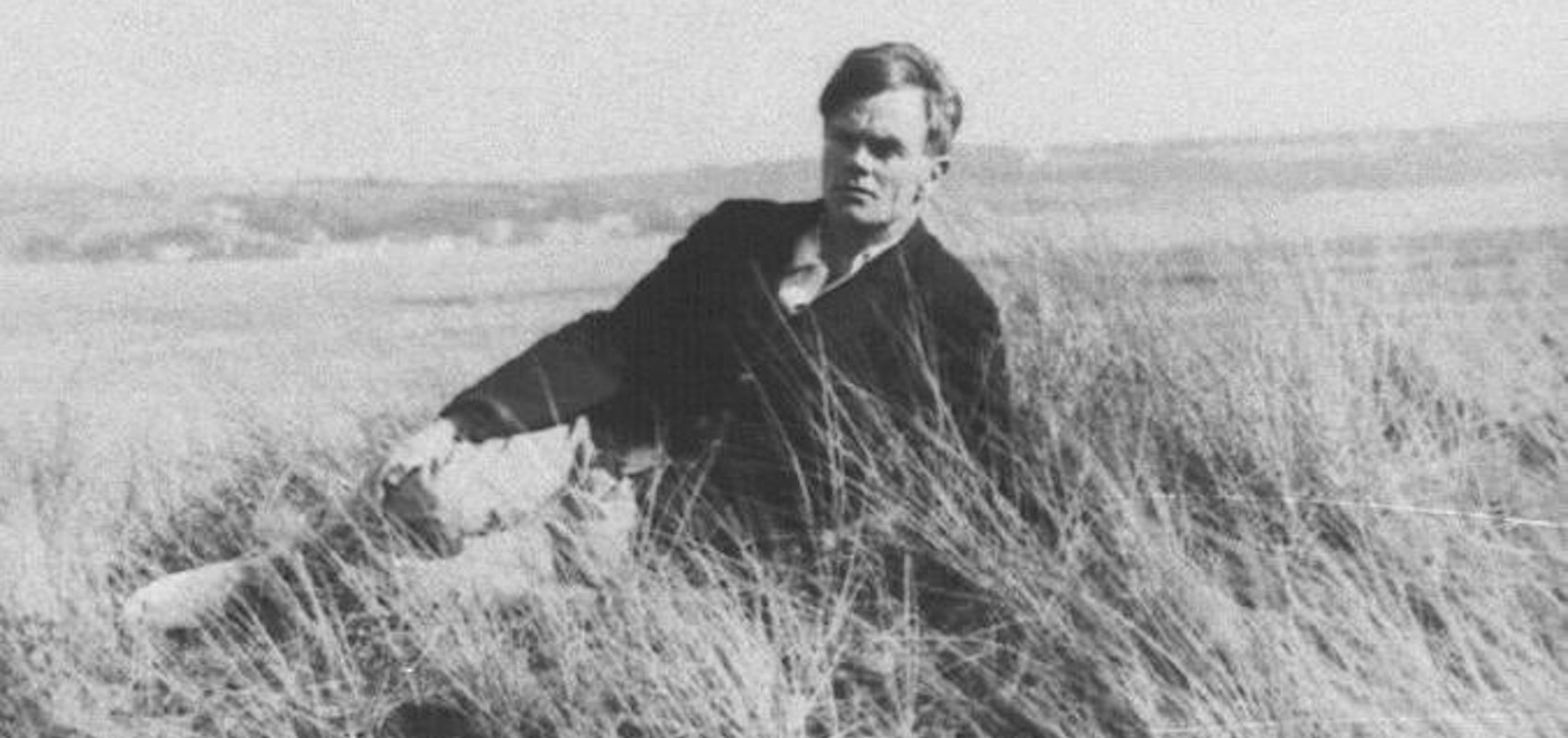
Earlier this autumn, I had the opportunity to visit Oxford the day before I delivered two lectures at the national conference for the Society for the Protection of Unborn Children. My wife and I visited the Kilns, the graves of Lewis and Tolkien, the restaurant where Tolkien read aloud from Lord of the Rings for the first time, and the Lamb and Flag pub, where the Inklings used to meet to discuss philosophy, faith, and literature.
There is a connection between the twenty-first-century abortion wars and the Inklings of Oxford. Owen Barfield, the philosopher, novelist, and a key influence on both C. S. Lewis and J. R. R. Tolkien, was one of the fifteen founders of the Society for the Protection of Unborn Children. SPUC holds the distinction of being “the first group anywhere in the world formed to campaign against legalized abortion”—at least in the twentieth century—and served as a countermovement during the parliamentary discussions leading to the passage of the 1967 Abortion Act.
Barfield is not as famous as his Inkling counterparts, but his influence permeates some of their most famous works. Lewis credited him with the ideas behind his Space Trilogy and dedicated The Lion, the Witch, and the Wardrobe to Barfield’s daughter, Lucy, Lewis’s goddaughter. Barfield’s philosophy also shaped Tolkien’s Middle Earth languages through his book Poetic Diction; the same work also informed the perversion of language in Lewis’s That Hideous Strength, an essential read for our times.
Unlike Lewis and Tolkien, both of whom died before the abortion debate began in earnest, Barfield addressed the subject directly in his writing, as Barfield scholar Landon Loftin detailed in a 2023 paper in the Journal of Inklings Studies. In a 1967 letter to the editor of Anthroposophical Quarterly titled “The Abortion Bill,” Barfield detailed his contribution to the launch of the Society for the Protection of Unborn Children, called on readers to join SPUC and to write to MPs to oppose the 1967 Abortion Act, and summarized his own view on abortion:
It is not for one human being to decide, even on compassionate grounds, that another human being had better not live. If it is not wrong to destroy an unborn baby because it may very probably be deformed, it must be even less wrong to wait and see, and then destroy it after it is born because it certainly is deformed. But nobody wants that . . . yet!
“Because of this,” Barfield wrote, “and because very few people are in the least aware of what is going on, or for that matter, of what abortion practice involves in way of discreetly suppressed horrors, the Society for the Protection of Unborn Children was formed.”
In “The Politics of Abortion,” a 1972 essay in the Denver Quarterly, Barfield observed that both sides of the abortion debate were essentially arguing past each other, with communication breaking down to the point where there was (and is) fundamental disagreement on what terms like “right,” “human,” “health,” and even “life” meant. Even terms describing different stages of human development are used as tools of dehumanization: “For some people an embryo is an actual or potential human being and they do not easily forget when they read of one that cried for half an hour before it was consigned to the bucket. For others (the easy-abortionists) it is not a human being in any sense; it is a ‘foetus,’ and that is all there is to it.”
Barfield’s warning that the lack of common or shared language prevents genuine debate is truer now than when he wrote it; it is also true that abortion activists actively seek to subvert language to justify these “suppressed horrors.” When American states began to pass “heartbeat” bills, banning abortion at six weeks when an unborn child’s heartbeat can be detected, abortion activists insisted that the media instead refer to “fetal pole cardiac activity” bills. “Heartbeat” is too humanizing, and to humanize the unborn leads to obvious and inconvenient moral conclusions.
Abortion is also the norm in Barfield’s 1975 dystopian science fiction novella Night Operation, set in a society that has taken to the sewers beneath ruined cities, driven underground by fear of terrorist attacks. The protagonist Jon, Barfield writes, had escaped being aborted by pure chance: “It was simply that the gynaecologist’s prognosis had indicated no special reason for aborting him and his mother’s distaste for the messy business of childbearing had not been quite strong enough of itself to make her opt for it. Somehow or other he had slipped in.” Barfield saw the “easy-abortionists” coming a long way off.
Barfield lived long enough to see many of his predictions come to fruition. He died in 1997, aged ninety-nine, the “first and last Inkling.” His anti-abortion advocacy can be seen as an extension of the Inklings’ collective worldview into the post-Christian era that Lewis so presciently predicted. The work of the Society for the Protection of Unborn Children continues, exposing the “discreetly suppressed horrors” that have become horrifyingly common since the Abortion Act, speaking not just for the vulnerable, but carrying on the legacy of the Inklings of Oxford.
Dear Reader,
Can I be direct with you?
War abroad. Socialists on the rise. AI upending human life. Endless uproar online. The modern attention economy doesn’t want readers — it wants users enslaved to the tyranny of the present.
First Things is the antidote: literary excellence, timeless truths, and a fixed point of reference in a culture that has lost its bearings.
But we can’t do it without readers like you.
Our goal: Raise $150,000 by November 1 to sustain First Things in the year ahead.
Your gift anchors readers in the permanent things.
Make your Fall Campaign gift now using the button below.
If you have any questions or would like more information, please contact Giovanni Del Piero, Director of the Editor’s Circle, at gdelpiero@firstthings.com or 212-627-1985.

YOU MIGHT ALSO LIKE
A Culture of Parricide
I learned a new word the other day: déploration. It’s the French, directly from the Latin, for “lament.”…
The Chariot Burials
Wheeling through the clotted earth, / Bronze, bone, and leather clumped in clay...
William of St. Thierry
“Where love and understanding join, hearts are tranquil, / They rise above the turmoil of this world…
