
Skipping School:
A History of American Homeschooling and How It Went Mainstream
by dixie dillon lane
eerdmans, 216 pages, $28.99
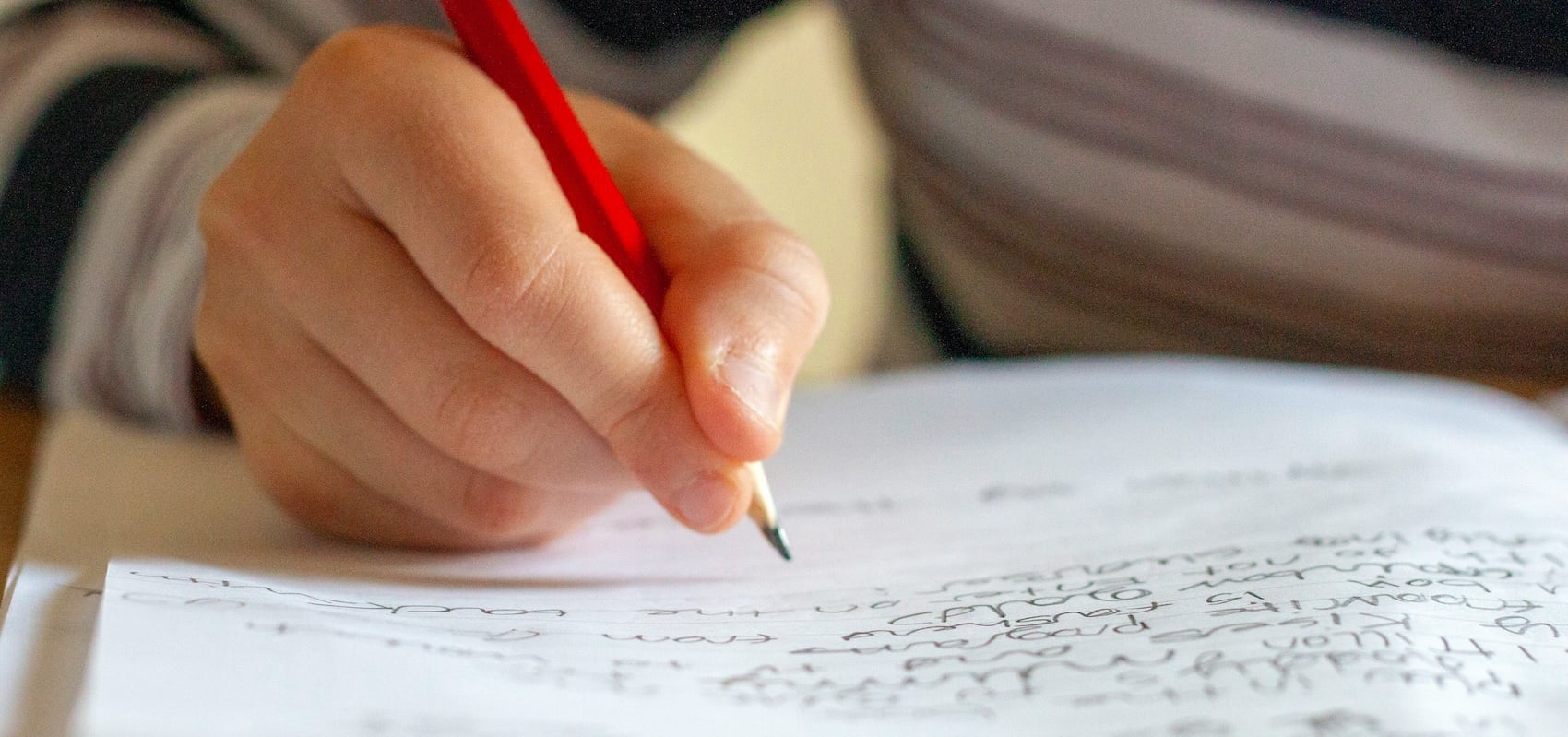
Dixie Dillon Lane’s Skipping School: A History of American Homeschooling and How It Went Mainstream is easily the best book I’ve read on its subject. Anyone with an interest in homeschooling should read it. But it could also be profitably read as a how-to by scholars who are working on entirely different subjects. I can’t immediately recall the last time I encountered such a model of rigorous scholarship made not merely accessible but inviting to a large audience.
Lane is a historian and former adjunct professor of history at Christendom College in Virginia; her husband, Christopher, is a professor of history there. They are themselves homeschoolers, and though Lane touches only very lightly on their experience, it contributes to the authority of her account.
Lane’s narrative tracks the evolution of her subject from 1950 to 2024, with an epilogue considering the prospects for “Homeschooling Tomorrow.” If, like me, you had children who went through grade school, middle school (“junior high”), or high school from the mid-1970s until the early 2000s, Lane’s account of the gradual but unmistakable changes in attitudes toward homeschooling will resonate.
My wife, Wendy, and I “homeschooled” three of our four children for brief periods, never for an entire school year. In all three cases, this was in response to a situation (whether due to a particular teacher or to fellow students or to some internal struggle) in which we saw that the child in question was very unhappy. In comparison to the rigorous standards exemplified by many homeschooling parents, our approach was much looser. (It helped that all of our kids were and are readers.) I mention this only because, as Lane’s narrative makes clear, such an attitude would have been almost unthinkable just a generation earlier.
We have known a range of homeschooling families over the years, including most prominently our daughter Mary (third of our four kids), her husband, John, and their eight children. Very soon after graduating from Wheaton College, where they met, Mary and John became Catholic, and they have been very faithful to that commitment. They began homeschooling with their first child, Theresa, and have continued over the years, with Mary principally responsible for the teaching. As Catholic homeschoolers, they have enjoyed and benefited from connections with other families following the same course; they have never been “isolated,” as some people have worried that homeschoolers must be (and as they in fact are in some cases). On the contrary, I would say that their sense of community is stronger than the average among public school and private school students.
Given what she set out to accomplish, I can understand why Lane didn’t provide more glimpses of the eccentric range of homeschoolers. I recall a brilliant young man we knew when we were living in Pasadena, who had an aerospace job. He was utterly scornful of what went on in conventional schools, convinced that math and science should make up the great bulk of the curriculum. He undertook to homeschool his very young son, on top of his day job; his wife agreed, so long as he would hire a “tutor” to give their son a little history instruction and so on. I don’t know how that experiment turned out, but this was far from being the strangest homeschooling family we encountered over the years. It would have been fun to have a bit more of that in Lane’s account, but you can’t do everything in a single narrative.
One important subject missing from Lane’s account—understandably so—is the impact that AI will have on education. That is not in the least a criticism. How the use of AI will play out in public schools, private schools, and the riotous variety of homeschooling is a huge unknown. Clearly, though, this will affect education at every level and in every setting. In some ways, it would seem to make more homeschooling probable, at the expense of public schools especially.
Meanwhile, acquire your own copy of Skipping School, and consider sending a copy of Lane’s book to those in your circle who are likely to profit from it.
Dear Reader,
Can I be direct with you?
War abroad. Socialists on the rise. AI upending human life. Endless uproar online. The modern attention economy doesn’t want readers — it wants users enslaved to the tyranny of the present.
First Things is the antidote: literary excellence, timeless truths, and a fixed point of reference in a culture that has lost its bearings.
But we can’t do it without readers like you.
Our goal: Raise $150,000 by November 1 to sustain First Things in the year ahead.
Your gift anchors readers in the permanent things.
Make your Fall Campaign gift now using the button below.
If you have any questions or would like more information, please contact Giovanni Del Piero, Director of the Editor’s Circle, at gdelpiero@firstthings.com or 212-627-1985.

YOU MIGHT ALSO LIKE
Foucault’s Idol of Nothingness
Today marks the 100th anniversary of the birth of Michel Foucault. He was influential in his lifetime,…
A Culture of Parricide
I learned a new word the other day: déploration. It’s the French, directly from the Latin, for “lament.”…
The Chariot Burials
Wheeling through the clotted earth, / Bronze, bone, and leather clumped in clay...
