
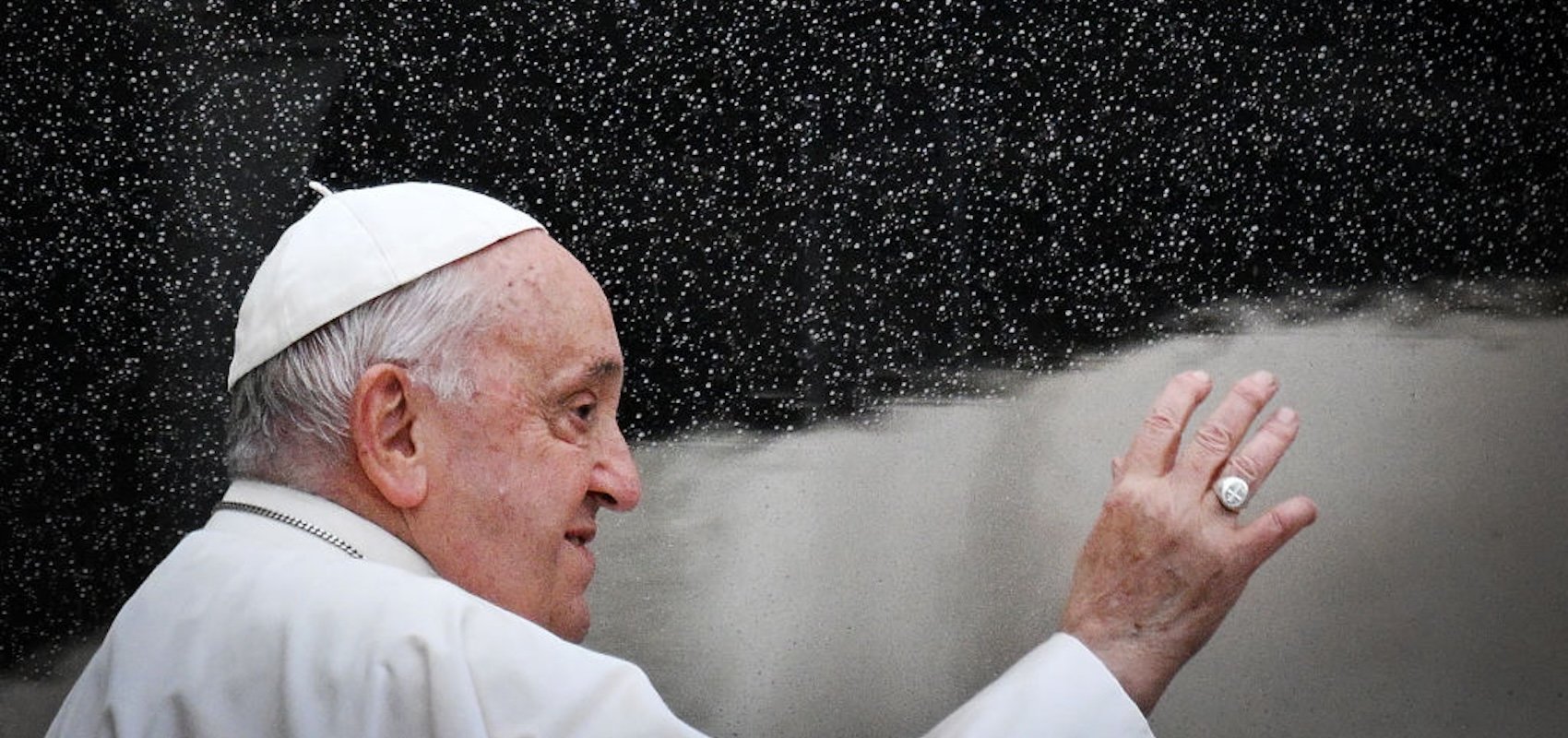
I have personal memories of Pope Francis that I greatly value: a friendly and generous working relationship at the 1997 Synod on America when we were both newly appointed archbishops; his personal welcome and warmth at Rome’s 2014 Humanum conference; and the extraordinary success of his 2015 visit to Philadelphia for the Eighth World Meeting of Families. He devoted himself to serving the Church and her people in ways that he felt the times demanded. As a brother in the faith, and a successor of Peter, he deserves our ongoing prayers for his eternal life in the presence of the God he loved.
Having said that, an interregnum between papacies is a time for candor. The lack of it, given today’s challenges, is too expensive. In many ways, whatever its strengths, the Francis pontificate was inadequate to the real issues facing the Church. He had no direct involvement in the Second Vatican Council and seemed to resent the legacy of his immediate predecessors who did; men who worked and suffered to incarnate the council’s teachings faithfully into Catholic life. His personality tended toward the temperamental and autocratic. He resisted even loyal criticism. He had a pattern of ambiguity and loose words that sowed confusion and conflict. In the face of deep cultural fractures on matters of sexual behavior and identity, he condemned gender ideology but seemed to downplay a compelling Christian “theology of the body.” He was impatient with canon law and proper procedure. His signature project, synodality, was heavy on process and deficient in clarity. Despite an inspiring outreach to society’s margins, his papacy lacked a confident, dynamic evangelical zeal. The intellectual excellence to sustain a salvific (and not merely ethical) Christian witness in a skeptical modern world was likewise absent.
What the Church needs going forward is a leader who can marry personal simplicity with a passion for converting the world to Jesus Christ, a leader who has a heart of courage and a keen intellect to match it. Anything less won’t work.
TIZIANA FABI / AFP via Getty Images.
Dear Reader,
Can I be direct with you?
War abroad. Socialists on the rise. AI upending human life. Endless uproar online. The modern attention economy doesn’t want readers — it wants users enslaved to the tyranny of the present.
First Things is the antidote: literary excellence, timeless truths, and a fixed point of reference in a culture that has lost its bearings.
But we can’t do it without readers like you.
Our goal: Raise $150,000 by November 1 to sustain First Things in the year ahead.
Your gift anchors readers in the permanent things.
Make your Fall Campaign gift now using the button below.
If you have any questions or would like more information, please contact Giovanni Del Piero, Director of the Editor’s Circle, at gdelpiero@firstthings.com or 212-627-1985.

YOU MIGHT ALSO LIKE
Why the Death Penalty Is a Sore Point for Papal Authority
Pope Leo XIV marked World Day Against the Death Penalty, observed on October 10, with the following…
Candace Owens and the Sin of Anti-Semitism
According to the online Encyclopedia Britannica, Sir Moses Montefiore (1784–1885) was “an Italian-born businessman who was noted…
The Myth of St. Francis
At the beginning of his 2020 encyclical, Fratelli Tutti, Pope Francis speaks of “an episode in the…
