
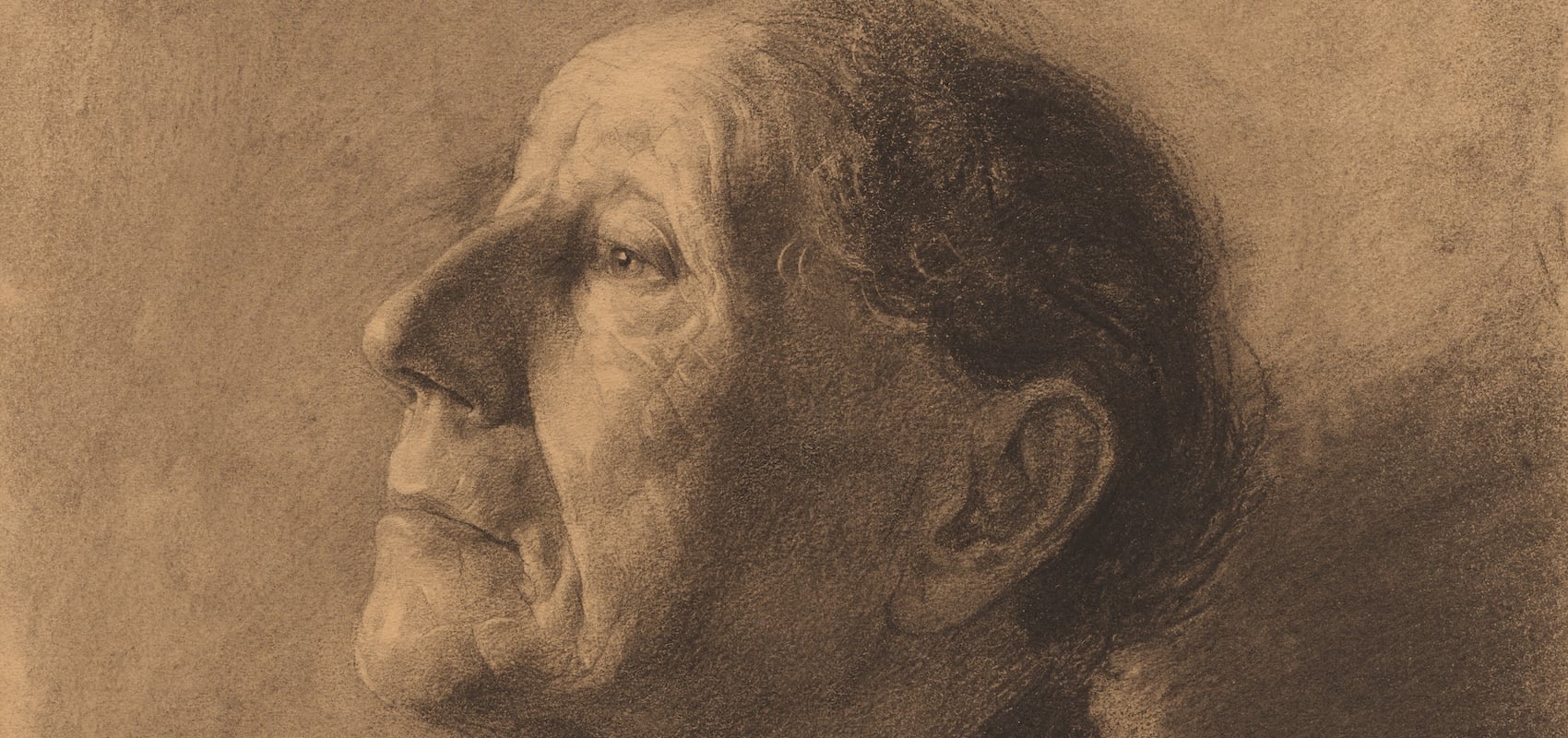
Life expectancy has increased in the U.S., rising a decade since 1950 and three decades since 1900. Good thing, right? Not altogether, argues Samuel Moyn in his recent Gerontocracy in America. While the modern world celebrated youth, innovation, and novelty, we extended life spans and so inadvertently robbed the young of their chance to shine. An aging society preserves instead of progressing. The old unfairly hold down the young and hoard their inheritance while maintaining a death-grip on all the levers of power. Elders don’t have the decency to die, forgetful of Comte’s insight that “our social progression rests on death,” on the removal of earlier generations to make room for new ones. Moyn is well aware that oldigarchy is the historical norm, but it’s an ancien-régime norm that modern societies should have binned long ago. (Here I acknowledge an interest. I’m one of those old guys. It’s tough to admit, but it’s “we” I’m talking about, not “they.”)
Moyn’s indictment is wide-ranging. Seniors vote more regularly than the young; apart from presidential elections, the median voting age is fifty-two. Most political donations come from seniors. The AARP supports us fogies as “the best-funded advocacy group in world history.” We seniors “control the biggest bank accounts and stock portfolios.” During the first decades of the twenty-first century, households headed by senior citizens saw their net worth grow by 42 percent, while “the wealth of families of adults 18 to 34 fell by 68 percent.” We own most of the prime real estate. Two successive octogenarians have occupied the Oval Office, and most politicians represent an age-affinity constituency that controls all forms of power. We are, Daniel Patrick Moynihan declared decades ago, “the first society in human history in which a person is more likely to be poor if young than old.”
All this, Moyn argues, tilts American politics to the right. Folks get more cantankerously conservative as they age. The old are “the most implacable opponents of immigration.” As time frames shorten, we seniors shrink our personal and political horizons in order to squeeze as much as we can out of the few years we’ve got left. We scramble for more and more and leave the costs of our scrambling to future generations. We don’t care about climate change or ballooning national debt, since we won’t survive to see the apocalypse anyway. All this right-tilting is disorienting, terrifying for a liberal like Moyn.
What to do? Term limits for SCOTUS and perhaps the presidency? Too tame, Moyn thinks. Institute proxy voting for minors. Abolish the Senate, that monument to “elder rule in America.” Even if the Senate imposed maximum age limits, its very existence would still be “offensive.” Moyn’s proposals are largely along these lines—structural and legal changes to empower the young and to encourage geriatrics to retire, transfer their wealth, and move offstage in a dignified way before they become undignified.
Moyn has identified a real problem, but it can’t be solved the way he suggests. The problem surely is cultural, hence spiritual. Having old guys in places of power can, after all, be a great thing. It’s the historic norm for a reason. Solomon’s son, Rehoboam, provides a biblical cautionary tale about listening to brash youngsters while closing our ears to the time-tested wisdom of the aged. More deeply, the paradox inside Moyn’s paradox is that old people hang on because we’re animated by youth culture. We want to be sexy, active, exploratory, wrinkle-free; the seventies are the new thirties and all that. We’re horrified at the prospect of becoming stuffy sages. But sages are precisely what we’re supposed to become. As Eugen Rosenstock-Huessy observed, old and young aren’t natural contemporaries but distemporaries. They come to share time when the old throw a line into the future by teaching the young, while the young throw a line into the past by listening to the old. If we refuse to assume the responsibilities of the old, if we pretend already to be contemporaries, we have nothing to pass on, monetarily or spiritually. Refusing to grow up, we become a raspy echo chamber of the young.
Behind this, of course, is our failure to have children to whom we can pass an inheritance. Again, youth culture corrupts: Kids are a burden that prevents us from living our best lives, so we put them off and minimize their number. No wonder the old have limited time horizons; many have no direct, personal investment in the future, an investment that only comes with having children (or children-substitutes). Few parents hoard resources, status, and power; we want our children to rise and replace us.
If you’d asked me fifteen years ago how long I wanted to live, I would’ve been content with seventy or so. That all changed when grandchildren emerged and kept emerging. I realized my paternal life was far from complete when our own children moved out of the house. Grandkids added another generation to my time horizon, and now I hope to live to see a goodly number of my great-grandchildren. (Great-greats are not impossible but, sadly, unlikely.) Precisely as my own personal time horizon shrank, my familial time horizon expanded because my wife and I lived to see our children’s children. Grandchildren perform a miraculous resurrection that many in my generation experience only on a small scale, or not at all. If Moyn really wants to smash the gerontocracy, he should go natalist.
Dear Reader,
Can I be direct with you?
War abroad. Socialists on the rise. AI upending human life. Endless uproar online. The modern attention economy doesn’t want readers — it wants users enslaved to the tyranny of the present.
First Things is the antidote: literary excellence, timeless truths, and a fixed point of reference in a culture that has lost its bearings.
But we can’t do it without readers like you.
Our goal: Raise $150,000 by November 1 to sustain First Things in the year ahead.
Your gift anchors readers in the permanent things.
Make your Fall Campaign gift now using the button below.
If you have any questions or would like more information, please contact Giovanni Del Piero, Director of the Editor’s Circle, at gdelpiero@firstthings.com or 212-627-1985.


YOU MIGHT ALSO LIKE
Foucault’s Idol of Nothingness
Today marks the 100th anniversary of the birth of Michel Foucault. He was influential in his lifetime,…
Forget Odysseus. Aeneas Is the True American Hero.
Who is our Odysseus? Or more precisely, who is the most Odyssean hero of American film? Matt…
Meet the Post-Religious Right
There have been many books written about the online right and the Trump movement, most by people…
