
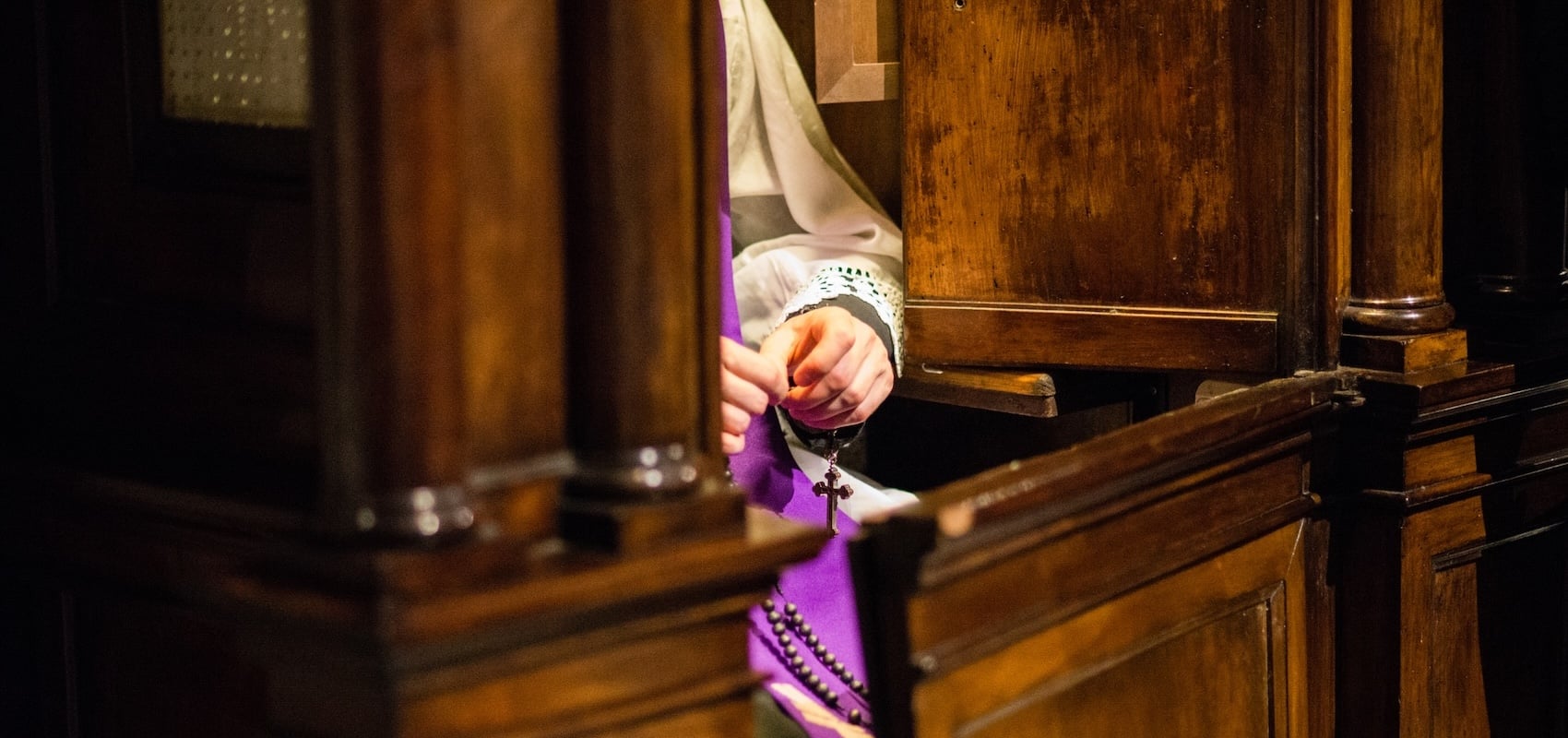
Frequent confession was once normal—monthly, biweekly, or even weekly. But it became rarer among Catholics formed from the 1970s through the 1990s. Today, many Catholics go to confession only after major moral failures or when life feels spiritually overwhelming.
Strictly speaking, confession is only required for mortal sins, and there was an emphasis on that fact in seminary formation and catechesis after the Second Vatican Council. Some years ago, a friend reported to me that her parish priest tersely instructed the faithful, “Don’t waste my time in the confessional with your little sins.” Historically, however, many Catholics confessed venial sins regularly. Confession was not merely emergency treatment; it was ordinary spiritual medicine. What changed?
The postconciliar period rightly sought to move away from what many perceived as a thoughtless “assembly line” mentality in the confessional—as though the sacrament were merely a spiritual car wash. There was increased attention given to reconciliation, conversion, Scripture, pastoral care, and encounter with Jesus Christ. The intention was understandable: to make the sacrament more meaningful, more biblical, and more visibly pastoral.
At the same time, psychology and the social sciences were ascendant, and optimism about their potential was everywhere, including in the Church and seminary formation. Philip Rieff’s 1966 book The Triumph of the Therapeutic argued that every culture possesses a “sacred order” that tells people what must be renounced and what must be embraced.
Rieff saw that the religious order was increasingly being eclipsed by a therapeutic order whose goal is feeling whole, integrated, authentic, and emotionally at peace. That shift does not necessarily deny sin outright, but it changes the center of gravity. Confession becomes less about forgiveness and mercy and more about personal encounter, emotional processing, counsel, and relief.
It also took decades after the Council for certain matters to be clarified. The revised Code of Canon Law did not arrive until 1983. The Catechism of the Catholic Church did not appear until 1992. Many seminarians in those years were formed to create encounter in the celebration of the sacraments and to keep the faithful engaged. Nowhere was this more apparent—and, I would argue, more burdensome—than in confession and in the celebration of the Mass, for which they got the impression that charisma and personality cultivates the full and active participation of the faithful. (But that’s another story.)
The replacement of traditional confessional boxes with “reconciliation rooms” soon followed. Face-to-face confession was not only encouraged but, in some places, presented as the more mature or authentic form of the sacrament. The grille gradually came to be seen as outdated, impersonal, or immature. When I made my first confession in the early 1980s, confessing behind a grille was never presented as an option, much less a good. Combine this emphasis on face-to-face confession with a practice increasingly limited by necessity to a brief Saturday afternoon window or by appointment, and we now have something largely unknown to previous generations.
I did not begin confessing behind the grille until my sophomore year in college seminary in 1997, all the while believing that doing so meant missing something important in the encounter. I came to realize that the grille does not diminish the sacrament. It removes obstacles to its grace. There is freedom and ease to be honest before God without looking at the priest—necessary though he is—because he remains an instrumental cause.
The triumph of the therapeutic did not abolish confession. It made confession feel psychologically heavy, and many Catholics stopped going regularly. Most Catholics are willing to accuse themselves of sins briefly and regularly. Far fewer are willing to enter into an extended personal conversation every few weeks with a man who is neither a therapist nor a close personal friend.
Psychology is no doubt beneficial; I myself have benefited from it. It can illuminate trauma, addiction, family systems, emotional wounds, and patterns of behavior. But priests are not therapists. A few pastoral courses in seminary making use of watered-down or popularized psychology do not make them so. Nor should priests feel compelled to insert their personalities constantly or to create psychological engagement in the confessional.
The Order of Penance instructs the confessor to offer “suitable counsel” to penitents, helping them to make a good confession, urging them toward contrition, and helping them understand God’s mercy. But interestingly, the rite notes that such things should be done only “if necessary” (si opus est). There are certainly times when it is necessary, especially with grave sins that have become deeply habitual in our time.
At the Dominican House of Studies, we emphasize to our student brothers as they approach ordination: “Confession is not spiritual direction. It is not counseling. You cannot fix people in the confessional.”
A certain sacramental reserve is needed: anonymity, modesty, brevity, objective structure, restrained questioning, simple penances that can be completed easily, and freedom from self-consciousness on the part of both priest and penitent.
Catholics should not need a crisis, a spiritual emergency, or a major life problem to seek mercy. Frequent confession becomes possible again when the sacrament is allowed simply to be what Christ gave to his Church—ordinary, accessible, sacramental mercy.

YOU MIGHT ALSO LIKE
SlutCon’s Emotional Void
The tech-rationalist phenomenon “SlutCon” caused quite a stir online, perhaps predictably. SlutCon was a multi-day retreat and…
The Boys on the Brink
In the latest installment of the ongoing interview series with contributing editor Mark Bauerlein, Leonard Sax joins…
Vatican II Didn’t Kneel to Modernity
In his weekly catecheses on Vatican II, Pope Leo is now discussing Gaudium et Spes, one of…
