
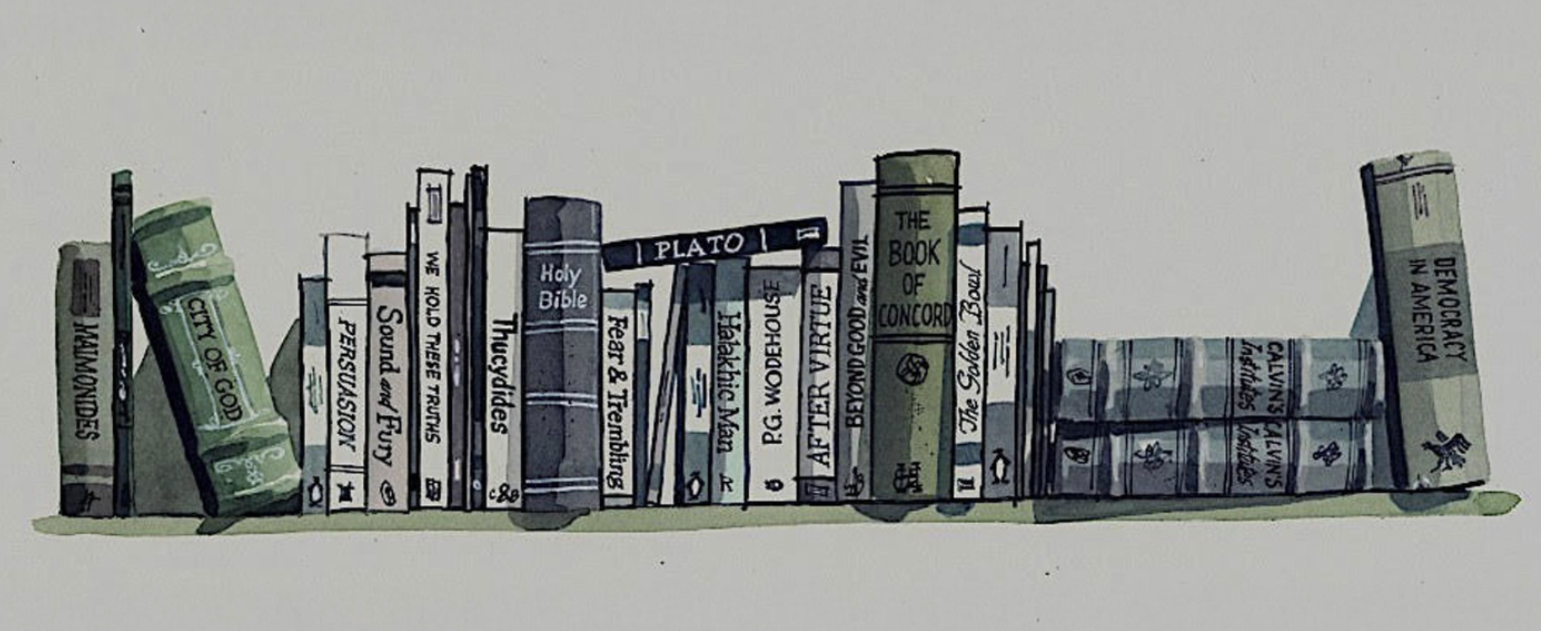
Spare Us Yet and Other Stories
by lucas smith
wiseblood books, 202 pages, $17
What if Flannery O’Connor had been forced to live through Australia’s COVID-19 lockdowns and its surrounding political and ecclesiastic paradoxes? A bizarre concept, and yet that’s the best way to describe Lucas Smith’s debut short story collection. O’Connor invented the term “Christ-haunted,” and many of Smith’s brilliant pieces of fiction are haunted by characters with desperate desires for the transcendent in a world shaped by demeaning systems.
Spare Us Yet is a collection of explosive stories about people who are achingly real. There are no caricatures in Smith’s work: From priests and church staff to rebellious teenagers and homeless vagrants, each character is a three-dimensional figure, with foibles and hopes and prejudices and the potential for acts of grace.
Not all of the stories take place in the 2020s or even in Australia, and Smith jumps from Sydney to Fiji to London, from the colonial past to the postapocalyptic future, and even into the mind of an angel assigned as guardian over a church altar. The strongest stories have a clear ending they are guiding the reader toward, like “Lions Over the Bridge,” which challenges presupposed notions about what a holy man looks like in the twenty-first century; and “Matthew of Ours,” which takes the concept of a postapocalyptic martyr in an entirely new direction. Many of the stories in this collection are challenging but refreshing in a literary landscape that so often leaves us wanting.
—A. A. Kostas
That Book Is Dangerous!
How Moral Panic, Social Media, and the Culture Wars Are Remaking Publishing
by adam szetela
mit, 288 pages, $29.95
Adam Szetela might be the last person you’d expect to underscore the negative effects of wokeness. He earned a PhD in English from Cornell and was a visiting fellow in the Program on the Study of Capitalism at Harvard. And yet, the assumption that Szetela rigidly abides by certain tenets based on a few disclosed identities is what he combats in his debut book.
That Book Is Dangerous! presents a harrowing portrait of the contemporary publishing dictatorship—one run by internet mobs and managed by “sensitivity readers,” people who screen books for potentially offensive content before publication. From young adult novels to journalism, no avenue of professional writing is untouched by these moral crusades. In the process of trying to transform every manuscript into the most hypersensitive, culturally monolithic work, Szetela argues, publishers, editors, and authors end up infantilizing their readers by protecting them from “‘harm’ and ‘danger’” and stunting the grander progressive cause.
Szetela is not alone in his critiques. He interviews the upper echelon of the Big Five publishers, prestigious literary agents, and even sensitivity readers, who all suggest that something is rotten in the state of Denmark. But alas, few agree to go on record. Szetela uses literary lampposts from our past—Orwell’s Nineteen Eighty-Four, Hawthorne’s The Scarlet Letter, Kesey’s One Flew Over the Cuckoo’s Nest—to illuminate the troubling phenomena of censorship, witch hunts, and institutionalized control seen today. Part sociological survey, part commiseratory lament, That Book Is Dangerous! is a compelling and depressing depiction of the anti-intellectual state of publishing, which attempts to serve the common good but, in the end, costs readers their dignity.
—Ally Hall
Why Democracy Needs the Rich
by john o. mcginnis
encounter books, 280 pages, $32.99
Law professor John O. McGinnis’s most recent book is an accessible, moderately entertaining analysis of political economy, especially job creation. He argues that democracies need the rich to thrive. For one, the rich, unlike average Americans, are better placed to challenge misguided popular opinions—they have the time and resources to do so. Meanwhile, both the left-wing intelligentsia and the lower classes, generally speaking, are more interested in joining political interest groups that collude with governmental institutions than those allied with free enterprise. While acknowledging that around half of the American upper class supports leftist causes, McGinnis asserts that the rich, especially the right-wing upper class, are nevertheless still more likely to create jobs and enduring wealth than both the middle and lower classes.
Unfortunately, McGinnis overlooks the possibility that the rich sometimes collude with the government to prevent the middle and lower classes from creating their own enterprises. While not criticizing populism outright, he nevertheless suspects that right-wing populists may upset the plans of the upper class to maintain the existence of free markets and ensure the perennial creation of new advanced forms of technology. McGinnis may have to be more open to the possibility that more members of the middle and lower classes believe in the efficacy of both free market and technological innovations than he is letting on. Firstly, many members of the American upper class struggle with decadence. Secondly, at least a few of America’s billionaires—such as Larry Ellison, Harold Hamm, and Oprah Winfrey—were poor before they became rich. As such, McGinnis will probably also have to look for talent outside the ranks of the upper class if he wants to make sure that the United States will always have a pool of entrepreneurs to ensure the growth of technology and technological output.
—John P. Varacalli

YOU MIGHT ALSO LIKE
Serial Liar, Serial Comma
How would you write a public letter that you know will become front-page news? Would you write…
Who Killed the Clancy Children?
After a Massachusetts jury failed to convict Lindsay Clancy of strangling her three small children to death…
Shakespeare Under Stalin’s Shadow
”We wish that we could pass this play over, and say nothing about it. All that we…
