
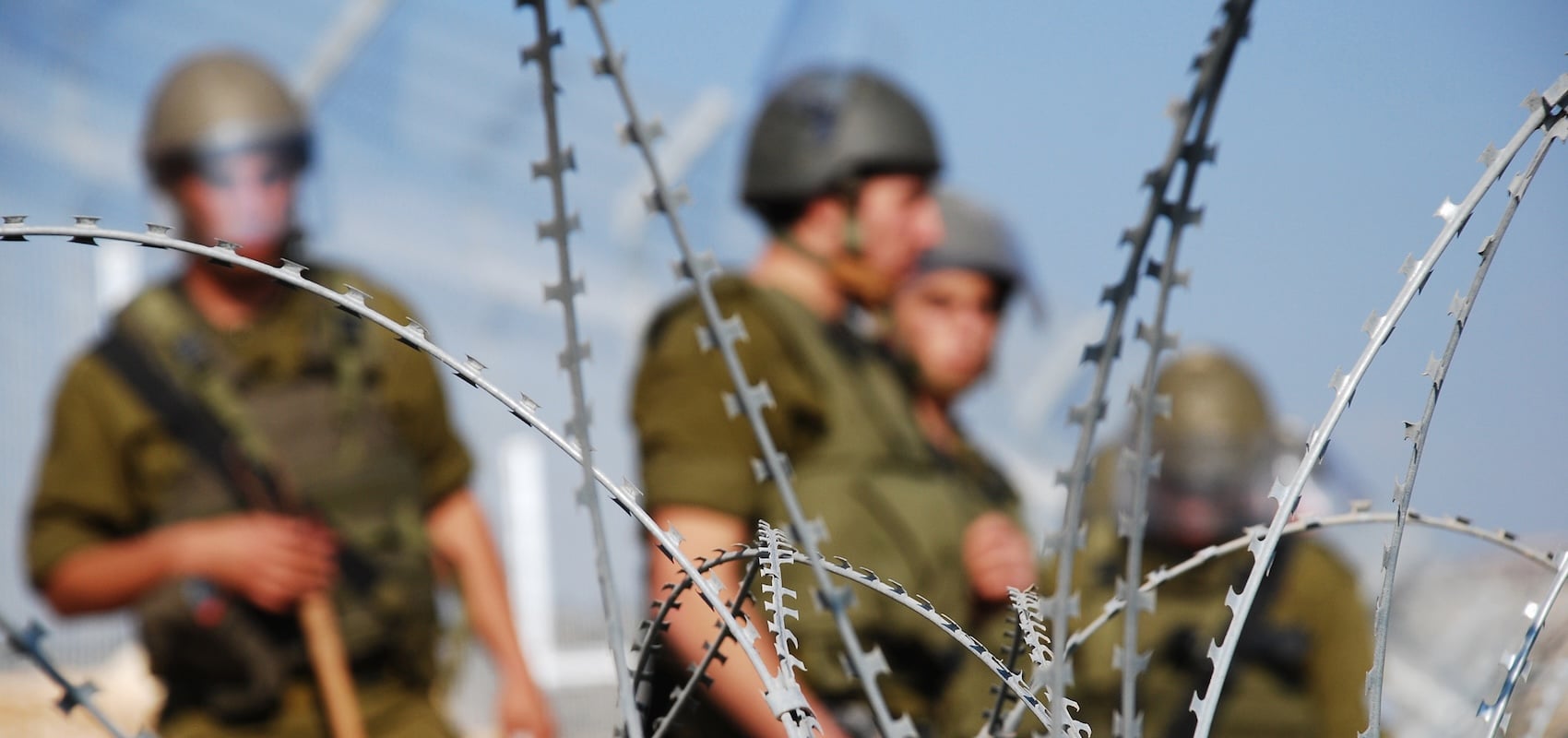
The first time I heard about just war theory was in my military ethics class. As midshipmen at the U.S. Naval Academy, we understood that our nation expected more from us than just tactical excellence; it theoretically charged us to be the custodians of peace and justice—to wage war morally and ethically. Many years later, after several operational tours and witnessing a close friend take his life following direct engagement with autonomous drone warfare, I know that those classes at the Naval Academy were not simply outdated; they were practically inconsequential, tacked on to a curriculum rather than comprising the ethos behind all that we did.
The fault for this lies not with our nation’s service academies, but with just war theory’s failure to keep pace with modern warfare. In his recent encyclical, Magnifica Humanitas, Leo XIV states that, “Today, more than ever, without prejudice to the right to self-defense in the strictest sense, it is important to reaffirm that the ‘just war’ theory, which has all too often been used to justify any kind of war, is now outdated.” Within the context of the encyclical, it is clear that Leo is not dismissing just war theory. Rather, he notes that “in the time of artificial intelligence,” some of its presuppositions must be retooled to engage this “fourth industrial revolution.” He states: “The Holy See has recently observed that the growing ease with which autonomous weapons systems can be deployed makes war more ‘feasible’ and less subject to human control. This violates the principle that armed force should be used only as a last resort in cases of legitimate self-defense.”
Our task is not to develop a new theory of just peace or just resolution to conflict, but to update just war theory in light of this new era, rejecting what Leo calls the “false realism” of realpolitik. As a former practitioner of war, and now a chaplain to those in the profession of arms, I would like to take up the pope’s call and offer a perspective from within my own tradition. In order to rightly update just war theory, we must revisit its roots in the Christian tradition: the gospel itself.
Oliver O’Donovan, in his The Just War Revisited, argues that just war theory “is in fact neither a ‘theory,’ nor about ‘just wars,’ but a proposal for doing justice in the theatre of war.” Leo notes in his encyclical that “we do not merely seek any kind of peace—such as an absence of conflict at any cost—but instead, the true peace born of justice.” If just war theory is outdated, it is because justice has been lost. Justice, for Christians, is not an abstract legal standard but is grounded in God’s love. O’Donovan describes God’s love as the “evangelical counter-praxis to war.” This counter-praxis finds its bearing in the gospel: “blessed are the peacemakers” and “love your enemies” (Matt. 5:9, 44). Just war, in the evangelical understanding, is never antagonistic; rather, it is a loving and positive action of the state’s God-ordained right to bear the sword to reestablish justice (Rom. 13). This reestablishment of justice is peacemaking. Outside of these bounds, any war, even a defensive war, would be unjust. But within these bounds, Christians are free to embark upon hostilities in ways that are always in pursuit of peace.
In Magnifica Humanitas, Leo aims to reassert the foundational principle of human dignity. This human dignity applies even on the battlefield. He notes that “no one is without responsibility. We all have our own areas for action, and it is precisely there—and nowhere else—that we must choose whether to fuel the mentality of force . . . or to preserve the mindset of peace.” This key insight is developed at length by O’Donovan as he notes the modern malaise of flattening human agency to the highest level of authority. Like our national political discourse where the election of national leaders causes infinitely more angst than the local elections that actually determine more of an individual’s lived experience, in nominal applications of just war theory all attention is placed at the highest level of authority, on administrations and governments. This, in one sense, absolves us of focusing on the way individual servicemembers participate in hostilities (justly or unjustly); yet, in another sense, it heightens the responsibility for individual servicemembers to weigh the justice of a cause or action that is far above their paygrade. O’Donovan critiques this malaise directly and refocuses the attention on the individual servicemember’s responsibility to attend to peacemaking and loving their enemies throughout the conduct of war. War can never strip the practitioner of his own personal responsibility or agency, otherwise it would cease to be human and thereby cease to be just. For, as Gandalf says (and Leo quotes), “It is not our part to master all the tides of the world, but to do what is in us for the succour of these years wherein we are set, uprooting the evil in the fields that we know, so that those who live after may have clean earth to till.”
Loving one’s enemies requires seeing and knowing them as fellow humans. One night while on patrol in the Black Sea, shortly after Russia invaded Crimea, I stared out across the waters toward an ominous dark shape on the moonlit horizon. The Russian ship that drew my attention had been following us since we transited the Bosporus. As a young watch officer, it was the bane of my existence. Every action I took had to account for that ship, and I had to relay all its activities to my captain. For all intents and purposes, the ship was inhuman: refusing to respond to radio communications, nary a soul on deck. But that night, as I stood staring at it, it occurred to me that probably somewhere on its bridge stood another young officer. Who knew what his background was? Maybe he had graduated from the St. Petersburg Naval Institute. Maybe he loved a weird mix of folk-rock and classical music. I began to envision a fellow man out there over the frigid waters of the Black Sea. In no way did my revelation lessen my commitment to duty, but it reframed and dulled my animosity, for it gave me someone to love. A fellow human being who—regardless of his adversarial posturing—had dignity because he too had been created in the image of God.
I mentioned my friend who took his life. We attended the same parish and we had kids the same age. While I turned left out my driveway to go work in the engine room of a ship in drydock, he turned right and worked in a trailer with a joystick and killed people. Whether or not a war is “just” means nothing when you live in a state of cognitive dissonance. To kill someone with a press of a button from thousands of miles away and then go home and tuck your kids in as they say their prayers is dehumanizing. The U.S. Military recognizes and is working tirelessly to alleviate the unique challenges presented by drone warfare. Yet warfare is only growing more autonomous and less human. The opportunities for warfare provided by AI are sobering and sickening. Can AI love or recognize human dignity? No. But for war to be just, that love and dignity must take center stage.
Returning to that young midshipman in ethics class: What I received was a hopelessly outdated model of justifying wars and assuaging my own participation in them. There was no consideration of love. Rather, I was taught a formulaic understanding of the criteria of proportionality and discrimination, as if I could apply this formula in the same way I used to apply time-speed-distance formulas in my role as a ship’s watch officer. Yet even when I stood watch with lethal authority, it seemingly did not matter. I would never be asked to weigh the just war implications; rather, to paraphrase Tennyson: Mine was not to make reply, mine was not to reason why, mine was but to do and die.
And yet, simply because modern applications of just war theory are outdated (or misunderstood and misused) does not mean we are called to discard the theory. Rather, we need to revisit it from the evangelical counter-praxis of love. War, for a Christian, must never be separated from Christ’s admonition: Love your enemies.

YOU MIGHT ALSO LIKE
SlutCon’s Emotional Void
The tech-rationalist phenomenon “SlutCon” caused quite a stir online, perhaps predictably. SlutCon was a multi-day retreat and…
The Boys on the Brink
In the latest installment of the ongoing interview series with contributing editor Mark Bauerlein, Leonard Sax joins…
Roger Scruton’s Eternal Youth
In this episode, First Things senior editor Dan Hitchens joins R. R. Reno on The Editor’s Desk…
