
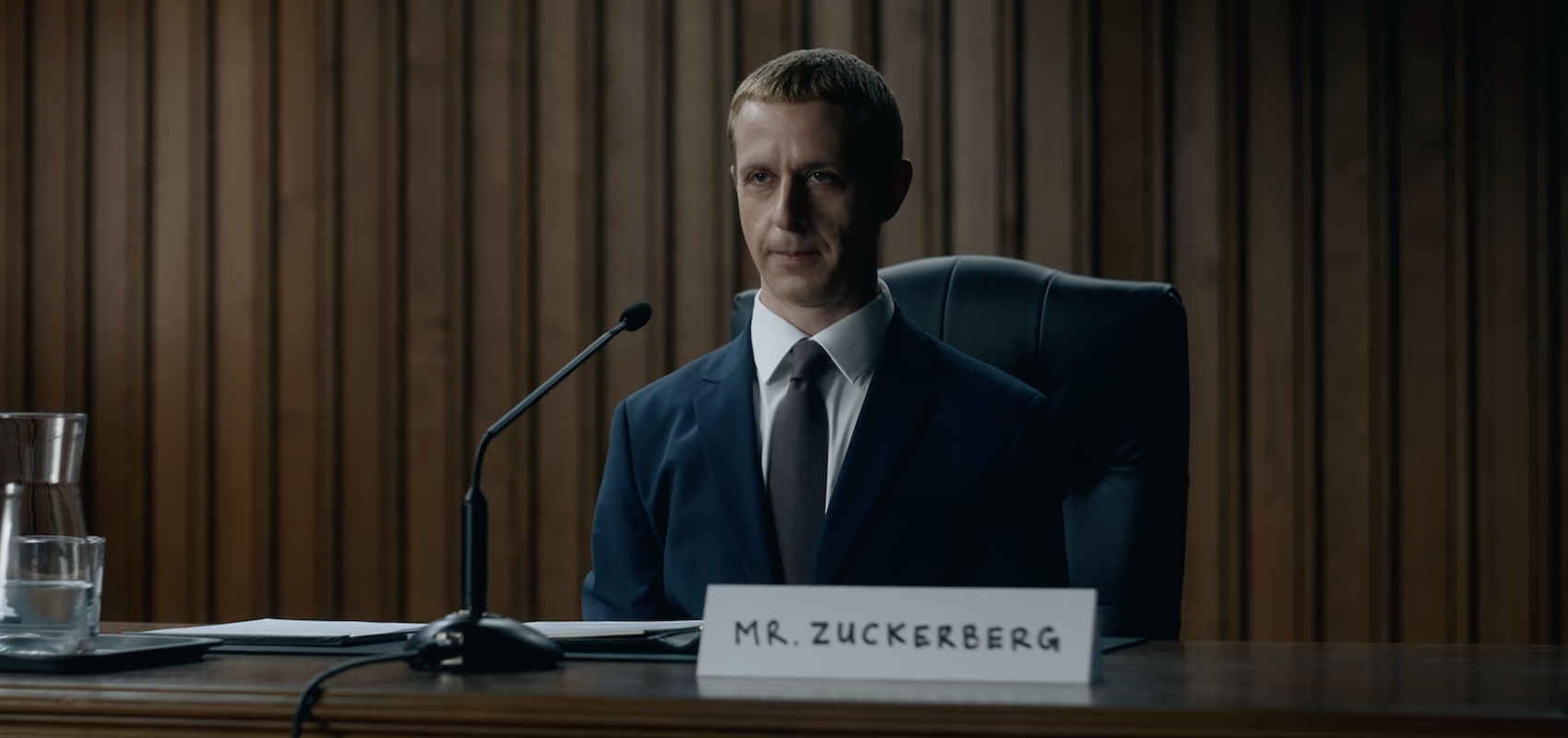
In 2014, Aaron Sorkin published an op-ed in the New York Times arguing that journalists should refuse to write about any of the private information, including emails, leaked in the Sony Pictures hack. Sorkin was one of the people embarrassed in that hack. The press had a moral obligation to refrain from covering those emails, Sorkin argued, because they had been obtained illegally and because none of the information was in the public interest. But Sorkin stopped short of calling for anyone to be arrested. He did not argue that federal marshals should padlock the offices of Variety in order to prevent it from publishing Amy Pascal’s most embarrassing Amazon orders.
When Facebook deletes a post for violating its policies, is that more like an editor declining to publish a bad story or more like the government seizing somebody’s printing press? Is it an act of corporate responsibility or censorship? Sorkin doesn’t have a good answer to these questions, and that is why The Social Reckoning, which he wrote and directed, is a muddled failure. The movie can’t take a clear line because the fight over Facebook was never really about free speech or protecting people. It was about politics.
The Social Reckoning is based on the book Broken Code: Inside Facebook and the Fight to Expose Its Harmful Secrets by Jeff Horwitz, a Wall Street Journal reporter, and tells the story of how Horwitz (Jeremy Allen White) worked with whistleblower Frances Haugen (Mikey Madison) to expose Facebook for deliberately ignoring serious problems with its product, including that its algorithm was steering conservative users toward extremist content and steering teen girl users toward content that worsened their mental health.
Audiences didn’t buy the moral crusade; the film has flopped massively. Sony Pictures has already pulled the movie from 2,000 theaters after only three weeks and will probably end up losing tens of millions of dollars. The last time Sorkin flopped this badly was with Studio 60 on the Sunset Strip, his follow-up to The West Wing, which was canceled after one season. There the problem was excessive seriousness. The show was about a fictional version of Saturday Night Live, and Sorkin put his signature high-flown monologues into the mouths of comedians and Hollywood producers. Lighten up, everyone said. It’s not the White House; it’s just late-night comedy.
Sorkin believes that, actually, TV is just as serious as politics—maybe more so, because its influence is greater. (Was there a single politician who did as much to make gay marriage a reality as Will & Grace?) The irony is that TV has now been replaced by new media, and the decision-makers in Silicon Valley are far more pompous about their awesome moral responsibility than Hollywood ever was. No one ever accuses them of excessive seriousness when they walk around sounding like self-important West Wing characters.
Sorkin should be happy. He tried to make a plucky underdog story when, in fact, his side won. Between 2016 and 2024, the various NGOs and deep-state spooks who spun up “misinformation” as a global threat got everything they ever wanted and more. The forces that brought about the so-called “Closure of the Internet” are currently in abeyance, with President Trump in the White House, but they are just waiting for another Democratic administration to come roaring back.
Corporate censorship is nothing new. The first TV censor was Stockton Helffrich, who worked at the National Broadcasting Company from 1933 to 1960. He was a progressive—a former member of the Communist Party, in fact. In addition to policing profanity, he banned insensitive phrases such as “he’s off his rocker,” “put him in the nuthouse,” and “he’s got loose marbles.” NBC’s censors would not allow the network to run advertising for wines, firearms, matrimonial agencies, lawyers, chiropractors, casket makers, mortuaries, or other “services associated with burial.” Some of their rules were silly, but they wanted to go beyond their legal obligation and uphold their civic responsibility to make television moral, educational, and uplifting.
NBC’s power was nothing compared to Facebook’s. When Helffrich nixed an ad from a mortuary, he was not trying to put funeral parlors out of business. When Facebook changes its policies to ban certain kinds of content, that content might as well be banished from the internet. Facebook’s disfavor puts companies out of business.
Sorkin’s case against Facebook is that it doesn’t fact-check anything. The character played by comedian Bill Burr spends the whole movie berating Mark Zuckerberg (Jeremy Strong) for that. I guess it depends on your definition of “fact-check,” because in 2020 the company had more than 35,000 people working on content moderation at a cost of over $3 billion. A different whistleblower, Ryan Hartwig, worked as one of those moderators from 2018 to 2020 and wrote a book about it. Some of the targets of Facebook’s content moderation included pro-life content and, during the pandemic, opposition to lockdowns.
If the movie were really about protecting people, its timing couldn’t have been better. Six weeks before The Social Reckoning hit theaters, Meta announced a massive settlement in the lawsuit brought by forty-eight state attorneys general regarding the company’s handling of teen mental health. The litigation was based in part on Haugen’s revelations—The Social Reckoning’s end credits mention the lawsuit—so you would think that the movie’s PR team would have found a way to work this historic $17.1 billion settlement into the film’s promotion.
But the movie and the settlement barely registered, because ultimately this isn’t a movie about Facebook’s content moderation policies. Teen mental health was just a distraction from the left’s main problem with social media, which is that it got Donald Trump elected president. The reason Facebook was the target of most of the hysteria about social media “misinformation” and “Russian bots” in 2016 is that it held out longer than other platforms against demands for censorship. Now the designated villain is Elon Musk, because X is the platform currently resisting liberal censorship. It’s all entirely political, which is why even Aaron Sorkin couldn’t make an idealistic movie out of it. The Social Reckoning fails to really reckon with anything.
Dear Reader,
Can I be direct with you?
War abroad. Socialists on the rise. AI upending human life. Endless uproar online. The modern attention economy doesn’t want readers — it wants users enslaved to the tyranny of the present.
First Things is the antidote: literary excellence, timeless truths, and a fixed point of reference in a culture that has lost its bearings.
But we can’t do it without readers like you.
Our goal: Raise $150,000 by November 1 to sustain First Things in the year ahead.
Your gift anchors readers in the permanent things.
Make your Fall Campaign gift now using the button below.
If you have any questions or would like more information, please contact Giovanni Del Piero, Director of the Editor’s Circle, at gdelpiero@firstthings.com or 212-627-1985.

YOU MIGHT ALSO LIKE
You Can’t See Everything
During marriage prep, my wife and I had to take the “Five Love Languages” test, a pseudoscientific…
Fjord’s Cold Reality
Fjord, Romanian director Cristian Mungiu’s Palme d’Or–winning film, is the kind of movie you desperately want to…
The Politics of Dissidence
In the latest installment of the ongoing interview series with contributing editor Mark Bauerlein, Scott Greer joins…
