
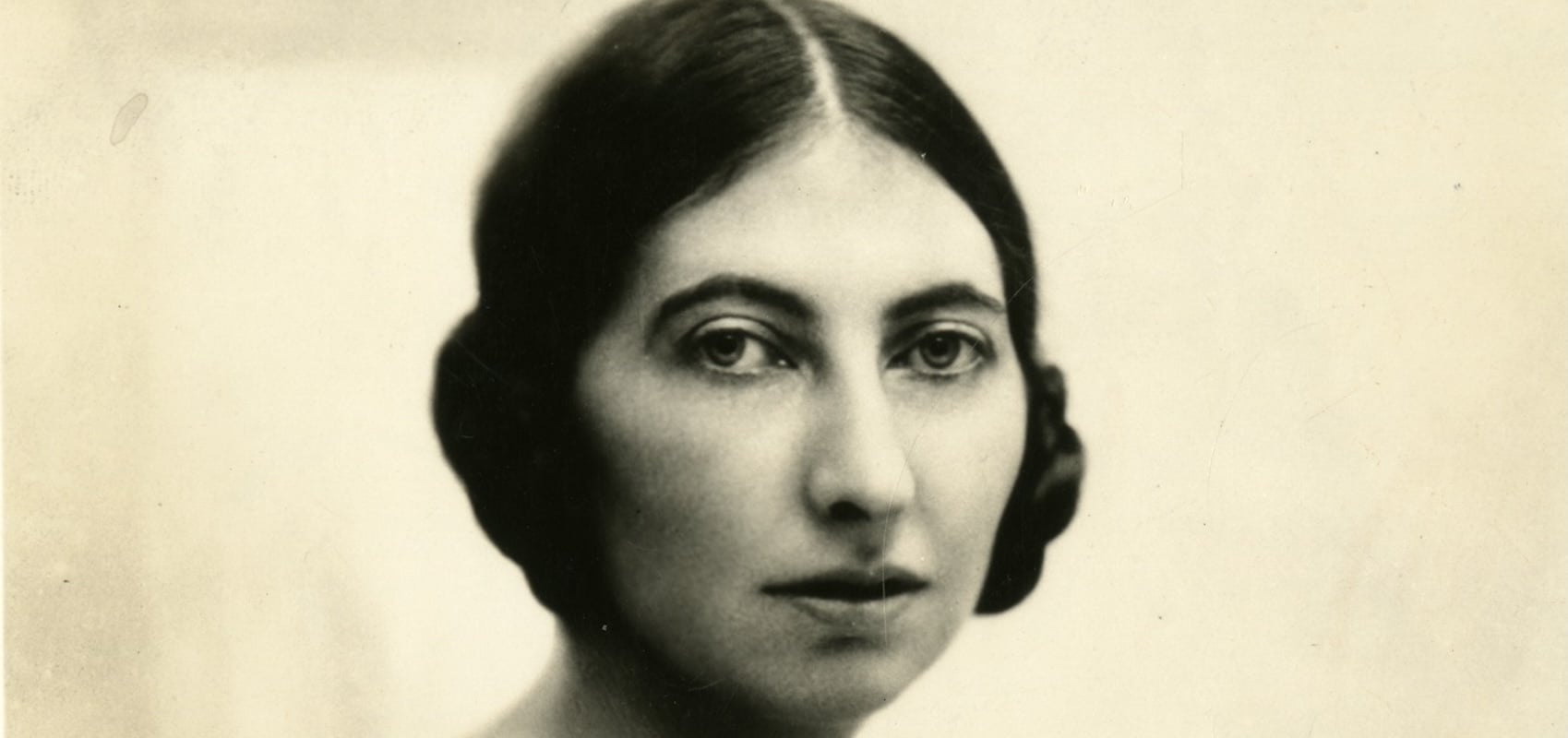
Margaret Kennedy—novelist, playwright, historian, critic—is having another moment. Feted and famous after the 1924 publication of her second novel, The Constant Nymph, Kennedy stopped writing novels during World War II, re-emerged afterward with a series of books that lasted nearly to her death in 1967, then faded from view, condemned to hover on the obscure edges of English letters with a reputation for being a middlebrow popular writer. Earlier this year, McNally republished two of her late novels, The Feast (1950) and Troy Chimneys (1953), which elicited a long and appreciative NYRB review by Columbia University’s Lionel Trilling Professor in the Humanities, Edward Mendelson, who urges a reassessment of Kennedy’s achievement and stature.
I would’ve missed the festivities if our daughter-in-law hadn’t raved to me (to everyone, in truth) about The Feast. Kennedy, who wrote a book on Jane Austen, writes with crisp Austen-like bemusement, but the opening couldn’t be more un-Austen. We learn in the first chapter that the cliffside Pendizack Manor Hotel on the Cornish coast is doomed. During the winter, a stray mine washes up and explodes in a cave beneath the hotel, without discernible damage. Over the following months, cracks open in the cliff, and an expert recommends abandoning the hotel if they get any wider. The Siddals, owners and proprietors of the Pendizack, pay no attention. Then one evening the cliff face slides off onto the rocky beach, killing everyone inside the hotel and burying the bodies beneath the rubble. After the first chapter, we go back a few weeks. As the novel moves day by day toward the predetermined end, our main question is: Who will be taken? Who will be left? Who will survive the apocalypse?
Kennedy assembles a memorable cast. The Siddals live in and manage the hotel with their sons, including Gerry, a doctor, who falls for Evangeline (Angie) Wraxton, sheepish daughter of the contentious Canon Wraxton, who’s devoted his life to expunging Anglo-Catholicism from the Church of England. Anna Lechene, an author writing historical fiction about the Brontës, arrives with her gorgeously handsome chauffeur, Bruce, himself a budding author of a manuscript he calls Hangman’s Boy. His initially combative relationship with the Siddals’ upright maid, Nancibel, grows into a deep affection.
Miss Ellis, another maid, neglects cleaning and making beds to devote her venomous energies to vicious gossip. Sir Henry and the bedridden Lady Eirene Gifford, estranged for a decade, have brought their mostly adopted children on holiday; the Gifford children run a Spartan Club led by Hebe, who covers her self-loathing with a wide streak of cruelty. Poor, grasping, petty Mrs. Cove arrives at the same time, with her three kind daughters, eager to befriend the Giffords and become Spartans. From those brief descriptions, I imagine you’ve picked out several you’d want to be in the hotel when it sinks into oblivion. I did.
Kennedy writes as a moralist, and her characters match up pretty nicely with the Seven Deadlies. Mendelson notes that the dust jacket of the original edition traced the book’s origins to a plan by Kennedy and several friends to produce a short story collection based on deadly sins. As my friend John Barach pointed out, the names are nearly Bunyanesque: With the slightest adjustment, we have a parable about Canon Wrath, Anna Lechery, Mrs. Covetousness, all guests of the Sloth family at a hotel served by Miss Envy. Care to guess how many are inside Hotel Sodom when it slides down the cliff?
There are goodies and baddies, but no one in the book is flawless; Hebe changes sides with an act of abject penance. Like all great moralists, Kennedy is simultaneously very stern, very subtle, and very funny. Nancibel takes an instant dislike to Bruce, whom she meets while he’s out on the town with Nancibel’s friend Alice:
She still felt that she could have liked him if so much had not been wrong. His accent was wrong: a refined superstructure upon Cockney foundations. Half the idioms which he used had evidently been picked up very recently from one person. They decorated his discourse like ornaments on a Christmas tree. And he was showing off all the time—about the Marine Parade, about his intellectual friends, about his lowly birth. Showing off to her, as she was very well aware, though the thick-headed Alice did not seem to have tumbled to it.
The plot is framed theologically. Mr. Siddal is, for all his passivity, a reliable philosopher. Alluding to Lot in Sodom in a conversation with Lady Gifford, he speculates that “mankind is protected and sustained by undeserved suffering; by all those millions of helpless people who pay for the evil we do and who shield us simply by being there, as Lot was in the doomed city. . . . The oppressed preserve the oppressors. If the innocent did not suffer we should all go pop.” On the other hand, he speculates, if there were a purely evil society, without a single innocent, “the earth would probably open and swallow them up” and “split the moral atom.” (Can you say foreshadowing?)
The Cove children have never attended a feast, much less hosted one, and, inspired by the Eucharist at Fr. Bott’s parish, they hatch a plan to catch a lobster and prepare it for everyone at the hotel. Nancibel tells them one won’t be enough, to which Maud Cove replies, “What about the loaves and fishes?” Nancibel buys more lobsters, while the Coves paint invitations and ask everyone to dress up as an Edward Lear character and memorize several lines of poetry to recite. It’s a scene out of Babette’s Feast, a “forgiveness party” with food and singing, everyone’s joy enhanced by four bottles of hock. The Cove children take greatest pleasure in serving rather than being served: “The Coves were too happy to sing, too happy to eat. Gravely they circled round the ring offering food and drink to their guests. Without seeming to do so they ruled the Feast and saw to it that everything should be done in a suitable manner.”
Truly a feast at the edge of the world’s end. Kennedy challenges her characters’ pretenses, and ours: Would you accept an invitation to a children’s lobster feast, pathetically poor children at that, children who could never repay your condescension? Would you dress like an Edward Lear character? Would you accept the invitation if your life depended on it? If it would save the world?
Dear Reader,
Can I be direct with you?
War abroad. Socialists on the rise. AI upending human life. Endless uproar online. The modern attention economy doesn’t want readers — it wants users enslaved to the tyranny of the present.
First Things is the antidote: literary excellence, timeless truths, and a fixed point of reference in a culture that has lost its bearings.
But we can’t do it without readers like you.
Our goal: Raise $150,000 by November 1 to sustain First Things in the year ahead.
Your gift anchors readers in the permanent things.
Make your Fall Campaign gift now using the button below.
If you have any questions or would like more information, please contact Giovanni Del Piero, Director of the Editor’s Circle, at gdelpiero@firstthings.com or 212-627-1985.


YOU MIGHT ALSO LIKE
A Culture of Parricide
I learned a new word the other day: déploration. It’s the French, directly from the Latin, for “lament.”…
The Chariot Burials
Wheeling through the clotted earth, / Bronze, bone, and leather clumped in clay...
William of St. Thierry
“Where love and understanding join, hearts are tranquil, / They rise above the turmoil of this world…
