
At some point we must give up trying to understand other people. Love them, surely. But recognize that such a love cannot be based on comprehension. We need always to remember that our love is carried on some great tide of divine demand. And we must throw ourselves into its current.
I was recently in Burundi, where I had worked long ago. I took a brief visit into the Congo, across the border. A recently established buffer zone, the frontier is but a few miles from fierce and brutal fighting. Civilians hectically rush back and forth across the border before nightfall, trying to sell vegetables or buy goods while there is still some respite of security. The whole area has been a realm of human horror the past few decades. An estimated six million persons have died in a conflict driven first by Rwanda’s post-genocidal effort to destroy enemies who had fled across the border into Congo, then by its alliance with Congolese rebels to pillage the valuable mineral resources of the area. Unspeakable atrocities have been committed as conflict drags on. How is this possible? Africa is a good place for Westerners to be roused from our cognitive complacencies and moral lethargies.
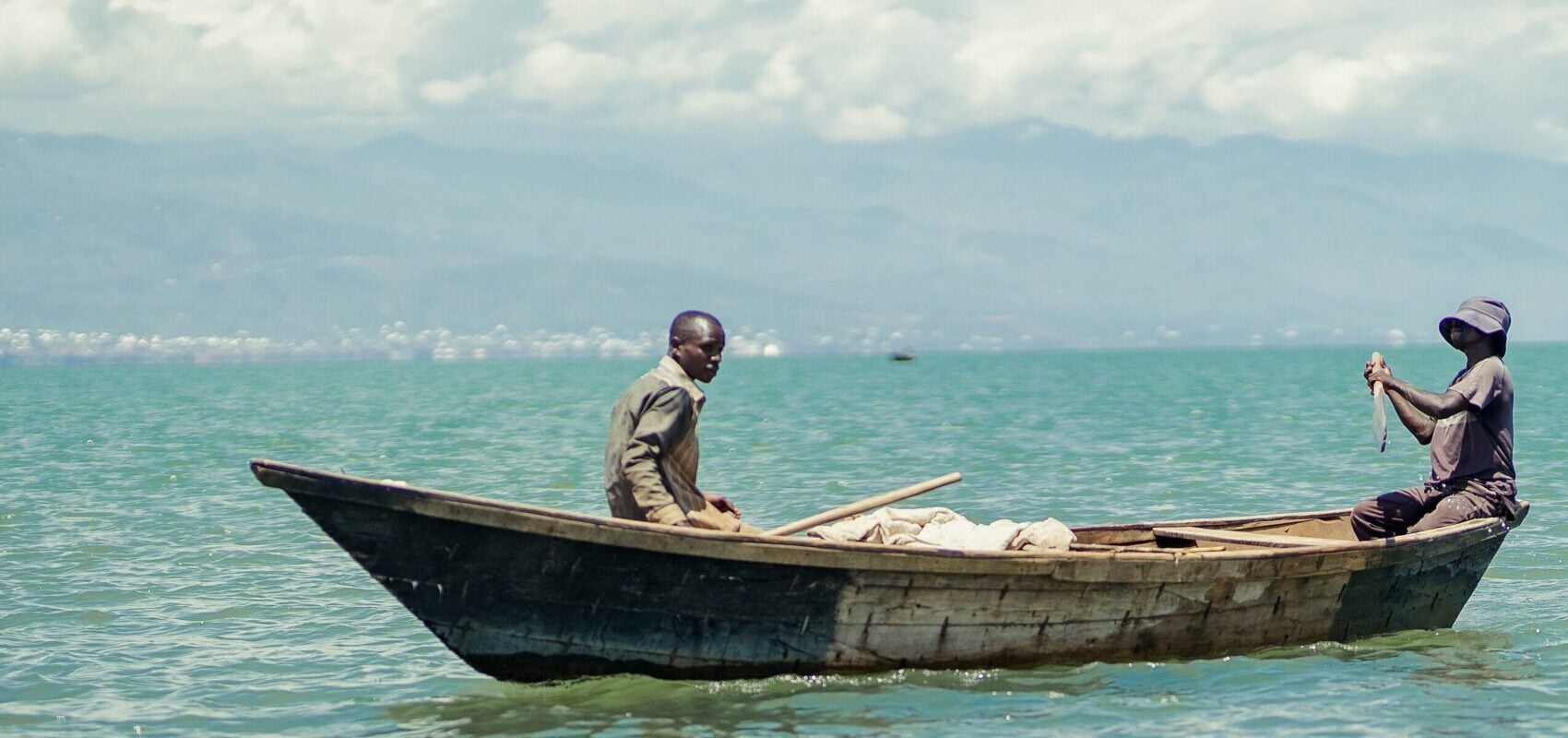
The border crossing is near the north end of Lake Tanganyika. For the past seven years, the waters of the lake have been rising ominously, flooding previously inhabited areas. Houses, banks, and stores are inundated. I stopped to take a picture of a half-sunken post office, first asking permission from a Congolese border guard nearby. Suddenly, out of nowhere, another official rushed up, grabbed my phone, and began berating me for the photos. Who was I? Taking photos is a security offense! Things became tense. My Burundi host and I were taken to the office of the regional director. I will call him the Commander. He sat amiably at his desk, dressed in his fatigues. He apologized. “No worries,” he said. “My subordinate got a little carried away.” Then there unfolded a long conversation about life in that part of the world.
Beginning with a few anecdotes, the Commander’s tone and topics slowly shifted to the brutalities of the current war, the precarious life of local residents, and the long years of killing. His bitterness grew more passionate. “Ah!” he finally exclaimed. “Macron, that fiend!” The French president was in cahoots with Rwanda, he exclaimed, all for the minerals, the money, the power. “Go figure,” the Commander sneered. “He married an older woman and has no children. What does he need money for? It is incomprehensible!” As we left, my Burundi host quietly noted: “There you have it: He thinks like an African.”
What did my host mean? That, in the Commander’s world, riches are pointless without a family? That judgment may be plausible in an ideal universe, but not in the one in which we live. In the Commander’s mind, the French president is part of a cohort. The greed and violence of single or childless men is legendary: Jakob Fugger, Cecil Rhodes, and so on. Jesus understood this. God says to the rich man in the parable, “Thou fool, this night thy soul shall be required of thee: then whose shall those things be?” (Luke 12:20). The brutal dissolution of family men is even better documented, from Genghis Khan to Leopold II, the Congo’s callous overseer. Yet for all these perhaps fitting biblical and historical connections, the Commander—entwined in his own world of corruption and degradation—found Macron to be an incomprehensible figure whose machinations were bringing woe upon uncountable families. More than that, in his stunted existence—no children!—the French president had become oblivious to the human suffering his policies promote. The Commander seemed as if he were uttering a cry of despair more than offering cogent analysis.
Or maybe I’m wrong in my assessment of that enigmatic encounter. For my part, I no longer believe I can grasp what is going on in other people’s minds. We are the children of Babel, and that means much more than being divided by different languages. We are consigned to disparate fiefdoms of obdurate misunderstanding. And when, with the gathering of saints in heaven, we praise the Lamb in a multitude of tongues (Rev. 5:9), we shall sing together something we have not known in common until that point. Even the pneumatic speech of the blessed is but a string of words launched “into the air” when uttered on their own (1 Cor. 14:9). The mind of a person is, apart from God’s enabling vision, but a hermetically sealed solipsism (1 Cor. 2:11).
Christians, of all people, should not fool themselves here. Apparently, when the Portuguese first came to the western Congo (today’s northern Angola), they experienced astonishing success in their evangelistic efforts. The king of Kongo, Nzinga a Nkuwu, was baptized in 1491 (with his son, King Afonso, becoming a devoted Christian in his wake). This has been explained in part through the peculiar Kongolese understanding that the pale skin of the European visitors was a sign that they had come up from the dead, bringing with them powerful knowledge. Arriving by the liminal seas, these creatures from the world beyond brought a truth they had long awaited. So, the royal court eagerly embraced the Christian message.
This story of conversion has been laid out by the historian David Northrup, among others. But my current Congolese interlocutors tell me this is all fantasy concocted by old-school anthropologists. No one, they say, is so silly as to believe it. In their account, Nzinga a Nkuwu was baptized for much more pragmatic reasons. Maybe they are right. Or maybe he converted simply out of the opaque mysteries of his soul. Who knows? The present and past of my own people, from family to nation, may well be mapped with chasms of misunderstanding all the way through.
And does it matter? President Macron—or whoever he symbolizes in the minds of many—will do what he wants, and others will fight back, understanding or not. We might think it at least helpful to understand each other, for otherwise we simply forge ahead, driven by our inner outlooks and desires as if they were all self-evidently reasonable, when they are not. After converting King Afonso and his subjects, the Portuguese immediately began kidnapping them and selling them as slaves. The outcome proved a horror: The nets of slavery were finally cast over the whole Atlantic basin, catching in their folds millions of souls (see Rev. 18:13). Surely something profound had been misunderstood by both sides, and from that dark hole crawled out a host of snakes.
Our age likes to recommend “dialogue.” By all means, talk to others. Sometimes it does some good. But we must be honest: We cannot grasp what is going on in other people’s minds. Nor they in ours. To acknowledge this fact is a good that is achievable, both easily received and morally protective, even freeing. Call it a dreadful humility. The whole spectrum of today’s Kantians—paleo, neo, crypto, and the rest—can persuasively argue for some common set of human capacities. We can often perform tasks together after all. We can all grasp how knives cut, rifles shoot bullets, wheels turn. We understand it. But what do we do with it?
Here optimism is unwarranted. Here misunderstandings not only proliferate but desecrate. For our common tasks uncover those intransigent differences that end up ruining cooperation. One might attribute these to diverse personalities, cultures, and histories. But where does that get us with respect to the larger question of truth? Religious diversity is a good example of this, where psyches and schemes take on lives of their own, hurling themselves against one another across the fragile borders of our tottering nations.
The natural law may well have roots within our selves and communities. I would never dare to urge the abandonment of its search and its fruit. But what the Commander and the president both do not comprehend—a perverse commonality—is the God who stands above, behind, before, and beneath the “darkling plain” upon which their otherwise “ignorant armies clash by night”: Matthew Arnold’s stark rendering of a world without faith. Given the world’s deceptions and cruelties, true understanding must be a matter not of the mind but of the heart.
The rising waters of Lake Tanganyika are inexorable. They are tied to the relentless extension of the rainy season. Climate change? Perhaps. It has happened before: waters slowly taking over fields and homes; people fleeing, or just wading. Something else is going on as we try to plan our futures and make our agreements with neighbors, enemies, commanders, presidents, peasants. Something else that keeps pushing underneath our figuring and relating. The moral life, our life with God, is tethered here, each of us grasped by a silent movement to which our thoughts, useless on their own, must learn to bow. Faith may seek understanding, but it actually offers love. It opens us to the only one who can give love and grant love power.



YOU MIGHT ALSO LIKE
The Left Is Right About the Bible
“Texas Public School Students Will Be Required to Read the Bible,” warned a headline in the New…
Two Spectacles, Two Frances
The Stade de France, the country’s largest soccer stadium, holds about 80,000 fans. On Friday, September 25,…
Lindsay Clancy and America’s Canadian Future
On September 4, the judge declared a mistrial in the Lindsay Clancy case, the result of one…
