
This past June I was in the Munich area for four days, giving a public lecture on Evangelical Catholicism and doing a lot of media interviews. My hosts were exceptionally gracious, but it was also obvious that the Catholic Church in what was once Germany’s most intensely Catholic region is in terrible shape. The numbers tell the tale.
The parish in whose rectory I stayed has some 10,000 parishioners—which is to say, the pastor knows that there are 10,000 people within the parish boundaries who, when paying their federal taxes, tick the box for the Kirchensteuer, the “Church tax.” Having seen years of statistics on Sunday Mass attendance from the German bishops’ conference, I was expecting the pastor to answer my question about his Sunday congregation with a figure somewhere between 700 and 1,000. No, he said; average Sunday Mass attendance among those 10,000 parishioners was 200. And when he asked people politely when he might see them at Mass, he frequently got the answer, “Look, I pay the Church tax; what else do you want?”
So it was with some interest that I read the recent explanation by Munich’s Cardinal Reinhard Marx as to why he and the majority of the German bishops were defying the Vatican and plowing ahead with their “binding Synodal process” in order to re-examine “issues” such as the Church’s sexual ethic, its teaching on marriage, and its ancient pattern of ordaining only men to the ministerial priesthood. Cardinal Marx claimed that “Countless believers in Germany consider (these issues) in need of discussion.” The not-so-tacit suggestion was that questions once thought settled by the Church were in fact open.
In light of my recent experience in the cardinal’s archdiocese, some questions immediately occurred: Who are these “countless believers”? Do they participate in the Eucharistic community of the Church or do they just pay the Church tax (and get snarky when asked why worship is not on their Sunday agenda)?
And further: How many of these “countless believers,” who seem to think that what is settled is in fact unsettled, have ever had the truths they question explained to them? How many of German Catholicism’s legion of theologians and church workers devote themselves to such teaching? The archdiocese of Munich and Freising has, I was told, some 2,000 employees. Do any of them live the vocation to explain what is challenging in the gospel and the Catholic Church’s application of it?
Moreover, in what time warp do these “countless believers” live? The Catholic Church has spent an inordinate amount of time and energy over the past 50 years “discussing” the “issues” that Cardinal Marx suggests are at the top of German Catholics’ concerns. Isn’t the real problem here that, after a lot of discussion and deliberation, the teaching authority of the Church resolved those issues in a way that “countless believers” didn’t like and still don’t like—perhaps because the Church’s settled answers are in severe tension with the libertine public moral culture that prevails across western Europe?
A little honesty here would go a long way.
Much of the Catholic Church in Germany (and in other German-speaking lands) is in a de facto state of schism: Many of its leaders and intellectuals do not believe what the Catholic Church believes. And because of that, they do not teach what the Catholic Church teaches. Nor does this de facto schism touch on neuralgic moral questions alone. It involves the bottom of the bottom line: Is Jesus Christ the unique redeemer of humanity, such that all who are saved are saved through him (in one fashion or another)? Are there divinely revealed truths that remain binding over time? Is the Catholic Church speaking the truth when it solemnly declares that it is doing so irrespective of what the surrounding culture thinks?
Catholicism is dying in the German-speaking world, not because the gospel has been proclaimed and found incredible or hard, but because it hasn’t been proclaimed with joy, confidence, and zeal. Friendship with the Lord Jesus Christ, and incorporation into the community of disciples in mission that is the Church, has not been offered. That is why there is 2 percent Mass attendance in that Munich parish. Recognizing that hard truth is the only path toward a German Catholicism that has something credible to say to the rest of the world Church.
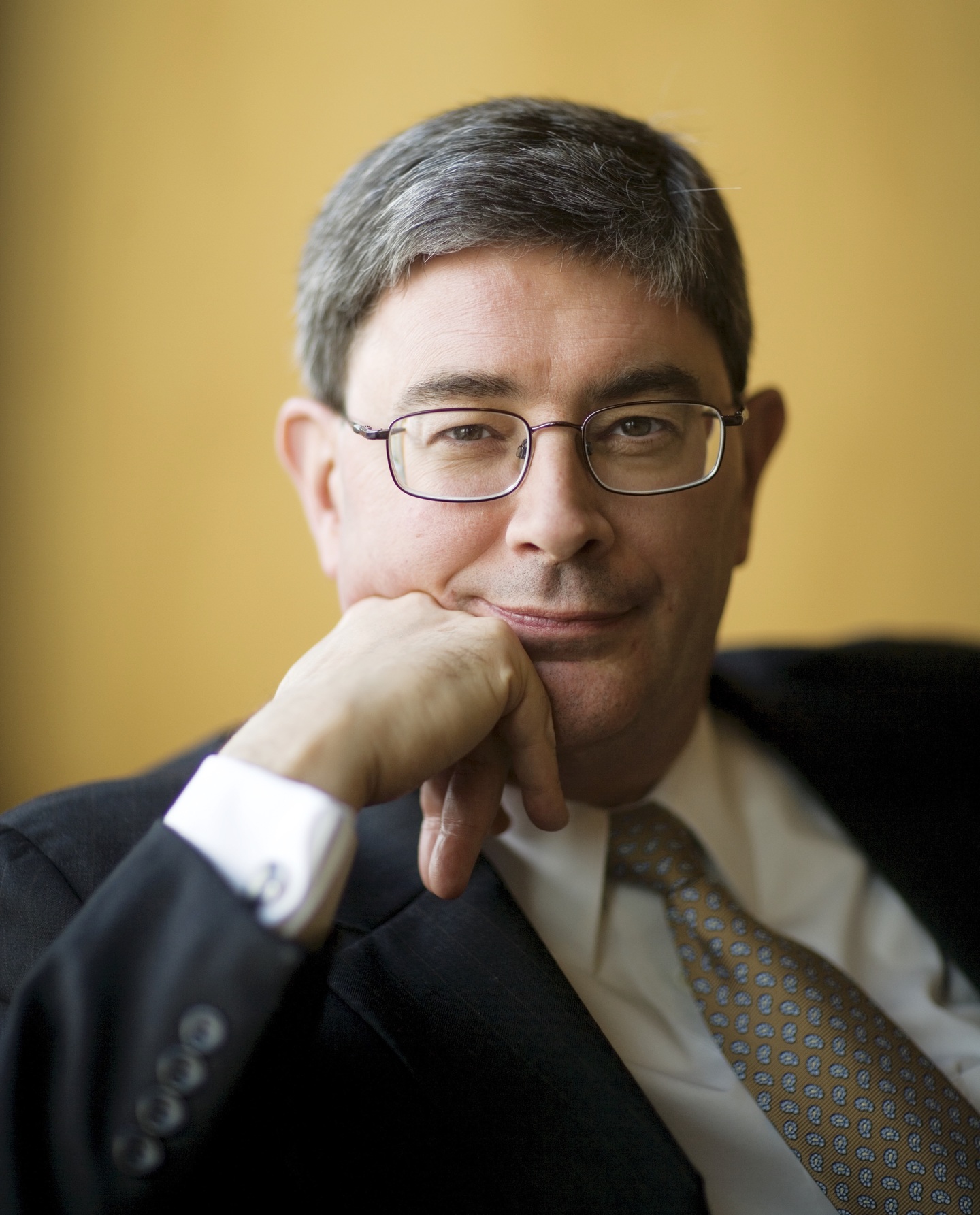
George Weigel is Distinguished Senior Fellow of Washington, D.C.’s Ethics and Public Policy Center, where he holds the William E. Simon Chair in Catholic Studies.
Photo by John Morgan via Creative Commons. Image cropped.
Like First Things on Facebook, subscribe to First Things via RSS, and follow First Things on Twitter.
Dear Reader,
Can I be direct with you?
War abroad. Socialists on the rise. AI upending human life. Endless uproar online. The modern attention economy doesn’t want readers — it wants users enslaved to the tyranny of the present.
First Things is the antidote: literary excellence, timeless truths, and a fixed point of reference in a culture that has lost its bearings.
But we can’t do it without readers like you.
Our goal: Raise $150,000 by November 1 to sustain First Things in the year ahead.
Your gift anchors readers in the permanent things.
Make your Fall Campaign gift now using the button below.
If you have any questions or would like more information, please contact Giovanni Del Piero, Director of the Editor’s Circle, at gdelpiero@firstthings.com or 212-627-1985.


YOU MIGHT ALSO LIKE
Why the Death Penalty Is a Sore Point for Papal Authority
Pope Leo XIV marked World Day Against the Death Penalty, observed on October 10, with the following…
Candace Owens and the Sin of Anti-Semitism
According to the online Encyclopedia Britannica, Sir Moses Montefiore (1784–1885) was “an Italian-born businessman who was noted…
The Myth of St. Francis
At the beginning of his 2020 encyclical, Fratelli Tutti, Pope Francis speaks of “an episode in the…
