
Reason magazine’s science writer, Ron Bailey, has long been in the thrall of transhumanism. (We debated once at CUNY). He has swallowed the immortality project without even chewing and has baptized himself in the scientism neo-faith that The Singularity will usher in a new era of super post humans.
He writes most recently of a debate he held on the issue, about which I wish to pick a bone. From “Is Transhumanism Coercive?” in Reason:
I advocate a liberal tolerant approach: People who reject enhancements for themselves and their progeny are free to do so, whereas those who want to upgrade their mental and physical capacities are also free to do so. Lawler believes, however, that the tolerance I favor must inevitably give way to coercion.
But transhumanizing one’s children is, by definition, coercive as to the child.
How can I put it in a way that Bailey will understand? Assume scientists find a “religion” gene that expresses for people to experience intense faith. And say, a fundamentalist Christian, decides he wants to ensure his kid will be saved for eternity—and so he transhumanizes the kid to have the “faith” gene, thereby creating a strong propensity in his child to believe. Would Bailey say that child had not been coerced into being religious? I doubt it.
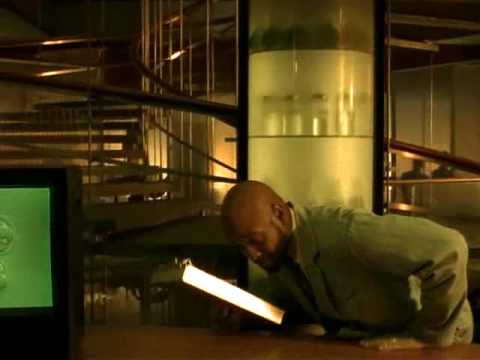
He might say—I don’t know—that engineering for faith should be forbidden. If so, he would be violating transhumanist libertarianism by constraining the “freedom” to post humanize children to only those enhancements with which he—or better stated, the power structure—approves. If not, he accepts the transhumanist core belief that in some sense children are mere sentient products, properly accessorized to please the desires and fulfill the wishes of their purchasers (or not, as in the classic Gattaca scene embedded above).
Transhumanism has revived the pernicious idea of the ubermenchen in the hubristic belief that they have the wisdom to intelligently design human life beyond how we evolved, were created, or were designed by a greater force than ourselves. They don’t, and they forget that often our human imperfections bring out the best in people—and indeed help produce greatness. (Would Abraham Lincoln have been Abraham Lincoln without what may have been his congenital melancholia?) In any event, the eugenic implications of transhumanist ideology are more than frightening.
Dear Reader,
Can I be direct with you?
War abroad. Socialists on the rise. AI upending human life. Endless uproar online. The modern attention economy doesn’t want readers — it wants users enslaved to the tyranny of the present.
First Things is the antidote: literary excellence, timeless truths, and a fixed point of reference in a culture that has lost its bearings.
But we can’t do it without readers like you.
Our goal: Raise $150,000 by November 1 to sustain First Things in the year ahead.
Your gift anchors readers in the permanent things.
Make your Fall Campaign gift now using the button below.
If you have any questions or would like more information, please contact Giovanni Del Piero, Director of the Editor’s Circle, at gdelpiero@firstthings.com or 212-627-1985.

YOU MIGHT ALSO LIKE
The Church in the Age of Therapy
In 1966, Philip Rieff wrote in The Triumph of the Therapeutic that “Religious man was born to…
Canada’s Deadliest Blind Spot
On September 20, the Daily Mail ran a story with the provocative headline, “Our 83-year-old Christian grandmother…
The Faithful Joy of Dolly Parton and Fulton Sheen
Dolly Parton and Fulton Sheen seem to have had little in common. She favored rhinestones; he wore…
