
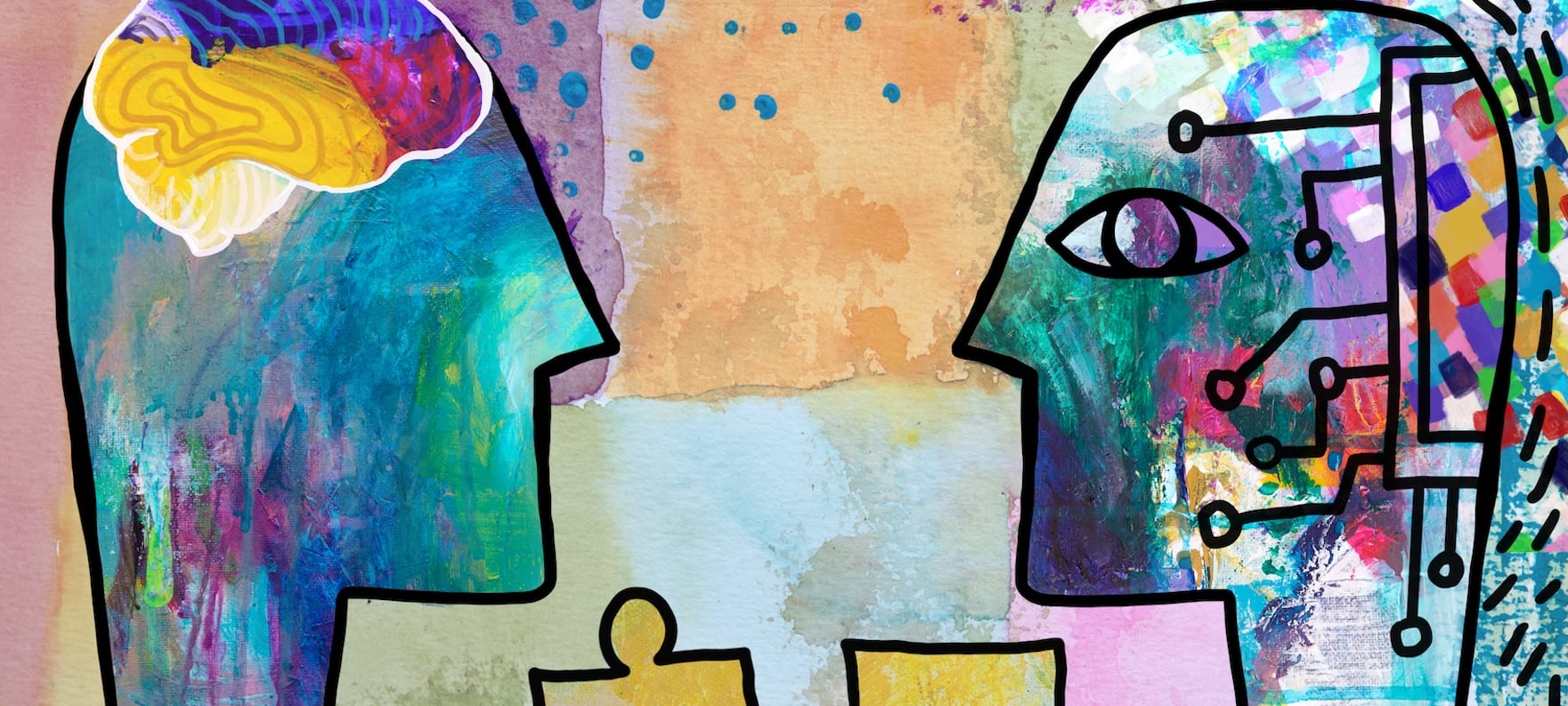
Imagine a friend who is awake whenever you are, never grumpy, and always interested in what interests you. She instantly forgives any snide remark and responds to a week of neglect with delight to see you again. She never grows bored, never disappoints you, and never asks you to be different than you are.
Last year, Meta CEO Mark Zuckerberg noted in an interview that most Americans report having fewer than three friends, though they would like to have many more. He suggested that AI companions could fill the gap. Already, AI apps such as Nomi, Replika, and Character.AI provide on-demand conversations with human-like virtual characters.
According to a 2025 study by Common Sense Media, nearly three-quarters of American teenagers have tried an AI companion, and one-third have turned to one specifically for friendship, romance, or emotional support. This is an alarming trend, and it merits a swift and decisive response.
These products are arriving at precisely the wrong moment. In 2025, the Global Flourishing Study, which tracks more than 200,000 people across twenty-two countries, measuring happiness, health, character, close relationships, meaning, and financial security, found an unexpected reversal. For decades, well-being research showed a U-shaped curve across the lifespan, with well-being high in youth, declining through middle age as career and family stresses press hardest, and rising again later in life. Today, young adults increasingly report the lowest levels of flourishing of any age group. In the United States, the older a respondent is, the more likely he or she is to report higher scores across all domains of flourishing. We are no longer confronting a youth mental-health crisis. We are confronting a youth flourishing crisis.
Why now? Close social relations are among the strongest predictors of flourishing. Whereas earlier generations entered adulthood with their relationships largely intact, this one is arriving already short of them, likely due in part to the ill effects of chronically online childhood. Delayed sleep, less in-person time, and fragmented attention are just a few of the effects of digital addiction. Technologies designed not to supplement friendship but to replace it thus deserve far greater scrutiny.
To their credit, lawmakers have moved quickly. California has passed Senate Bill 243, requiring AI companions to disclose that the user is talking to a machine and not a person. In New York, legislation that would prohibit some chatbot behaviors considered unsafe for children and teenagers has passed both chambers and has been sent to Gov. Kathy Hochul for her consideration. In the U.S. Congress, the GUARD Act, which would bar minors from AI companions and require age verification for every user, cleared the Senate Judiciary Committee unanimously in April, though its prospects for becoming law remain uncertain. Much of this activity is in response to well-publicized cases of children who committed suicide after months of confiding in these systems, often without their parents knowing the extent of the engagement.
These legislative initiatives should be encouraged. But they treat as a matter for adult discretion a phenomenon that is destructive in itself. The benefits of an artificial friend or romantic partner are illusory, as the palliation of an evening’s loneliness is not a cure for loneliness. The harm, by contrast, is very real: Artificial friends undermine our capacity to form and sustain real relationships, friction and all. Relationships with other human beings are essential to a good life, and they are already in retreat across our society. As a 2023 U.S. Surgeon General’s report showed, the problem is profound. Approximately half of American adults report experiencing loneliness. The report noted the role of digital technology, citing a study in which young adults who used social media for more than two hours per day were twice as likely to feel socially isolated as those who used it for less than thirty minutes per day.
AI “friends” differ from earlier technologies in that social media, for all its harms, directed us outward, toward other people. The person at the other end of the feed was real—someone you might pass on the street, work beside, argue with, marry. A virtual friend or romantic chatbot is not an imperfect bridge to other people; it is a replacement for other people. It points us only to itself—or back at ourselves.
We do not propose a ban on all relational AI chatbots. Certain general-purpose AI assistants or skill-building chatbots may have good uses, and some may be rendered more effective by the incorporation of relational elements. At UNC Chapel Hill’s School of Civic Life and Leadership, an instructor repurposed an AI sales tool in order to help students practice having a conversation with someone they disagreed with. The tool’s avatar responded in real time, giving the students something close to live practice in civil discourse. Though we may not always use all chatbots well, they are not universally harmful. But the general-purpose chatbot is very different from the chatbot specifically designed to replace the intrinsic good of another person.
Western liberalism affords adults wide discretion in deciding what is good for them. This premise, though, is sometimes made to do more work than it really can. It is best thought of as a rule for adjudicating among rival or competing goods, for it assumes that all options are good to one degree or another. But when activities or substances are regarded as essentially or universally harmful, the state does sometimes enact a universal ban (as with hard drugs, for example).
Such bans often arise because the activity in question damages some good or replaces it with a fake. We ban organ sales not because the sale of an organ is per se harmful to any one person, but because putting a price on a body doesn’t stop with the individual—it turns bodies into commodities. We also ban counterfeit products and activities. Counterfeit money merits harsh punishment because it debases the form of exchange that makes modern capitalist societies function. From handbags to drugs, we care about banning fakes.
AI products that have as their principal goal artificial friendships or romance might likewise be banned. When the end is to replace human relationships, the product’s intended use is inherently harmful. If we are willing to ban counterfeit money, why shouldn’t we ban counterfeit relationships? Without human-to-human relationships, very little of the good life is possible. We lose the face-to-face connection; we lose the potential to grow together; we lose the capacity to contribute to the life of another.
Chatbots aimed at friendship and romance have no place in a flourishing life. What we have learned over the last two decades about the effect of social media on human relationships may pale in comparison to what will soon emerge with friendship and romance chatbots, if we do not act quickly.
We are made for one another, and learning to bear the friction of a relationship—to be known, to disappoint or be disappointed, to forgive or be forgiven—is not an obstacle to the good life but constitutive of it. As Dietrich Bonhoeffer pointed out in Life Together, community begins on the far side of disappointment with others and ourselves. A truly flourishing society would not stop at protecting its children from these tools. It would ask the harder question: If these systems erode the capacities on which a flourishing life depends, why should harms to the young be the only ones that merit prevention?

YOU MIGHT ALSO LIKE
How to Train Your Elites
Democratic Socialists of America on the march. Angry MAGA voters. Shrill online extremism. Protesters who can’t name…
While We’re At It
♦ Richard Nixon is back. JD Vance championed the thirty-seventh president when speaking at the Nixon Library in…
After Disenchantment
What does the phrase “disenchantment of the world” mean? Disenchantment is easy to identify and even easier…
