
It’s easy to see why gay activists invoke the civil-rights movement of the 1950s and early 1960s, and not just because it’s a handy way to take the moral high ground. It puts a large body of legal sanctions, an expansive bureaucratic power, and a well-established tradition of social censure behind the goals of sexual liberation.
Last summer, New York’s mayor Michael Bloomberg gave a speech in advance of the close vote in the New York state legislature that decided that men have a right to marry men and women women. He described the fight for same-sex marriage as “the great civil-rights issue of our times.” He then went on to issue the threats latent in the analogy: “On matters of freedom and equality, history has not remembered obstructionists kindly. Not on abolition. Not on women’s suffrage. Not on workers’ rights. Not on civil rights. And it will be no different on marriage rights.”
It’s a chilling warning, one meant to intimidate. History has been not only unkind in memory, but also highly punitive in fact. The civil-rights movement set in motion what has been undoubtedly the most extensive and pervasive expansion of government power over society. It was to American culture what the New Deal was to the economy.
Responding to entrenched and systemic racial discrimination, the Civil Rights Act of 1964 did not just dismantle Jim Crow as a legal regime in the South. It prohibited racial discrimination in nearly all aspects of American economic and social life. Along with the Voting Rights Act of 1965 and subsequent Supreme Court decisions, this seminal legislation created an energetic bureaucracy and expansive body of law that sought to stamp out racial discrimination.
Conservative libertarian and presidential hopeful Barry Goldwater notoriously voted against the Civil Rights Act (something he later said he regretted doing). Southern states had voting laws that effectively disenfranchised blacks, as well as an elaborate legal apparatus that enforced discrimination in everything from education to courthouse bathrooms. Goldwater claimed to be in favor of using the power of the federal government to overturn these forms of state-sponsored discrimination. But he insisted that trying to prohibit discrimination in employment and public accommodations empowered the government to interpose itself into the everyday lives of citizens to an unprecedented degree. With his characteristic bluntness, he warned that a government mandate to prevent and correct discrimination at all levels of society would require a “police state.”
I certainly hope that if I had been in Goldwater’s position I would have voted for the Civil Rights Act. And yet, however misaligned his moral compass was in 1964 and hyperbolic his description of the consequences of the translation of the goals of racial equality into government policy, he wasn’t entirely wrong about the implications of the legislative and courtroom victories of the civil-rights movement.
The various implementations of the broad antidiscrimination mandate were often heavy-handed. For example, the Nixon administration formulated the “Philadelphia Plan,” which imposed hiring quotas on unions, an initiative designed as much to punish Nixon’s union adversaries as to promote racial equality. Mandatory school-busing programs were implemented, often against a great deal of local resistance. Corporations and universities put in place quotas and special hiring programs.
Beginning in the late 1970s, the legal and bureaucratic machinery for securing civil rights for blacks was refined and extended. The courts struck down the use of strict quotas in most cases, and in their place emerged a powerful and pervasive system of employment regulations, legal sanctions, and bureaucratic review. Gender equality was added to the antidiscrimination mandate, as well as legal protection against discrimination based on disability. The details of this multifaceted system are complex and continue to be litigated in the courts.
As the legal apparatus was put in place, tremendous efforts were put into reeducating the American public. Growing up in Baltimore, I remember hearing full-throated racism expressed in public into the early 1970s. Suddenly things changed. Many were persuaded by the vision of equality put forward by the leaders of the civil-rights movement, and those who weren’t came to feel a punishing social censure. By decade’s end, racist statements, and even the suspicion of racism, evoked denunciations and ended careers. Feeling the threat of social sanctions, the voice of racism largely went silent, or underground.
A few years ago, in an electronic discussion on Slate, William F. Buckley, Jr. and Michael Kinsley agreed that the Civil Rights Act set in motion an unprecedented intrusion of government power into the private lives of citizens. Referring to the public-accommodations portion of the act, Kinsley allowed that “using the power of government to tell people whom they must do business with really is a major imposition on private freedom.” But given the depth and degree of racial discrimination suffered by black Americans for generations, he judged this intervention and exercise of social control justified. Buckley agreed with Goldwater in 1964, but he later allowed that he had been mistaken. Fighting the evil of racial discrimination really did require something like a government takeover of our racist culture.
That necessity has left a potent legacy. We have a large body of civil-rights law as well as countless legal clinics and nonprofits staffed by lawyers trained to apply and extend its influence. We also have a large bureaucratic apparatus to monitor many aspects of society and to intervene if discrimination is detected. Federal, state, and local agencies have civil-rights divisions and commissions. Nearly all large corporations, universities, and nonprofits have affirmative-action officers and diversity consultants.
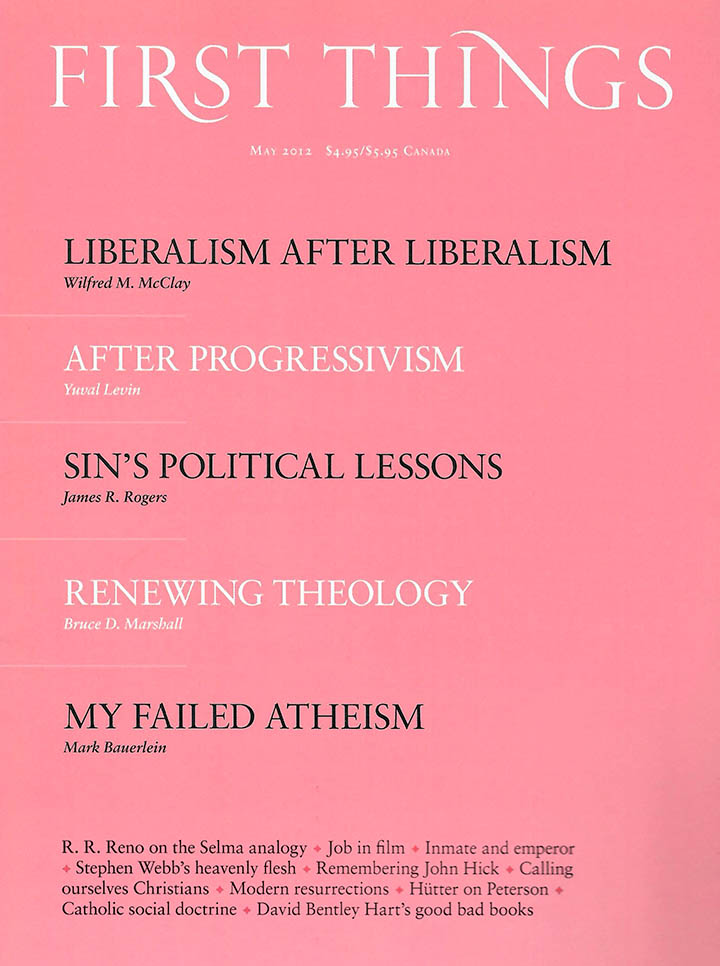
That’s why the widespread use of what we can call the Selma analogy does not constitute an idle threat. As the imposition of homosexual rights on a recalcitrant society becomes “the great civil-rights issue of our times,” this large and powerful apparatus will swing into action against those it considers the equivalent of racists, as it already is doing. The courts have used reasoning from historic civil-rights decisions to redefine marriage. They are likely to use the same reasoning to empower Equal Opportunity Employment Commission lawyers and others to add sexual orientation to their lists.
Moreover, as was the case with racial discrimination, informal social sanctions play a crucial role. The liberal consensus now sharply censures those who fail fully to affirm the moral rightness of homosexual acts, making opposition to innovations such as same-sex marriage akin to racism, and thus career-ending.
But opposing racism is not the same as overturning traditional views of sexual morality, which makes the Selma analogy dangerous. The civil-rights movement fought against a racist mentality that made a racial characteristic rather than a chosen act socially and legally decisive. What a black man achieved in his life was irrelevant; his character and his deeds didn’t matter. A white adulterer drank from the white man’s water fountain; the black saint drank from the colored-only fountain. Jim Crow was concerned only with skin color.
Most Americans accepted the massive intrusion of state power into social life after the Civil Rights Act, and most got behind the new social consensus that denounced and punished racism. To a great extent that acceptance reflected our collective recognition of the moral scandal of racism. Arguments for racial inequality collapsed when whites encountered blacks on equal terms. Virtue, intelligence, talent, and charm do not follow the rules of Jim Crow.
The belief that homosexual acts are immoral is not the same kind of claim as the belief that black people are inferior because they are black. When we deem homosexual acts immoral, we are not stigmatizing a class of persons; we’re exercising our moral reason about the rightness and wrongness of actions. Unlike racism, principled opposition to homosexual rights has a firm basis. It’s normal to judge behavior, including (and, perhaps especially) sexual behavior. That’s why describing homosexual acts as immoral is not at all like calling black men and women inferior.
To merge sexual liberation into the civil-rights movement dramatically raises the stakes in public debate. The Selma analogy makes traditional views of sexual morality as noxious as racism, and in so doing encourages progressives to adopt something like a total-war doctrine. The implication is that people who hold such views should have no voice in American society and that homosexuality should be aggressively affirmed in our public and private institutions, while dissent is punished.
Chai Feldblum is an Obama appointee to the Equal Employment Opportunity Commission who recognizes that the Selma analogy is based on a deeper moral disagreement. In the past, people thought that being male and female mattered in sexual morality. Now they don’t, or at least lots of powerful, well-educated people like Chai Feldblum don’t. And these powerful people have a very large and powerful legal and social bulldozer at their disposal, one created by the civil-rights movement. And they will use it—because they can.
She sees the future this way: “Positive changes in the moral values of our country—such as moral values that honor the love between two people, regardless of their gender—will inherently and necessarily pose a challenge to those who believe, for religious or other reasons, that such love is sinful.” The “challenge” is that the coercive power of government and the social censure of elite opinion will force people to accept homosexuality whether they like it or not. For example, when asked her opinion on the conflict between homosexual rights and the moral commitments of religious institutions she insisted that “in almost all cases sexual liberty should win, because that’s the only way that the dignity of gay people can be affirmed in any realistic manner.” It’s a frank statement that clarifies how few restraints progressives feel once they are convinced that they are fighting for “the great civil-rights issue of our times.”
Hard cases make bad laws, and severe crises make for bad policies. Slavery and the legacy of racial discrimination in America demanded dire action; first a war of guns and cannons and then, a hundred years later, a war of laws and social coercion. Necessary, perhaps, but hardly the usual way (as Feldblum unfortunately presumes that it is) in which a society should work out its disagreements about moral questions.
Unless, of course, one’s goal is to crush those who disagree. I fear that we are entering into a new phase of the culture war. Unlike social conservatives who (abortion excepted) do not look to the coercive power of the state as necessary, or even useful, in their goal of restoring traditional moral views, progressives like Chai Feldblum self-consciously and programmatically seek to use the power of the state to achieve their goals. The Selma analogy gives them a rationale for deploying the vast coercive power of the civil-rights apparatus to serve their moral vision of sexual liberation. It’s a prospect that will give an even more literal meaning to the dictatorship of relativism.


YOU MIGHT ALSO LIKE
Who Killed the Clancy Children?
After a Massachusetts jury failed to convict Lindsay Clancy of strangling her three small children to death…
A Terrible Coarsening
The now-ubiquitous terms “reproductive health” and “reproductive freedom” have contributed mightily to a slaughter of the innocents…
The Stench of Corruption
The Trump family’s exploitation of every opportunity to enrich themselves demoralizes me, as I’m sure it does…
