
In three weeks, a panel of senior judges will hear Cardinal George Pell’s appeal of the unjust verdict rendered against him at his retrial in March, when he was convicted of “historical sexual abuse.” That conviction did not come close to meeting the criterion of guilt “beyond a reasonable doubt,” which is fundamental to criminal law in any rightly-ordered society. The prosecution offered no corroborating evidence sustaining the complainant’s charge. The defense demolished the prosecution’s case, as witness after witness testified that the alleged abuse simply could not have happened under the circumstances charged—in a busy cathedral after Mass, in a secured space.
Yet the jury, which may have ignored instructions from the trial judge as to how evidence should be construed, returned a unanimous verdict of guilty. At the cardinal’s sentencing, the trial judge never once said that he agreed with the jury’s verdict; he did say, multiple times, that he was simply doing what the law required him to do. Cardinal Pell’s appeal will be just as devastating to the prosecution’s case as was his defense at both his first trial (which ended with a hung jury, believed to have favored acquittal) and the retrial. What friends of the cardinal, friends of Australia, and friends of justice must hope is that the appellate judges will get right what the retrial jury manifestly got wrong.
That will not be easy, for the appellate judges will have been subjected to the same public and media hysteria over Cardinal Pell that was indisputably a factor in his conviction on charges demonstrated to be, literally, incredible. Those appellate judges will also know, however, that the reputation of the Australian criminal justice system is at stake in this appeal. And it may be hoped that those judges will display the courage and grit in the face of incoming fire that the rest of the Anglosphere has associated with “Australia” since the Gallipoli campaign in World War I.
In jail for two months now, the cardinal has displayed a remarkable equanimity and good cheer that can only come from a clear conscience. The Melbourne Assessment Prison allows its distinguished prisoner few visitors, beyond his legal team; but those who have gone to the prison intending to cheer up a friend have, in correspondence with me, testified to having found themselves cheered and consoled by Cardinal Pell—a man whose spiritual life was deeply influenced by the examples of Bishop John Fisher and Sir Thomas More during Henry VIII’s persecution of the Church in sixteenth-century England. The impact of over a half-century of reflection on those epic figures is now being displayed to Cardinal Pell’s visitors and jailers, during what he describes as his extended “retreat.”
Around the world, and in Australia itself, calmer spirits than those baying for George Pell’s blood (and behaving precisely like the deranged French bigots who cheered when the innocent Captain Alfred Dreyfus was condemned to a living death on Devil’s Island) have surfaced new oddities—to put it gently—surrounding the Pell Case.
How is it, for example, that the complainant’s description of the sexual assault he alleges Cardinal Pell committed bears a striking resemblance—to put it gently, again—to an incident of clerical sexual abuse described in Rolling Stone in 2011? How is it that edited transcripts of a post-conviction phone conversation between the cardinal and his cathedral master of ceremonies (who had testified to the sheer physical impossibility of the charges against Pell being true) got into the hands (and thence into the newspaper writing) of a reporter with a history of anti-Pell bias and polemic? What is the web of relationships among the virulently anti-Pell sectors of the Australian media, the police in the state of Victoria, and senior Australian political figures with longstanding grievances against the politically incorrect George Pell? What is the relationship between the local Get Pell gang and those with much to lose from his efforts to clean up the Vatican’s finances?
And what is the state of serious investigative journalism in Australia, when these matters are only investigated by small-circulation journals and independent researchers?
An “unsafe” verdict in Australia is one a jury could not rationally have reached. Friends of truth must hope that the appellate judges, tuning out the mob, will begin to restore safety and rationality to public life Down Under in June.
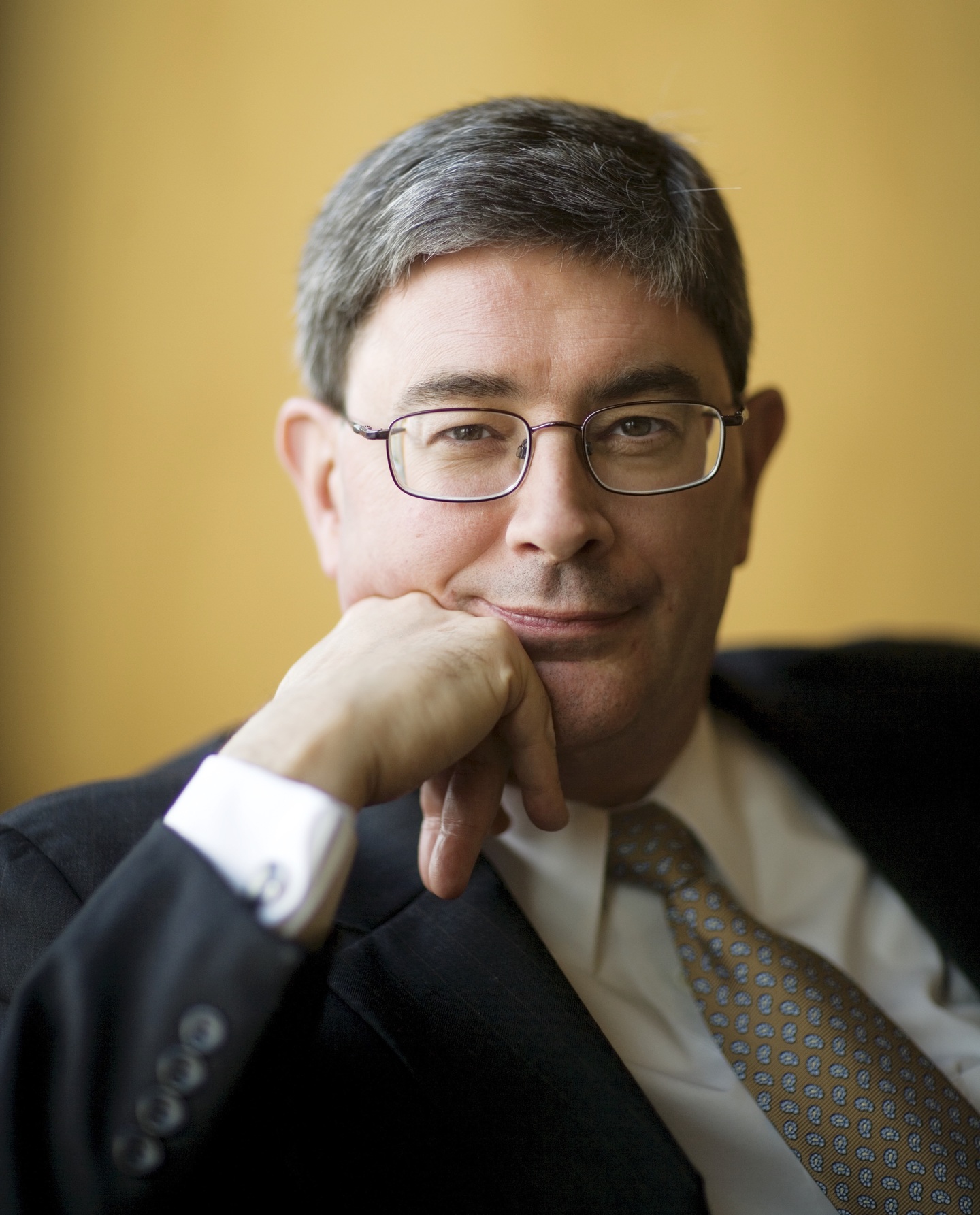
George Weigel is Distinguished Senior Fellow of Washington, D.C.’s Ethics and Public Policy Center, where he holds the William E. Simon Chair in Catholic Studies.
Become a fan of First Things on Facebook, subscribe to First Things via RSS, and follow First Things on Twitter.
Dear Reader,
Can I be direct with you?
War abroad. Socialists on the rise. AI upending human life. Endless uproar online. The modern attention economy doesn’t want readers — it wants users enslaved to the tyranny of the present.
First Things is the antidote: literary excellence, timeless truths, and a fixed point of reference in a culture that has lost its bearings.
But we can’t do it without readers like you.
Our goal: Raise $150,000 by November 1 to sustain First Things in the year ahead.
Your gift anchors readers in the permanent things.
Make your Fall Campaign gift now using the button below.
If you have any questions or would like more information, please contact Giovanni Del Piero, Director of the Editor’s Circle, at gdelpiero@firstthings.com or 212-627-1985.


YOU MIGHT ALSO LIKE
Why the Death Penalty Is a Sore Point for Papal Authority
Pope Leo XIV marked World Day Against the Death Penalty, observed on October 10, with the following…
Candace Owens and the Sin of Anti-Semitism
According to the online Encyclopedia Britannica, Sir Moses Montefiore (1784–1885) was “an Italian-born businessman who was noted…
The Myth of St. Francis
At the beginning of his 2020 encyclical, Fratelli Tutti, Pope Francis speaks of “an episode in the…
