
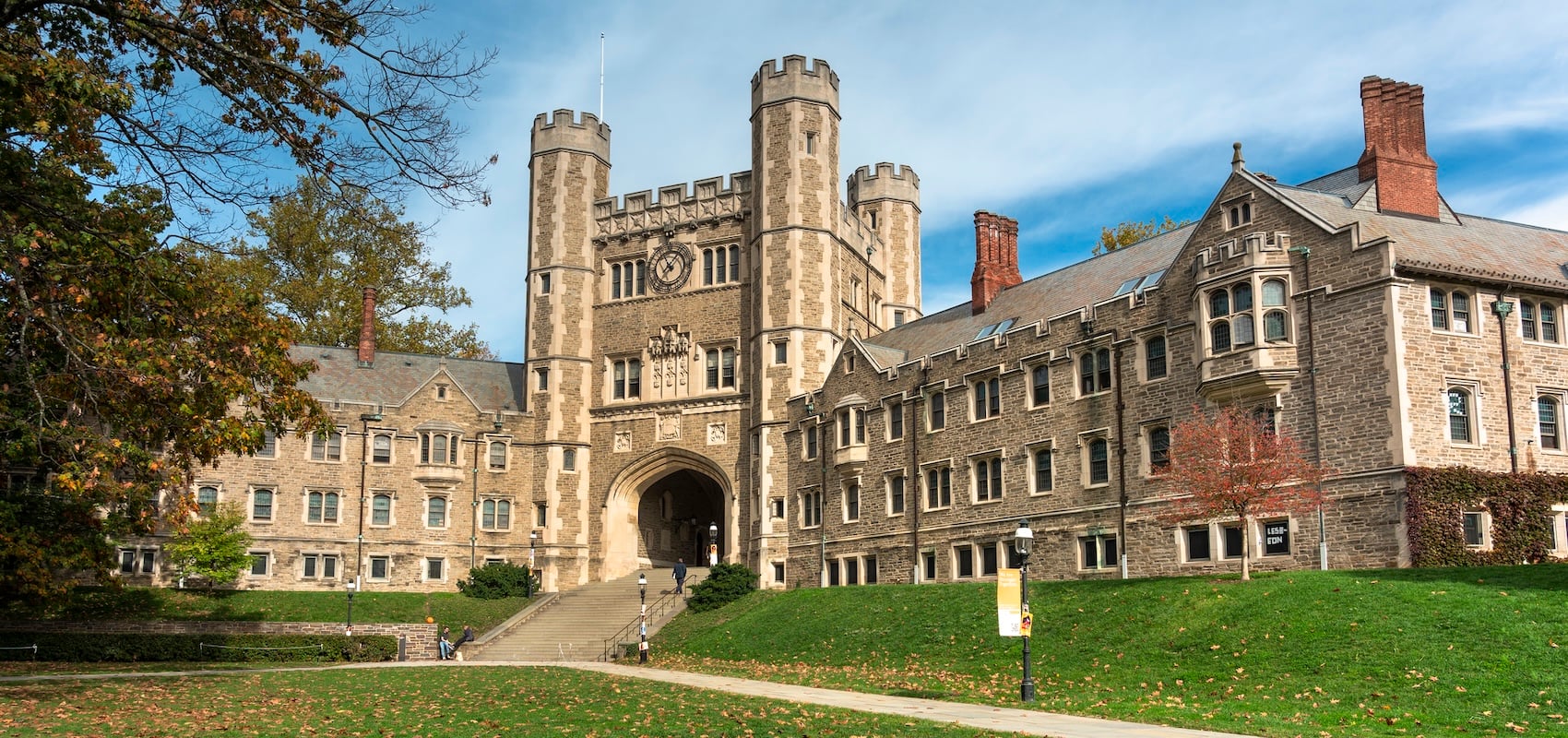
On Monday, the Princeton University faculty voted overwhelmingly to end the 133-year-old tradition of unproctored examinations. Princeton had previously administered all assessments on the honor system. Former dean of the college Jill Dolan, discussing the change with the campus newspaper, declared, “I think we need some different practices in this day and age.” Only one faculty member opposed the change.
It is a strange thing to live through the end of an era. Princeton had long been the ultimate bastion of Ivy League gentility, the consummate embodiment of high-trust American culture. Cheating on a test, Princeton novelist F. Scott Fitzgerald wrote, “simply doesn’t occur to you, any more than it would occur to you to rifle your roommate’s pocketbook.” As in all living cultures, the actual rules were not spelled out. The place occupied in a more corrupt society by written rules was instead taken up by an internal ethic, socially enforced, and summed up in a single word—honor.
I never sat a proctored exam at Princeton; I never had a professor expect anything from me but complete integrity. When I did a semester abroad during my junior year, a conflict of schedules meant I had to leave before the Princeton semester concluded. I took my exams abroad, on my honor, timing myself and faxing back the results. At the conclusion of each exam, I wrote out the statement, “I pledge my honor that I have not violated the Honor Code during this examination.” That was the sum total of the supervision I received.
It was a small ritual that bound me to generations before me. The hero of Fitzgerald’s This Side of Paradise, Amory Blaine, “yawned, scribbled his honor pledge on the cover, and sauntered from the room.” He was a gentleman in his exams. Later, someone wrote a song for the pledge, to make it easier to remember. It was performed in a musical revue during freshman week. I memorized the pledge then and have never forgotten it. I was told to take it seriously, and I did.
Its lessons seeped into me. Honor started in yourself: You would not claim as yours something that was not. It led you to accept your limitations, and as such was ultimately a form of respecting yourself. At my first job interview, my interviewer had a copy of my transcript. “You don’t like physics, I see,” he mocked. I had A’s in Latin and Greek and English and history, and a C- in physics. I did not blink. The grade, I informed my future boss, accurately reflected how much physics I knew. “If you’re looking for an expert in physics,” I said, “I think you will find me a C- candidate.”
If honor started with inner honesty, it soon had other ramifications. When I accurately measured my own limitations, I noticed the achievements of others more. You respect the achievements of others when you refuse to claim them as your own. It also awakened in me a spirit of what the ancient Romans called emulation, not imitation but a striving for the achievements you see in others. I realized I couldn’t take credit for things I had not done. But that meant I wanted to do something, to achieve something, to have an accomplishment that was undoubtedly mine. I had a friend who dreamed all the time of winning the lottery. I didn’t. I didn’t want something for nothing. That wasn’t honor. I wanted to earn my place.
Living with the Honor Code gave you a sense of privilege: You were part of a group, and in the group, you could be sure that mistrust was misplaced. I enjoyed my professors’ confidence in me; it felt like the proper way of things. I honored them by doing my work honestly, and they honored me with their trust. We were aware that not all people acted this way; but we did.
For this reason, I felt a particular contempt for cheaters. It was dishonorable in itself; it made life worse for everyone else, too. It was a social offense. And part of the Honor Code was an explicit requirement to report any cheating. Many people say they like honor codes, but then claim they hate snitches, people who “rat out” others. To me the only rats were the people who tried to claim work that was not theirs. I felt no particular compassion for them. There were transfer students waiting to take their places. I would have had no difficulty turning in a cheater, but I can say that I never knew anyone who committed an Honor Code offense. The system generally worked.
Up until recently, that is. Out of five hundred survey respondents from the class of 2025, 30 percent reported that they had cheated; 45 percent claimed they knew of someone else cheating but did not report it. No one appears to be rebutting the claim that the Honor Code has in fact broken down.
It is interesting to consider why. For one thing, AI is new and remains somewhat morally ambiguous. Just last year, Princeton announced the creation of the “New Jersey AI Hub” at Princeton, a collaboration between the university, Microsoft, CoreWeave, and the New Jersey government, “to foster AI innovation.” Princeton treating AI as a welcome technology and future economic engine at least suggests that students who use AI are merely using the tools that everyone will soon find appropriate for these tasks. In the past, cheating involved someone else’s work; the removal of the person has made that at least slightly less clear. Yet faculty discussions of cheating suggest more than just AI use on papers: They report widespread use of devices during exams and professors refusing to give take-home exams, as the results are now frequently worthless.
A symptom of breakdown is the fact that the faculty have imposed the change. Students have not demanded it themselves. They have made it clear that they do not feel the contempt and revulsion for violators that was such an integral part of the old way: Almost half of the students have seen violations they did not report. The old honor system has been replaced by open cheating and a general culture that does not care enough to report it.
A culture of honesty cannot be rebuilt without this culture of enforcement, and that culture of enforcement probably cannot exist without the emotive power of ostracism and contempt. We certainly see a desperate need for honesty. Princeton still has it better than most places. I would be shocked to see Princeton faculty found guilty of the kinds of financial fraud and graft that have become normal in our government. Yet we have seen a culture of academic integrity come undone before our eyes: Not even the president of Harvard University can be relied on. If this is how our elite compete for grades, we can guess what bad news is coming when they start competing for money and mates and fame, in a society increasingly devoid of honor.

YOU MIGHT ALSO LIKE
SlutCon’s Emotional Void
The tech-rationalist phenomenon “SlutCon” caused quite a stir online, perhaps predictably. SlutCon was a multi-day retreat and…
The Boys on the Brink
In the latest installment of the ongoing interview series with contributing editor Mark Bauerlein, Leonard Sax joins…
Serial Liar, Serial Comma
How would you write a public letter that you know will become front-page news? Would you write…
