
Reading—for obvious reasons—Henri Daniel-Rops’s The Church in the Dark Ages, I have been repeatedly struck by the truism that moments of institutional crisis demand genuinely great leaders. Movements, forces, trends are all very well, but in the end you need these towering figures like an Augustine who can encapsulate the essence of Christian theology and philosophy in a single body of work, a Benedict who can found an entire way of life, a Charlemagne who can reboot civilization, a Pope Leo who can face down a brutal warmonger . . .
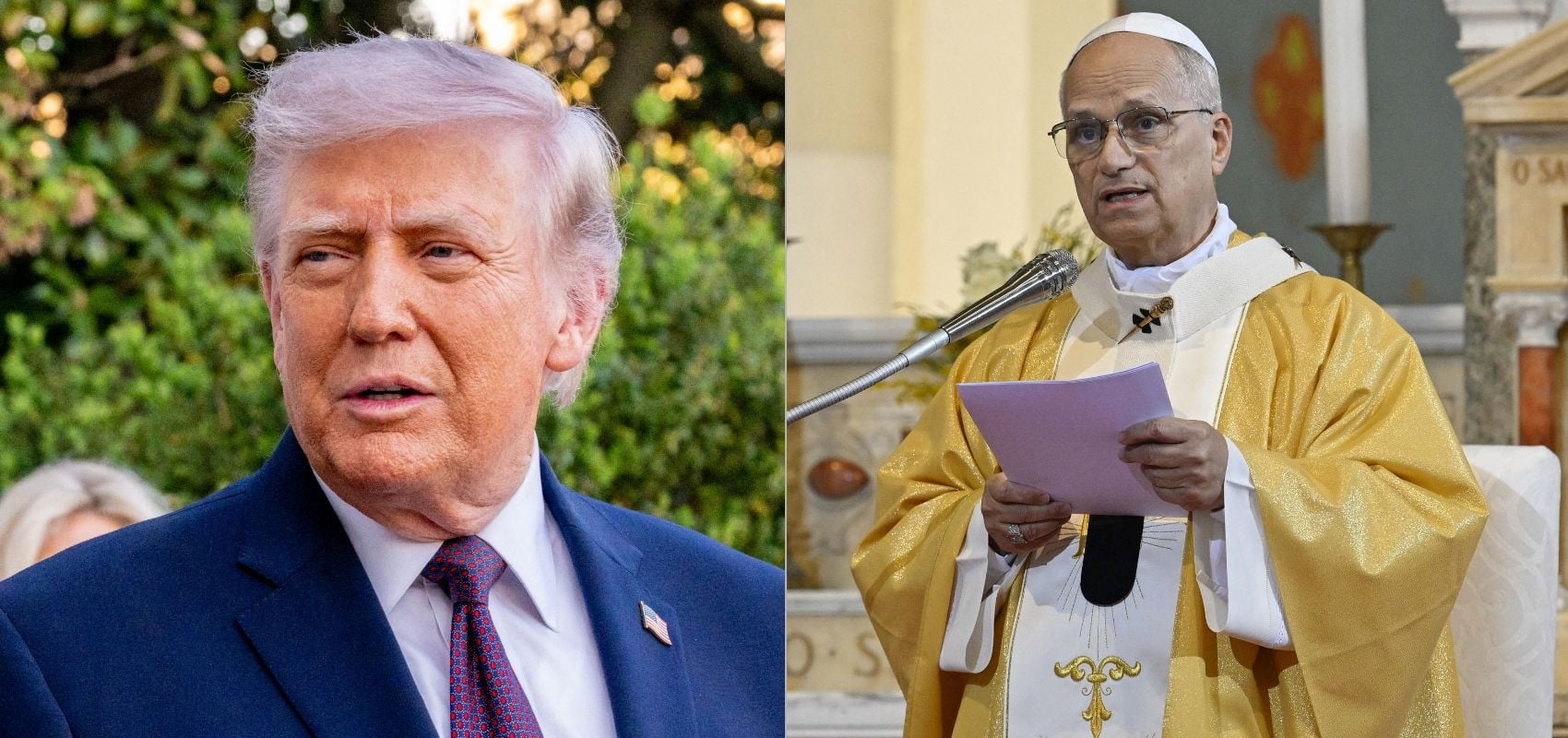
Ah yes. That. Watching the confrontation between the Holy Father and the White House, it is tempting to see in it a kind of epochal struggle for the soul of Western culture. On the one hand, a man of peace, standing for the oldest, grandest, strangest institution on the planet, bringing the same message of love that Jesus Christ preached when he walked the earth; on the other, the incarnation of pride and vengefulness, now driven to the point of actually blaspheming and presenting himself as Christ as his destructive rage threatens an ancient civilization and the stability of the world.
There’s something to that, perhaps. But taking a longer view, the conflict represents something else. We are not in an age of great leaders; instead we are being granted some tantalizing images of what great leadership might be.
In Trump, you can witness the force of a single character to overturn apparently immovable facts. First he walked straight through the Republican Party’s internal defenses and claimed it as his own; then he won victory after victory against the cultural left, who had seemed all-powerful in the middle of the last decade; then he has repeatedly seen off scandals and lawsuits that would have sunk any other politician. Anyone not impressed by this, with whatever reservations, is kidding himself.
However, Trump looks less and less like a great figure, not just because of his failings but because those failings seem increasingly to be destroying even his solid achievements. This month we are getting a spectacular lesson in why pride is considered the gravest of sins. It is chilling to reflect that last year Trump appeared to be going through some kind of spiritual crisis—“I want to try and get to heaven if possible. I’m hearing I’m not doing well”—but is now raging against the Vicar of Christ and presenting himself as Jesus. As ChatGPT might put it, that’s not greatness—that’s vainglory.
In Pope Leo, meanwhile, the sheer wonder of the papacy is once again visible. Detached from the ugliness of politics, and yet able to speak with a matchless power in moments of danger; a living proof that Christianity is not irrelevant, but “ever ancient, ever new”; a truly fatherly presence for the billions of us who look to him. And of course no pontiff since John Paul II has come across quite so, well, papally. Leo’s face, his voice, exude prayerfulness and a quiet courage so much in evidence in recent days.
Having said that—“God does not bless any conflict.” Doesn’t he? “Anyone who is a disciple of Christ, the Prince of Peace, is never on the side of those who once wielded the sword and today drop bombs.” Never? “Military action will not create space for freedom or times of #Peace, which comes only from the patient promotion of coexistence and dialogue among peoples.” Is there any chance we could have some more detail on that?
Sorry, but JD Vance isn’t wrong when he says that popes have some responsibility to be precise about these things. (In this case, rather enjoyably, the pope is correct on the specific policy issue whereas the vice president is right about the abstract theological question.) It’s not necessary to relitigate the fascinating arguments about the Book of Joshua, the centurion in the Gospels, King Alfred, St. Louis IX, St. Joan of Arc, the Battle of Lepanto, the Siege of Vienna, the liberation of Nazi-occupied Europe, and any number of thought experiments regarding the tangled and bloody threads of the conflict in the Middle East to make the point that the Holy See is not currently the first place to look for theological rigor. It is only necessary to point out that, almost a year into this pontificate, Cardinal Victor Manuel Fernández is still in charge of the Vatican’s doctrine department.
This isn’t meant to sound ungrateful for the blessings of the Leo pontificate and the obvious goodness of this quiet American. Leo has given us an idea of what a great, history-changing pontificate might be like; but it remains, for now, only an idea. If his pontificate is somewhat reminiscent of Pope Leo I turning back Attila the Hun from ravaging Italy, it is not especially reminiscent of Pope Leo identifying the major heresies, the shocking deviations from the historic and unchanging faith of the Church, and condemning them.
It is this combination of political courage and theological exactitude that has given Leo I the name “The Great.” When popes can emulate that, and when all-powerful statesmen can admit their nothingness before God, then history will be on the move again.
Right Photo by DPPA/Sipa USA / Left Photo by (EV) Simone Risoluti/Vatican Media/Abaca/Sipa USA
Dear Reader,
Can I be direct with you?
War abroad. Socialists on the rise. AI upending human life. Endless uproar online. The modern attention economy doesn’t want readers — it wants users enslaved to the tyranny of the present.
First Things is the antidote: literary excellence, timeless truths, and a fixed point of reference in a culture that has lost its bearings.
But we can’t do it without readers like you.
Our goal: Raise $150,000 by November 1 to sustain First Things in the year ahead.
Your gift anchors readers in the permanent things.
Make your Fall Campaign gift now using the button below.
If you have any questions or would like more information, please contact Giovanni Del Piero, Director of the Editor’s Circle, at gdelpiero@firstthings.com or 212-627-1985.

YOU MIGHT ALSO LIKE
Forget Odysseus. Aeneas Is the True American Hero.
Who is our Odysseus? Or more precisely, who is the most Odyssean hero of American film? Matt…
A Muslim Answer to Muslim Immigration
Modern America worships at the altar of youth and eagerly tracks in polls and market research its…
Meet the Post-Religious Right
There have been many books written about the online right and the Trump movement, most by people…
