
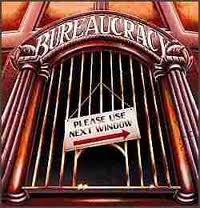
 Merrill Matthews at Forbes makes an excellent point about Obamacare undercutting of the rule of objective law and elevating subjective and/or arbitrary standards of control by bureaucrats—a theme I have also pounded like a drum. Recall, for example, Medicare’s new Independent Payment Advisory Board, the recommendation of which trump a presidential veto!
Obamacare has unleashed price increases in private insurance. (I know it is not the only factor, but it is a factor.) And the Feds’ answer to a problem they created? Try and stop price increases by bureaucratic fiat, based on factors that are not defined and cannot, therefore, be adequately subjected to consistent compliance enforcement. From “Unreasonable Standard:”
Last week we saw a troubling new pattern: The Obama administration is embracing an “unreasonable” standard — pun not necessarily intended, but it fits — for deciding if it likes what private sector companies are doing. The unreasonable standard is being applied to both private sector health insurers and companies that provide Internet service. But expect the White House to impose the standard on a lot more industries as the Obama blob continues to absorb every aspect of the economy. What it means is that we are abandoning the rule of law for the rule by bureaucrats. Unelected officials have been given the power to fundamentally remake industries based on their political and value judgments.
No kidding. Here’s how Matthews sees it working in Obamacare:
Take the Patient Protection and Affordable Care Act (aka, ObamaCare). The law empowers the Department of Health and Human Services (HHS) to monitor health insurance premium increases. If HHS bureaucrats identify increases they think are “unreasonable” — which they define, at least for now, as a 10 percent increase or higher in one year — they can begin to harass the company. The New York Times explains, “A rate increase will be considered unreasonable if it is excessive, unjustified or ‘unfairly discriminatory.’” Translation: HHS bureaucrats, not an objective standard, get to decide who is playing fair and who isn’t. And the punishment? “Under the new federal law, insurers that show ‘a pattern or practice of excessive or unjustified premium increases’ can be excluded from the centralized insurance market, or exchange, to be set up in each state by 2014.”
What do ya bet that big Obama donors who make nice with the administration will be more likely to get a pass on high premium increases?
Exactly. Politically popular regulation isn’t the only thing that matters. Having a reliable, precisely defined, and non arbitrary (what looks good?) standard by which the regulated know they will be judged is essential to economic thriving and risk taking.
The USA’s great strength is that we—as the saying goes—based on the rule of law, not the rule of men. But that great overarching principle is eroding and being replaced by emotionalism (STOP THE GREED!) and political expedience. Obamacare’s construction of a system of bureaucratic fiat is not good for health care—nor the country.
Matthews sees a a potential method to the madness:
Here, folks, we see the usual pattern of liberal, big-government demagogues. They proclaim that they — as the protectors of the people — will ensure the public gets many more benefits for much lower costs. When it becomes evident they can’t deliver on their promises, the demagogues turn to price controls, along with more threats and regulations, as the only way to “stem the greed.” As a result, companies that had been participating in the market begin to drop out, reducing competition and choice. The whole market becomes even more dysfunctional, and the government feels justified in stepping in for a full-scale takeover.
And indeed, some of Obamacare’s biggest boosters have stated that destroying the private health insurance system is the ultimate goal.
Dear Reader,
Can I be direct with you?
War abroad. Socialists on the rise. AI upending human life. Endless uproar online. The modern attention economy doesn’t want readers — it wants users enslaved to the tyranny of the present.
First Things is the antidote: literary excellence, timeless truths, and a fixed point of reference in a culture that has lost its bearings.
But we can’t do it without readers like you.
Our goal: Raise $150,000 by November 1 to sustain First Things in the year ahead.
Your gift anchors readers in the permanent things.
Make your Fall Campaign gift now using the button below.
If you have any questions or would like more information, please contact Giovanni Del Piero, Director of the Editor’s Circle, at gdelpiero@firstthings.com or 212-627-1985.

YOU MIGHT ALSO LIKE
The Church in the Age of Therapy
In 1966, Philip Rieff wrote in The Triumph of the Therapeutic that “Religious man was born to…
Canada’s Deadliest Blind Spot
On September 20, the Daily Mail ran a story with the provocative headline, “Our 83-year-old Christian grandmother…
The Faithful Joy of Dolly Parton and Fulton Sheen
Dolly Parton and Fulton Sheen seem to have had little in common. She favored rhinestones; he wore…
