
Though nothing can bring back the hour
Of splendour in the grass, of glory in the flower;
We will grieve not, rather find
Strength in what remains behind.
—William Wordsworth, “Ode on Intimations of Immortality from Recollections of Early Childhood”
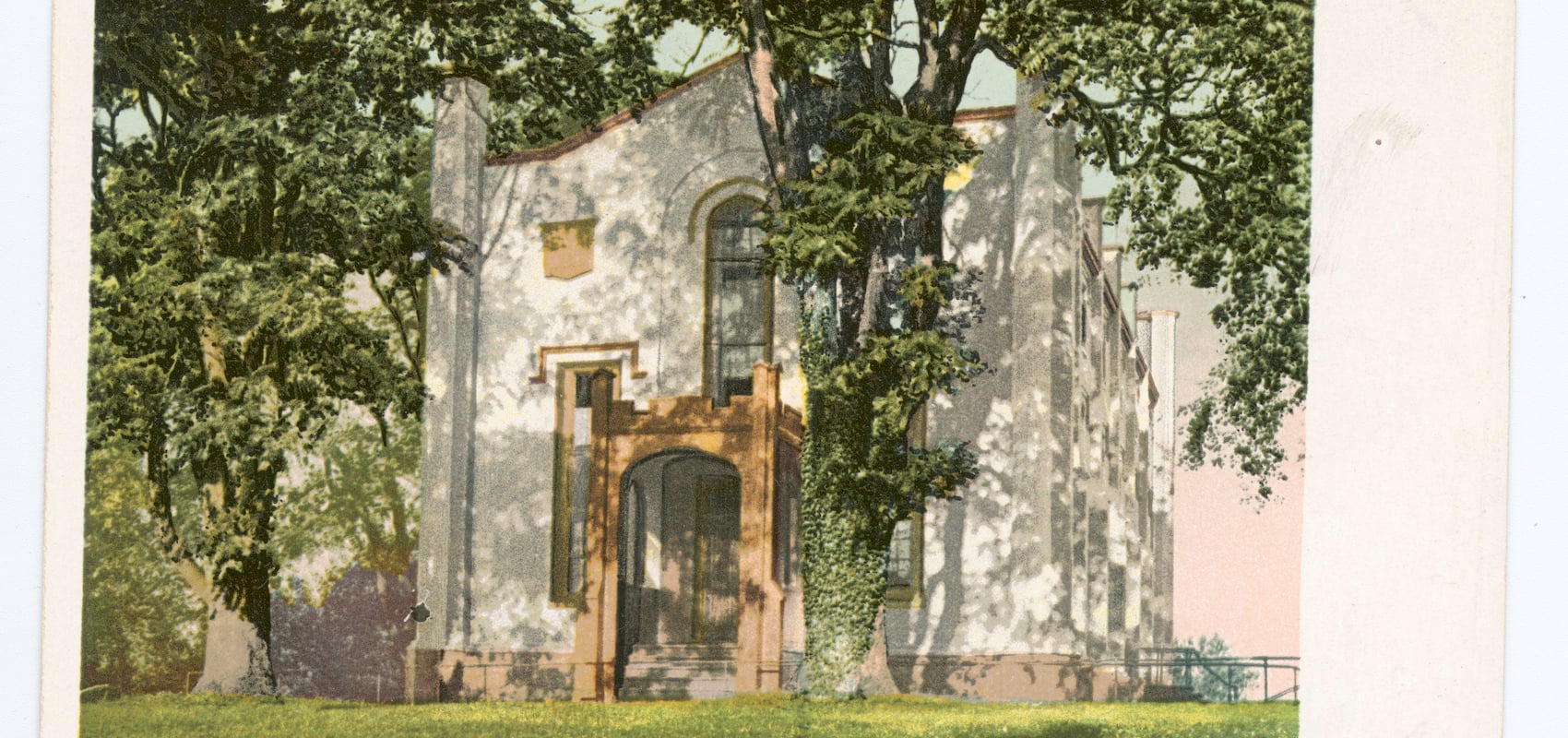
Recent weeks have seen a great deal of discussion and a fair bit of controversy about classical education, in particular the study of the Great Books. There have been arguments about the best way to read the texts and assertions about how to create good citizens. Inevitably, someone will mention St. John’s College, my alma mater, known as “The Great Books School.” Four years are spent reading the canonical texts in chronological order. There are no majors, no minors, no secondary sources. Everyone reads the same book at the same time.
I entered St. John’s in 1974 as a sixteen-year-old freshman. Miserable in high school, I was desperate to escape, and when St. John’s agreed to take me, I asked if I could quit tenth grade on the spot. Alas, the admissions director insisted I finish Algebra 2, and although I assured him it was a lost cause, I hung on, knowing I would soon be heading for Annapolis, Maryland, and a new life with Plato, Austen, and Dostoevsky.
I loved my time at St. John’s. It was exactly what I needed when I needed it. Surrounded by others equally excited about reading the greatest there was to read, we drank in the books—morning, noon, and night. Formal seminars were twice a week in the evening, but the conversations continued around the table at breakfast, lunch, dinner, and in the wee hours at our beloved Little Campus bar two blocks away.
Let me tell you about our seminars: There were generally eighteen students around a table and always two tutors seated across from each other, one of whom would lead off with an opening question. In those days there was a dress code—men in coat and tie, women in dresses—and we addressed each other as “Mr.” or “Miss.” Our tutors were “Mr.,” “Mrs.,” or “Miss,” so everyone was on equal footing, student and professor alike. That somewhat amusing formality was twice blessed, granting our conversations both pointed civility and a delightful ritual unique to Johnnies.
For two hours at least, every Monday and Thursday, we struggled with the text. Sometimes the tutors prodded or guided; often they remained maddeningly silent. There were evenings we seemed to learn absolutely nothing, and there were evenings of brilliant clarity. The “Socratic method” was deeply frustrating—but when it worked, it was exhilarating and powerful.
Smoking was permitted then, and almost everyone lit up—whether or not they actually liked cigarettes. I had a brief flirtation with Camels, merely so I could hang with the cool kids. Thus, the only props on the table, other than each student’s book, were the glass ashtrays, and they were invariably enlisted to demonstrate a proposition—nowhere more memorably than in freshman year when discussing the Platonic forms. The Greek word eidos will be forever linked in my mind with the vision of a glass ashtray.
I graduated in 1978, and for years kept ties with the college, contributing, volunteering, and helping to recruit new students. But time passed, and America entered the dark ages. Allan Bloom’s The Closing of the American Mind came out in 1987, critical theory was conquering university departments everywhere, and DEI was fast becoming the law of the land.
All the while, I kept hoping, indeed expecting, that St. John’s would take advantage of the moment and proclaim far and wide its profoundly countercultural alternative. Never was the college more needed. Never was the opportunity to create new converts so great. The time was now. David against Goliath. But every time I suggested that the college speak out, I was ignored or rebuked—treated like an embarrassing reactionary best kept at a distance.
Meanwhile, instead of pushing back against the woke madness, my fellow alumni were all in. In 2018, then-President Mark Roosevelt (a Democrat) appeared on Tucker Carlson’s show merely to answer questions about the college, and the alumni had a collective meltdown. How dare he appear on Fox News? How dare he engage in civil discourse with the other side?
In 2020, St. John’s predictably sent out a lengthy DEI survey to all of its alumni, parroting every other institution in America. The language was laughable, the framing craven. St. John’s, that eccentric, little college whose sole raison d’être was to promulgate the Great Books, was busy apologizing, bowing, and scraping, cowering in the corner.
Somehow, I had naively believed that studying the Great Books would inoculate us against the insanity, would make us brave and strong and true—or, failing that, at least civil. How utterly clueless I was. The unofficial St. John’s alumni Facebook page is full of vicious, woke scolds, no different from any online mob from any college.
I should have known better. There are so many examples from our not-so-distant past. The universities and “educated” classes have always been responsible for our worst follies. We have the credentialed to thank for the scourge of -isms: Nazism, communism, anti-Semitism, wokeism, transgenderism. The wreckage lies all around us.
Does the study of Great Books make us better citizens? Do the books make us more thoughtful and nuanced, braver and stronger? Apparently not. Harold Bloom maintained that the canon can only teach “the proper use of one’s own solitude, that solitude whose final form is one’s confrontation with one’s own mortality,” and maybe that will have to do, but I hope and believe there is something more to be gleaned. And, strange as it may seem given my wrath and disappointment with my alma mater, the path may still lead back to Annapolis.
I have lamented my recent experience with many of the alumni, but I have neglected to mention the homecoming seminars. Over the years I have occasionally returned to campus and participated in the reunion seminars for our class. The last one I attended—for my fortieth reunion—was on a few short stories by Borges, some particularly impenetrable texts. And there we sat, maybe thirty of us, around the same old wooden table, struggling with the text, and yes, calling each other “Mr.” or “Miss.” There were no ashtrays, and it seemed we were all wearing theatrical make-up designed to make us look old, but otherwise nothing had changed.
We spoke and we listened, really listened, coming together as one, trying to understand the text and what it means to be human. Around that table, for those fleeting minutes, our differences, our daily lives, our tangled pasts were put aside in a shared mission. It was beautiful and it was true.
In the heat of battle, St. John’s College, the institution, was missing in action, but so long as its students still read the books, still meet around a table in good faith and serious discussion, all is not lost. At its best, a college can offer a place where it is still possible to believe in such outmoded ideas as beauty and truth, and to actively encourage the pursuit of both. If only for a short while, the student steps outside the self and joins with the other in search of the good.
So let us “find strength in what remains behind.” First, the books. Some of them will stay with you forever, may even become your best friends. A life with Penelope and Achilles, Hamlet and Rosalind, Anna and Pierre is a life immeasurably richer. And second, the table—essential for both seminars and dinner parties. Human beings are embodied creatures who need physical connection, and conversation will always work best when we sit at the same table. If there’s a way forward, it will happen there.
Dear Reader,
Can I be direct with you?
War abroad. Socialists on the rise. AI upending human life. Endless uproar online. The modern attention economy doesn’t want readers — it wants users enslaved to the tyranny of the present.
First Things is the antidote: literary excellence, timeless truths, and a fixed point of reference in a culture that has lost its bearings.
But we can’t do it without readers like you.
Our goal: Raise $150,000 by November 1 to sustain First Things in the year ahead.
Your gift anchors readers in the permanent things.
Make your Fall Campaign gift now using the button below.
If you have any questions or would like more information, please contact Giovanni Del Piero, Director of the Editor’s Circle, at gdelpiero@firstthings.com or 212-627-1985.

YOU MIGHT ALSO LIKE
De Gaulle Triumphant
The Second World War left Europe invaded and ruined, divided between Soviet and American occupations. Hitler’s defeat…
Meet the Post-Religious Right
There have been many books written about the online right and the Trump movement, most by people…
While We’re At It
Erin Piacenti, a thirty-two-year-old wife and mother, was killed in Times Square on August 31. Her killer…
