
My mother is fond of saying that children spell love T-I-M-E, by which she means they have an instinctive understanding of the role that sustained attention plays in the formation, demonstration, and maintenance of our affections. There is no substitute for presence, focus, and intentionality.
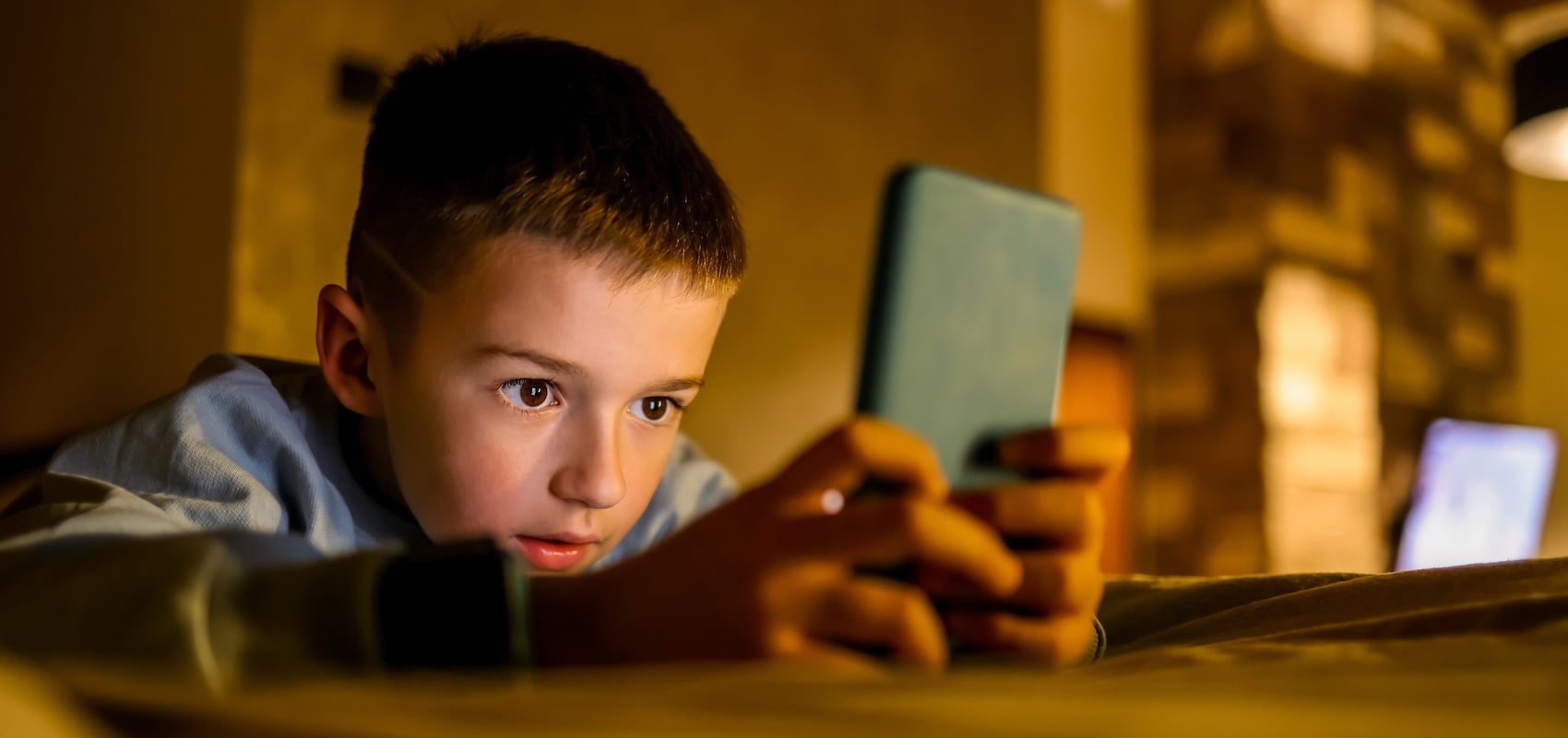
She is right; but for two decades a crisis of attention has been building, a crisis created by the addictive fusion of hardware—touchscreen smartphones and tablets—and software—social media sites, especially those making use of short-form video and those where the user experience is heavily shaped by algorithms. Handheld devices with fast internet connections are a technology of Elsewhere. They remove us from a particular situation and present infinite other diversions, according to our own whims. They reduce opportunities for social interaction because our activity on a smartphone or iPad is illegible to those around us, in a way that the reading of magazines and books is not. They undermine the development of virtues such as patience and thought.
It is bad enough to see adults doomscrolling. The sight of children and teenagers being similarly ensnared is almost horrifying. Before they have even had the opportunity to develop habits of concentration, observation, and quiet reflection, their ability to do so is being destroyed. Every week, seemingly, brings a new cri de coeur from an academic in the humanities, lamenting the fact that undergraduates are incapable of careful, close reading.
This slow-burn cultural disaster should be part of the assessment of Keir Starmer’s announcement that the British government will legislate to ban under-sixteens from most social media sites, and to limit access for under-eighteens. The prime minister insisted that he was “not prepared to compromise on the safety and happiness of our children.” It is encouraging to see politicians address the problems associated with children and tech.
Some critics of the plans rely on what I call the Elvis Hips Fallacy, that is, the attempt to obscure the negatives of any given cultural or technological change by pointing out that people in the past also complained about cultural and technological changes. You complain about children and teenagers spending hours on smartphones, they say, but thirty or forty years ago video games were in the crosshairs, and before that TV and rock ‘n’ roll (hence “Elvis Hips”).
One obvious flaw in this line of argument is that those historical skeptics were generally correct. Rock ‘n’ roll, broadly understood, was a crucial part of the social transformation of Western countries from the 1960s onward, and the rise of screen-based home entertainment in the second half of the last century clearly had huge effects on childhood, many of them bad. As I often say to my own son and daughter, you can only spend each hour once. If children devote multiple hours a day to watching TV or their computer, there are other things they are not doing: playing outside, reading, spending time with friends, nurturing their creativity or their curiosity.
But there is a more serious critique of Starmer’s plans for social media, which should be considered even by those of us who are generally sympathetic to the principle of separating young people from their screens: that the wellbeing of children is being used as a moral battering ram to introduce state control and censorship of social media. This is not an absurd suspicion: Ever since this government was elected two years ago, Labour Party figures have floated restrictions or outright bans on X, and Britain has some of the strictest limits on speech in the Western world.
It’s true also that the new British establishment of human rights lawyers and left-wing academics and the institutionally progressive civil service is facing a crisis of legitimacy, thanks in no small part to the way in which social media sites like X and YouTube have exposed its colossal failings, around the grooming gangs scandal, crime committed by illegal immigrants, and the ineptitude of policing. The Labour government, which represents this establishment, secured a large majority in 2024 on barely a third of the popular vote, thanks to Britain’s fragmenting electoral geography, but is now below 20 percent in the polls. However, the political class seem to believe they can patch things up, and keep limping on, if they can just limit the ability of their opponents to talk openly about the country’s problems. We hear much about bad actors online spreading “disinformation” and “division,” especially when ordinary people rise up in protest against horrific crimes like the murder of three small girls by an unhinged second-generation immigrant. This is convenient for our leaders, convinced of their personal rectitude and enlightenment, because they can pretend that the problem is with everyone else. Nevertheless, it is highly cynical. No doubt individuals get things wrong online or draw false conclusions based on incomplete information, but that is the price of liberty, and the alternative is a populace constantly kept in the dark.
So there is a tension here, between the commendable aim of getting children off their phones and limiting their exposure to dubious material, and the knowledge that the government will almost certainly use the law as a Trojan Horse for further speech restrictions. Online anonymity, a crucial shield for dissenters in the current British dispensation, where causing offense can lead to a criminal conviction, will come under threat.
One way to square the circle, to solve the giant collective action problem facing parents in their decisions about children and internet access, without giving the state unwelcome powers over adult users or preventing children with laptops from using YouTube to learn new skills or revise for exams, would be to simply ban smartphone ownership for under-sixteens or under-eighteens, or at least to have special child handsets with limited features. This is probably the most sustainable long-term solution—it has been backed by Nigel Farage of Reform U.K., Britain’s most popular party—but in the meantime, we will have to watch our rulers carefully.
Dear Reader,
Can I be direct with you?
War abroad. Socialists on the rise. AI upending human life. Endless uproar online. The modern attention economy doesn’t want readers — it wants users enslaved to the tyranny of the present.
First Things is the antidote: literary excellence, timeless truths, and a fixed point of reference in a culture that has lost its bearings.
But we can’t do it without readers like you.
Our goal: Raise $150,000 by November 1 to sustain First Things in the year ahead.
Your gift anchors readers in the permanent things.
Make your Fall Campaign gift now using the button below.
If you have any questions or would like more information, please contact Giovanni Del Piero, Director of the Editor’s Circle, at gdelpiero@firstthings.com or 212-627-1985.

YOU MIGHT ALSO LIKE
Foucault’s Idol of Nothingness
Today marks the 100th anniversary of the birth of Michel Foucault. He was influential in his lifetime,…
Forget Odysseus. Aeneas Is the True American Hero.
Who is our Odysseus? Or more precisely, who is the most Odyssean hero of American film? Matt…
How Sweden’s Immigrant Vote Toppled the Right
For decades, Sweden had perhaps the most open immigration policy and the strongest commitment to tolerance and…
