
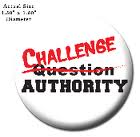
 Skeptics of global warming are often castigated as “anti science.” But the true underminers of that powerful method of obtaining and applying information about the natural world are the politicized scientists and advocates who unilaterally proclaimed the “debate over” and sought to force the world to accept a highly politically contentious “solution” to purported man caused global warming that almost passed at Copenhagen.
Enough courageous “skeptics” kept looking into other potential explanations—despite a nasty neo McCarthyist campaign to prevent other perspectives from making the peer review journals. But that hegemony is cracking and now cosmic rays are being investigated as a potentially powerful driver of climate—which current computer models don’t even consider when making their projections. From “The Other Climate Theory” published in the Wall Street Journal:
On the phone from Geneva, Mr. Kirkby says that Mr. Svensmark’s hypothesis “started me thinking: There’s good evidence that pre-industrial climate has frequently varied on 100-year timescales, and what’s been found is that often these variations correlate with changes in solar activity, solar wind. You see correlations in the atmosphere between cosmic rays and clouds—that’s what Svensmark reported. But these correlations don’t prove cause and effect, and it’s very difficult to isolate what’s due to cosmic rays and what’s due to other things.”
In 1997 he decided that “the best way to settle it would be to use the CERN particle beam as an artificial source of cosmic rays and reconstruct an artificial atmosphere in the lab.” He predicted to reporters at the time that, based on Mr. Svensmark’s paper, the theory would “probably be able to account for somewhere between a half and the whole” of 20th-century warming. He gathered a team of scientists, including Mr. Svensmark, and proposed the groundbreaking experiment to his bosses at CERN.
It took years to get funding, and now even though these investigators think humans play a part in warming, clinical experiments are underway that are proving fruitful:
Through several more years of “careful, quantitative measurement” at CERN, Mr. Kirkby predicts he and his team will “definitively answer the question of whether or not cosmic rays have a climatically significant effect on clouds.” His old ally Mr. Svensmark feels he’s already answered that question, and he guesses that CERN’s initial results “could have been achieved eight to 10 years ago, if the project had been approved and financed.” The biggest milestone in last month’s publication may be not the content but the source, which will be a lot harder to ignore than Mr. Svensmark and his small Danish institute.
Any regrets, now that CERN’s particle accelerator is spinning without him? “No. It’s been both a blessing and the opposite,” says Mr. Svensmark. “I had this field more or less to myself for years—that would never have happened in other areas of science, such as particle physics. But this has been something that most climate scientists would not be associated with. I remember another researcher saying to me years ago that the only thing he could say about cosmic rays and climate was it that it was a really bad career move.”
Pay very close attention to the last line. Scientists were scared away from engaging in true science—that is, from challenging “the consensus”—which is a crucial part of the scientific method. That is why unilaterally ending debates, trying to suppress heterodoxy, and crowing about consensus views corrupts science and subverts its awesome power of learning and understanding. If the field is ever going to regain its lost credibility, this thought control must end.
Dear Reader,
Can I be direct with you?
War abroad. Socialists on the rise. AI upending human life. Endless uproar online. The modern attention economy doesn’t want readers — it wants users enslaved to the tyranny of the present.
First Things is the antidote: literary excellence, timeless truths, and a fixed point of reference in a culture that has lost its bearings.
But we can’t do it without readers like you.
Our goal: Raise $150,000 by November 1 to sustain First Things in the year ahead.
Your gift anchors readers in the permanent things.
Make your Fall Campaign gift now using the button below.
If you have any questions or would like more information, please contact Giovanni Del Piero, Director of the Editor’s Circle, at gdelpiero@firstthings.com or 212-627-1985.

YOU MIGHT ALSO LIKE
The Church in the Age of Therapy
In 1966, Philip Rieff wrote in The Triumph of the Therapeutic that “Religious man was born to…
Canada’s Deadliest Blind Spot
On September 20, the Daily Mail ran a story with the provocative headline, “Our 83-year-old Christian grandmother…
The Faithful Joy of Dolly Parton and Fulton Sheen
Dolly Parton and Fulton Sheen seem to have had little in common. She favored rhinestones; he wore…
