
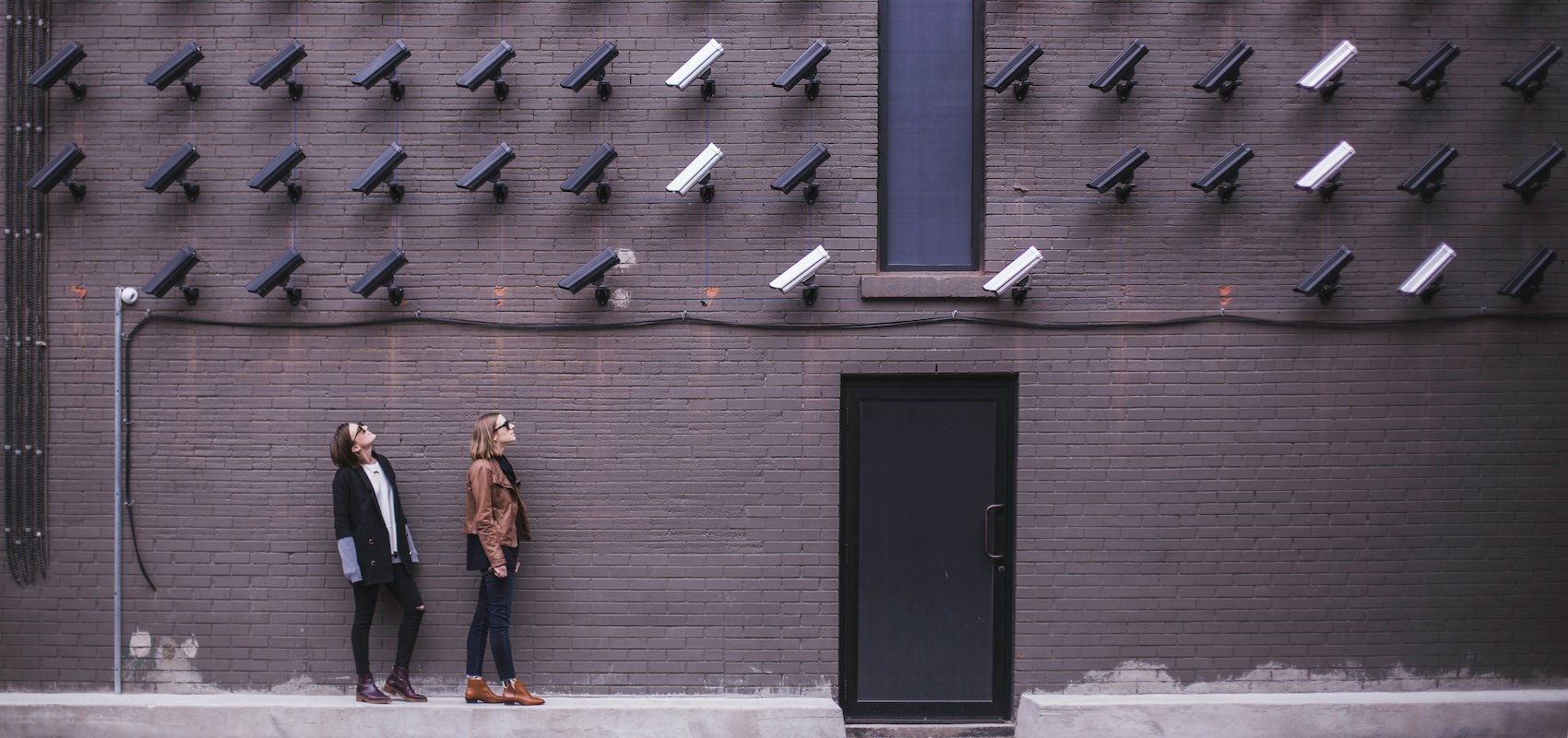
On his recent trip to India, U.K. Prime Minister Keir Starmer praised the country’s Aadhaar digital identification system, a biometric registry holding the data of over a billion people, as a “massive success.” Meeting with a key architect of the scheme, Nandan Nilekani, he hailed it as an inspiration for Britain’s own forthcoming digital ID. While he did not visit the fortress-like facilities that hold the data in Bengaluru or Manesar, one imagines that he might have been equally impressed. Unlike the traffic jams and packed buses of the cities outside teeming with life, the server farms sit in air-conditioned complexes, humming with predictable precision. Like a film that cuts from chaos to a patient waking in a sanitized hospital room, one can picture Starmer, the arch-technocrat, stepping from the pulsating streets into the soft mechanized beep-beep-beep of the electronic database. This is the body politic. These are the people.
It is easy to see why a tired British government might envy this order. Facing societal and economic malaise, the promise of perfect information must feel like medicine. In late September, the U.K. Labour government announced the BritCard, a mandatory digital ID system ostensibly meant to prove one’s right to work and tackle the small boats crossing the Channel. But anyone who remembers Tony Blair’s failed 2006 ID-card scheme could recognize an old prescription in a new bottle. When immigration proved unconvincing as a rationale, ministers pivoted to a host of others—access to services, inclusion, something about not being able to find a utility bill. Whatever the ever-changing rationale, it’s clear that the BritCard is a solution in search of a problem. Because what can’t be said is that the problem is the people themselves.
The BritCard is only the most visible recent shift toward a governance model increasingly based on a public-health-style form of population risk management. This is the era of “infinite envelopment,” as French economist Laurent Baronian put it: Capitalism no longer so much expands outward through grand projects like railways, but instead turns inward, sealing leaks and regulating flows. Facing persistent barriers to growth, our societies have become self-absorbed, regulatory, and increasingly dreaming not of the noise and risk of outward expansion but of the steady, mechanical hum of data churning over and over.
All this might seem overstated. Surely digital identification is convenient, necessary even, to control black markets, to ensure that whatever happens happens legally and is counted. But much of what is promised is already enjoyed with existing checks, and surely small boats do not turn back at firewalls. That deeper and more contentious rationales lurk behind the initiative is hinted at by the multiplying—and creeping—justifications for the scheme. Yesterday it was a check against illegal immigration; this week it’s a passport to public services; tomorrow it’s a safeguard against welfare fraud or “online harms.” For now, it will not collect biometric data. But even this is contradicted by the government’s own cryptic information about what the ID will include: “a photo—as the basis for biometric security—just like an eVisa or Passport, but updated for the modern digital world we live in.”
Think-tank blueprints from groups like Labour Together imagine a digital ID “ecosystem” that would make it easier to “tackle some of the most difficult challenges facing government,” including “harmful online content” and “making healthcare more effective.” Tellingly, it traces much of the impetus to the Covid-19 pandemic, which, it argues, exposed the need for a unified digital identity; showing how much smoother efforts might have been if it already existed, and, perhaps unwittingly, how readily universal health slips into universal compliance.
Public health offers a potent moral vocabulary for control because it sounds like care. “There is no shame in getting help” hides the flip side that shame must be heaped on those who suffer in silence, lest they become risks to themselves and others outside the watchful eye of the professional. The rhetoric of equity and “inclusion” surrounding digital ID may also sound like standard lefty rhetoric but actually gestures powerfully in the same direction. Postliberal management of the subject is a necessarily inclusive project. No one can escape its purview. Everyone must stand up and be counted—literally.
Human beings are unpredictable and thus, in a risk-averse government, must be more carefully maintained. The Aadhaar system that so impressed Starmer links fingerprints and iris scans perilously to bank accounts (though officials maintain that UIDAI, the governing body responsible for issuing ID numbers, does not hold bank information). Few of critical mind need to be reminded of the “debanking” of Canadian truckers and controversial figures like Nigel Farage, nor warned about the risks of creeping toward China’s much-derided developing social credit system. But the Home Office already admits that the BritCard could expand to include much more than they will currently admit to explicitly. And why not? Infrastructure built for one emergency stands ready for the next, be it another pandemic, “climate catastrophe,” misinformation, or simply “hate.”
Society is unraveling, which breeds a desire for greater, deeper, more “enveloping” forms of control. The U.K. government, wrote Peter Hitchens, “has so completely lost control of the national frontiers . . . that it plans to issue breathing licences to everyone living here.”
We now live in the purgatory of decline, knowing that there can be no future that looks different from today, but only the same forever with tighter controls. Surveillance may start with convenience. But given its underlying logic, it will not stop at knowing us. It must adjust us, smooth out our deviations, until society itself becomes as frictionless as the data that models it. But people are not data. They are not glitches in a broken system. Life is inconvenient and messy—which is exactly what the managerial class cannot tolerate.

YOU MIGHT ALSO LIKE
The Last Statesmen?
In the latest installment of the ongoing interview series with contributing editor Mark Bauerlein, Steven B. Smith…
The Cold Beauty of Jan Morris
Jan Morris (1926–2020) was a writer of astounding gifts who not only recorded history but made it.…
Forget Odysseus. Aeneas Is the True American Hero.
Who is our Odysseus? Or more precisely, who is the most Odyssean hero of American film? Matt…
