
It has not been a happy few weeks for the Church of England. First, St. Paul’s Cathedral announced that it had struck a deal to let a London nightclub use Sir Christopher Wren’s masterpiece as a venue. Then, on the twenty-fifth anniversary of 9/11, the archbishop of Canterbury gave an interfaith award to Hafiz Tahir Ashrafi, a Muslim cleric, only to withdraw it a few days later when comments he had made praising Osama bin Laden came to light—comments that a simple Google search would have turned up, had Church leaders bothered to run one. Of course, Ashrafi claimed that his comments had been taken out of context. The context was that in 2007, after law-abiding British citizen and distinguished author Salman Rushdie was named for a knighthood, the Pakistan Ulema Council, chaired by Ashrafi, announced it would confer on bin Laden the title of Saifullah, which Ashrafi called “the highest title for a Muslim warrior.”
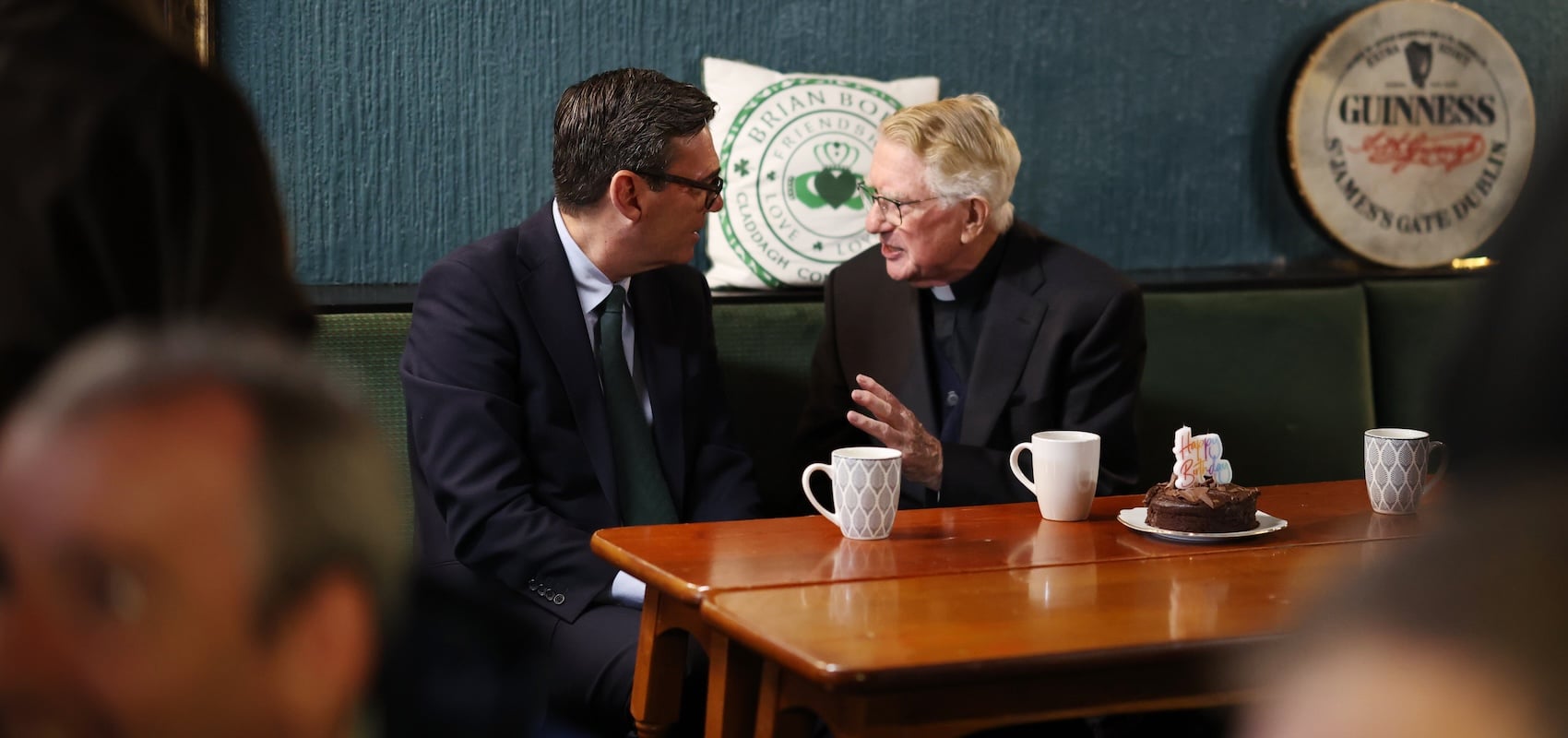
Now comes the news that Prime Minister Andy Burnham has introduced legislation that would allow Catholics and Jews to be involved in the appointment of Church of England bishops. Burnham is a Catholic and, as prime minister, would be responsible for presenting the names of potential bishops to the monarch. Up until the nineteenth century, Catholics and Jews were excluded from public life, including Parliament. These restrictions were eased with the Roman Catholic Relief Act 1829 and the Jews Relief Act 1858. However, the acts still precluded a Catholic or Jewish prime minister from presenting episcopal candidates to the crown.
In practice, this has never been an issue. Burnham is the first lifelong Catholic prime minister to reside at Number 10. Benjamin Disraeli was ethnically Jewish but was baptized into the Church of England. Strange to tell (presumably because such scenarios were inconceivable in the past), Keir Starmer, an atheist, and Rishi Sunak, a Hindu, were not barred by law from advising the king on Church appointments. It is also today a largely symbolic gesture. Before 2007, the prime minister would receive two names from the Crown Nominations Commission and choose which to pass on to the monarch. Now the prime minister receives only one name.
And yet the proposed legislation is significant. First, Burnham has far more pressing issues than episcopal appointments to consume his time. This is gesture politics. But for whom? The Labour Party is mortgaged to the inner-city vote, as well as to a somewhat radicalized Muslim vote. Rhetoric about Gaza is likely to pay more dividends than breaking the Protestant-atheist-Hindu monopoly that has hitherto applied to high appointments in the Anglican Church. Catholic and Jewish parents angry that their children cannot grow up to be glorified errand boys for the Crown Nominations Commission are not a significant electoral demographic.
Second, one Catholic friend asked me if this signified the end of the Reformation. Probably not. That horse, as they say, left the stable a long time ago. The reality of the interference of the secular state in matters of Church governance and liturgy goes all the way back to the English Reformation itself. It was one of the principal sources of conflict in the sixteenth and seventeenth centuries. And for a state Church, public legitimacy will only grow more elusive as religious diversity increases. The Church of England’s leadership has answered this conundrum for many generations by offering a religious veneer to whatever happens to be the values of English culture, at least progressive English culture—tolerance, inclusivity, and so forth. But these values do not require a Christian foundation and have often morphed into forms that are antithetical to Christian orthodoxy and moral teaching.
Ironically, orthodox Catholics would be a refreshing change from much of what has happened in the Anglican Church over the centuries. From the most basic elements of the faith, such as the existence of God (anyone remember the non-realist theology of Anglican priest Don Cupitt?), to the Trinity, Incarnation, and Resurrection, it is hard to see how a well-catechized Catholic would not do a far better job than those who currently run the show. Of course, it is ridiculous to suggest that the Church of England would benefit from allowing such people a more than procedural role, though it is no more ridiculous than so many established precedents in the Church.
If the legislation passes, it will be the final confirmation that the Church of England is now really an administrative body, a mere arm of the state, one that has nothing more than ceremonial significance. True, the current archbishop of Canterbury is much more Christian on the issue of assisted suicide than her predecessor—but it is a day of small things when that is the best that can be said. Its leadership will keep lecturing about the evils of racism, capitalism, the eco-disaster—anything that grips the imagination of the progressive class. The Church will thereby fail in its primary task: drawing the hearts and minds of congregants from the passing phenomena of our cultural moment to the great truths of God and the gospel. I doubt that Burnham is going to help change that. It would require more than broadening the pool of potential go-betweens from the Crown Nominations Commission to the king. But it is hard to imagine that this law will damage the Church of England’s Protestantism. The Church did that all by itself, many generations ago.
Image from Number 10 via Creative Commons. Image cropped.
Dear Reader,
Can I be direct with you?
War abroad. Socialists on the rise. AI upending human life. Endless uproar online. The modern attention economy doesn’t want readers — it wants users enslaved to the tyranny of the present.
First Things is the antidote: literary excellence, timeless truths, and a fixed point of reference in a culture that has lost its bearings.
But we can’t do it without readers like you.
Our goal: Raise $150,000 by November 1 to sustain First Things in the year ahead.
Your gift anchors readers in the permanent things.
Make your Fall Campaign gift now using the button below.
If you have any questions or would like more information, please contact Giovanni Del Piero, Director of the Editor’s Circle, at gdelpiero@firstthings.com or 212-627-1985.

YOU MIGHT ALSO LIKE
Smashing the Images
As the postwar era draws to an end, some Christians continue to reach for analogies to the…
The Protestant Missions History Forgot
The World’s Reformation is a splendid achievement. Extensively researched, Alec Ryrie’s book covers an extraordinary global scope,…
The Fraying Fabric of the Church of England
St. Paul’s Cathedral has come up with a novel way to fill the pews: It is becoming…
