
Modern America worships at the altar of youth and eagerly tracks in polls and market research its latest and lightest velleities. Our present preoccupation with youth, of course, stands in sharp contrast with older historical societies, most of which accorded special respect to the elderly. The advice of the elderly was once prized because of their long experience of life—hence the value attached by traditional societies to history, whose study since the time of Herodotus was encouraged as a way of extending the natural memory of individuals. Students of history tend to acquire the calm demeanor characteristic of seasoned older people when their country is plunged into bewildering times. They know that the crises of the present are rarely unprecedented, and they have a sense of how such crises have been resolved in the past, for better and worse.
One crisis plaguing us today concerns social cohesion in an era of mass migration. The challenges are especially acute when migration includes large numbers of Muslims. Islam is a confident missionary religion that makes strong claims about how to order public life to accord with its religious outlook. It brings with it a detailed and comprehensive system of law that regulates civic affairs. As Muslims attain sufficient numbers in Western countries, their religious system emerges as a rival to Christianity’s long and deep influence. With time, it may fatally undermine the Judeo-Christian bedrock of our civilization.
One need not be a Christian believer to regard this prospect with dismay. Anyone versed in basic principles of sociology will recognize that social and cultural change of such a fundamental nature will be disruptive, polarizing, and potentially violent. It is therefore only too easy to become radicalized—or to become defeatist, thinking that the West is doomed.
History counsels against enervating despair. It stands as a witness that there are other exits from the impasses of today. It lifts us out of the dark valley of the present, where ignorant armies clash by night, and extends our horizons to other times and places. It enlarges our practical wisdom by extending our memory of the past. A well-stocked memory, with elements that can be adapted and recombined in new patterns, is the engine of imagination.
It is a truth too little noted of the Founding Fathers that they were keen students of history, especially John Adams, John Dickinson, James Madison, and Thomas Jefferson. For them, history was a far more important teacher than even “the celebrated Montesquieu,” whom they so often praised. They read history because they were founding a new nation and needed to know which institutions of the past had succeeded and which had failed, and under what circumstances. Today their approach might be called “applied history.” In designing the American Constitution, they used history to enrich their powers of adaptive borrowing. There is indeed no element of the United States Constitution, from bicameralism to the separation of powers to senatorial management of foreign affairs, that has no precedent in the republican traditions of the West. The Founders paid most attention to the Roman Republic, to both its successes and its failures, but they also drew on Italian republican traditions, especially those of Florence and Venice, the Netherlands, and the British Commonwealth. The form of government the Founders created, though unprecedented for its freedoms and its trust in the good sense of ordinary citizens, was the result of sifting and adapting different elements of the Western republican tradition.
Many commentators mourn the loss of the Founders’ wisdom and the absence of any such geniuses on our current political stage. I would suggest that, instead of complaining, we follow the Founders’ example. Nothing prevents us, too, from turning to history for solutions to the threats posed by large-scale Muslim migration—looking not only to the history of the West, but of all successful countries, past and present.
Sometimes solutions can be found in surprising places. I am going to make here the suggestion that the United States can adapt to its own situation the religious policies encoded in the 1957 Merdeka Constitution of Malaysia. I’m aware that this will seem to most people prima facie an outlandish suggestion—after all, Malaysia is a Muslim country—but please bear with me.
First, some history. At the present moment, many in our country are meditating on the central claim in the Declaration of Independence: “We hold these truths to be self-evident, that all men are created equal, that they are endowed by their Creator with certain unalienable Rights, that among these are Life, Liberty and the pursuit of Happiness.” Commentators of all kinds in this anniversary year are invoking the Declaration’s great principle of human equality to address our current discontents, in the hope of authorizing particular solutions to them. Some Americans who see themselves as progressives or Democratic Socialists believe that the principle of human equality entails that all would-be immigrants to the United States should have an equal claim to be welcomed to our shores. The great egalitarian principles of our Founding, they claim, forbid us from discriminating among the millions of people around the world who would like to enter our country and enjoy the benefits of residing among us, whatever their geographical origins, whatever the religions and cultural practices of their home countries, whatever the prospect that they might as individuals be able to contribute to our common life. “Get in line” seems to be their only principle of selection, and sometimes not even that.
History teaches that, until recent decades, few societies had taken this radically egalitarian view of immigration. This is true even of the United States, which has generally shown a welcoming attitude to immigrants. But since the Naturalization Act of 1790—which restricted naturalization to “free white persons” of good character who had resided in the country for at least two years—America has never had an open-door policy, despite the famous lines of Emma Lazarus inscribed on the Statue of Liberty. In practice, some degree of selection has always been part of American naturalization law. The issue of immigrants’ religion has always been contentious. Indeed, until recent times, the most emotionally charged debate about immigration policy occurred in the nineteenth century, when the “Know-Nothing” or American Party was formed specifically to oppose Catholic immigration and its perceived influence.
As the outcome of that debate suggests, America’s historical experience does not provide us with morally respectable models for restrictionist policies based on religious faith. Catholics and Jews are particular sensitive to the issue for obvious reasons. The free exercise of religion is enshrined in the First Amendment to the Constitution and is one of the glories of our American liberty. America was among the first countries to reject the confessional state in the eighteenth century. This was a type of state—discussed at length in my recent book, The Golden Thread: A History of the Western Tradition (Vol. 1)—where one religion only is recognized as the state religion. Other religions within its borders are accorded varying degrees of toleration. Sometimes they are actively persecuted, but bursts of persecution are relatively rare; in most eras social peace has outweighed religious purity. The state religion functions as the “social glue” of society, and those who do not belong to the state religion generally have diminished status: fewer legal protections, for example, restrictions on the public exercise of their religion, or restrictions on their access to public office and education. The most familiar examples of such disabilities are probably those imposed on Catholics in Great Britain between the Elizabethan era and the Catholic Emancipation Act of 1829. Again, these are not happy memories for most, which indicates that our own history in the West is unlikely to provide us with the enlargement of imagination we need.
Yet the need is increasingly being felt. Anyone paying attention to the current travails of Great Britain, where public authorities and police regularly take the side of the Muslim minority against patriotic Britons, will be concerned that similar upheavals may arise in America. This perverse hostility toward one’s own heritage has been taken to the point of discouraging, and even prohibiting, the display of the English flag and other symbols of nationalism in some localities. On the Continent, it is well known (at least to those who have allowed themselves to be informed) that new patterns of religiously inspired terrorism and sexual violence have followed on the mass immigration of Muslims from Syria and elsewhere since 2015. If present trends continue—and I fear that in Europe they will—social tensions and political instability are likely to rise.
In this country, we are not so far gone. We still have an opportunity to prevent the Judeo-Christian traditions of our country from being undermined by the public exercise of Islam that seeks to dominate the public sphere. The rationale for taking steps against the rising influence of radical Islam is plain. We, too, have endured many incidents of religiously motivated violence. We have numerous examples, especially among the Somali community of Minnesota, of disdain for our laws and customs and willingness to exploit public generosity for private gain. We have too many people on the progressive left who are willing to excuse and even condone criminal behavior so long as the criminals can be classed as persons oppressed by the white majority.
There are some in the postliberal camp who have advocated something like a revival, or partial revival, of the confessional state and have predictably drawn the ire of the classical-liberal right, who characterize them as “authoritarian,” “counterrevolutionary,” and even “totalitarian.” The epithet “counterrevolutionary” betrays the typical, historically shallow attitude of those who think that history goes only in one direction. But we don’t have to reach back to the confessional state of earlier centuries to find morally defensible models of how a majority’s religious culture might be protected against militant religious movements that despise it and seek to establish themselves in its place.
This brings me to my provocative suggestion: We should meditate on what has happened over the last seventy years in the multicultural state of Malaysia. There, a society has emerged whose political structures and democratic aspirations accord more with pluralistic societies such as our own than did those of the confessional states of premodern Western history. It has experienced relatively little political violence—less than America has suffered in recent years. Malaysia values its traditional Islamic beliefs and does not allow it to be undermined by incompatible faith traditions. In that sense, it is democratic but not liberal.
The modern Malaysian state, nevertheless, has for decades drawn praise from many Western liberals who admire its democratic resilience, its management of ethnic frictions, and its ability to combine growth and stability in accordance with Western models of economic development. Its current prime minister, Anwar Ibrahim, has ruled as a nonaligned pragmatist in his foreign policy and is believed, somewhat optimistically, to harbor aspirations of liberal reform. Liberal Western observers may not yet be willing to give the country an “A+” as a successful liberal democracy, but they shy away from naming openly the chief reason why Malaysia has been relatively successful at maintaining a stable democratic order.
The reason is that Malaysia declares itself an Islamic state.
This expression shouldn’t be confused with its usage by the Middle Eastern terrorist group of that name. In Malaysia, Islam is the official religion, but other religions are tolerated. All citizens of Malaysia can freely practice their religion, but non-Muslims are not allowed to do so in the public sphere and are not permitted to proselytize or missionize the Muslim majority. In several Malay states, this activity is a criminal offense. (Malaysia is a federation of states rather like the early American republic in this respect.) The Muslim majority, on the other hand, may missionize religious minorities. Muslim authorities under Shari’a law have the right to punish apostates. However, Shari’a courts apply only to Muslims, and other Malaysians, in principle, live only under the civil law. A person who marries a Muslim must convert to Islam.
I can already hear the alarm bells going off among my liberal-minded brethren, so let me hasten to say that any adaptation of these principles to America would look quite different, as I will explain. But let me continue to leaven our imaginations with the Malaysian experience.
Different Malay states (or provinces) within the Malaysian federation practice different forms of Islam, some more traditional, some more modern. Each state is responsible for maintaining Islam according to its own customs; there is no central religious authority based in the federal capital of Kuala Lumpur. As in Turkey, Egypt, and Iran, urban populations are significantly more tolerant than rural regions. Although Article 3 of the 1957 constitution states that “Islam is the religion of the Federation” and public ceremonies and symbols have a Muslim flavor, the state apparatus itself is officially secular. Other religions may be practiced “in peace and harmony.” Within ethnic enclaves, mostly in the larger cities, Chinese Buddhist and Thai Buddhist temples, Hindu temples, and Christian churches function quietly, with little political interference. Christians are free to wear crosses, Chinese Buddhist monks can wear the haiqing, although for prudential reasons they may avoid doing so in the more conservative rural areas.
Those who practice other religions do not live under civil disabilities and are not subject to blasphemy laws, as in some modern Muslim countries like Pakistan. Article 11 of their constitution guarantees freedom of worship. Malay Muslims and other poor indigenous peoples enjoy some economic privileges, mostly through a kind of affirmative action, to counter dominance of business and finance by ethnic Chinese. Non-Muslims can vote and hold office (with some exceptions in the case of sensitive roles). The 1957 constitution defines a Malay as a person who practices Islam and speaks the Malay language, but religious minorities, mostly Buddhists, Hindus, and Christians, have few restrictions on their political, cultural, or economic activities so long as these do not contend against the Muslim character of the body politic. As a rule, they have the same standing in the courts as the Malayan majority, and judges are keenly aware that any favoritism to Muslims, who make up about 65 percent of the population, will be seen as a threat to the social contract.
There are exceptions to the civil equality of all citizens of Malaysia. Malays are preferred in the civil service, in university admissions and scholarships, and in the granting of government contracts. Some key companies such as those in defense industries are required to have a fixed percentage of Muslims in equity ownership. In recent decades, to be sure, there has been a push for more Islamization. Anwar Ibrahim’s victory in 2022, however, shows that countervailing political opposition to Muslim extremism can still be effective.
The modern Malayan religious settlement, so different from the theocratic controls of Shiite Iran and the Wahhabi monarchy of Saudi Arabia, came about through the interplay of British statesmanship, Malay Islamic tradition, and the well-defended interests of a multicultural society made up of significant Chinese, Indian, and European elements. Before the Second World War, two key territories in Malaya—Penang and Malacca—were administered as British crown colonies, while other parts, mostly sultanates, were gradually brought under British rule. These were “protectorates,” some managed by a British Resident—a form of indirect rule—while others had a looser protectorate status overseen by British “advisors.” After the Japanese occupation (1942–45), the British were no longer able to maintain their protectorates in the Malay states. Nevertheless, they managed their exit with considerable practical acumen throughout the 1950s, far better than in the case of their withdrawals from India or Kenya.
This was the period of the Malayan Emergency (1948–1960), when the country was plagued by the violent insurgency of communist rebels (the Malayan National Liberation Army, or MNLA). The MNLA fought for independence from Britain, capitalizing (as did communists in France) on their dubious claims to be heroes of the resistance against Japanese fascism. Fortunately, the revolution never succeeded. British anti-insurgency policy under General Sir Gerald Walter Templer, the British High Commissioner, even became an admired model in the armed service academies of other nations, including U.S. military schools, when they needed to develop effective counter-insurgency tactics. (Templer was the man who coined the phrase “winning hearts and minds.”)
The violence and cruelty of the communists eventually discredited them, while British rule managed to recover some of its prewar prestige. But the British here as elsewhere ultimately lacked the will to continue their rule over the Malay states. That federation longed for stable governance, but the British were no longer in a position to guarantee it. The most effective way to cut the ground from under the feet of the communist independence movement was to offer Malaya the same thing the communists were offering: independence. The result was the 1957 constitution, brokered in London by the British, which remains among the great achievements of Foreign Office statesmanship. It is certainly comparable to the American postwar achievement in Japan and Germany. As in Barbados and a few other former colonies, the British left behind them a functioning democracy, a free economy, good schools, and an excellent court system based on British principles of justice.
The result today is that Malaysia (as the country is now called) is a Sunni Muslim–dominated democracy that enjoys civil peace, manages smooth transitions of power between its political parties, and flourishes as a relatively free market economy. These are the achievements praised by standard academic authorities in the West.
But what about the country’s religious settlement? Is that an example that can be followed elsewhere? Would it be possible, for example, in majority-Christian societies like America to establish non-sectarian protections for our Judeo-Christian culture? Is it possible to imagine that sauce for the Islamic goose might be adapted to make sauce for the Christian gander?
Learning from the Malay settlement, might we restrict the public practice of Islam (and perhaps other non-Western missionary religions) that currently aspire to establish political control in some areas of the U.S.? Currently, only a few small towns and cities—like Hamtramck and Dearborn, both in Michigan, as well as Minneapolis, Minnesota, and Paterson, New Jersey—allow the Muslim call to prayer (adhan) to be broadcast over loudspeakers. All these towns also allow Muslim religious assemblies, like Friday prayers (Jumu’ah), to be held outdoors in public spaces.
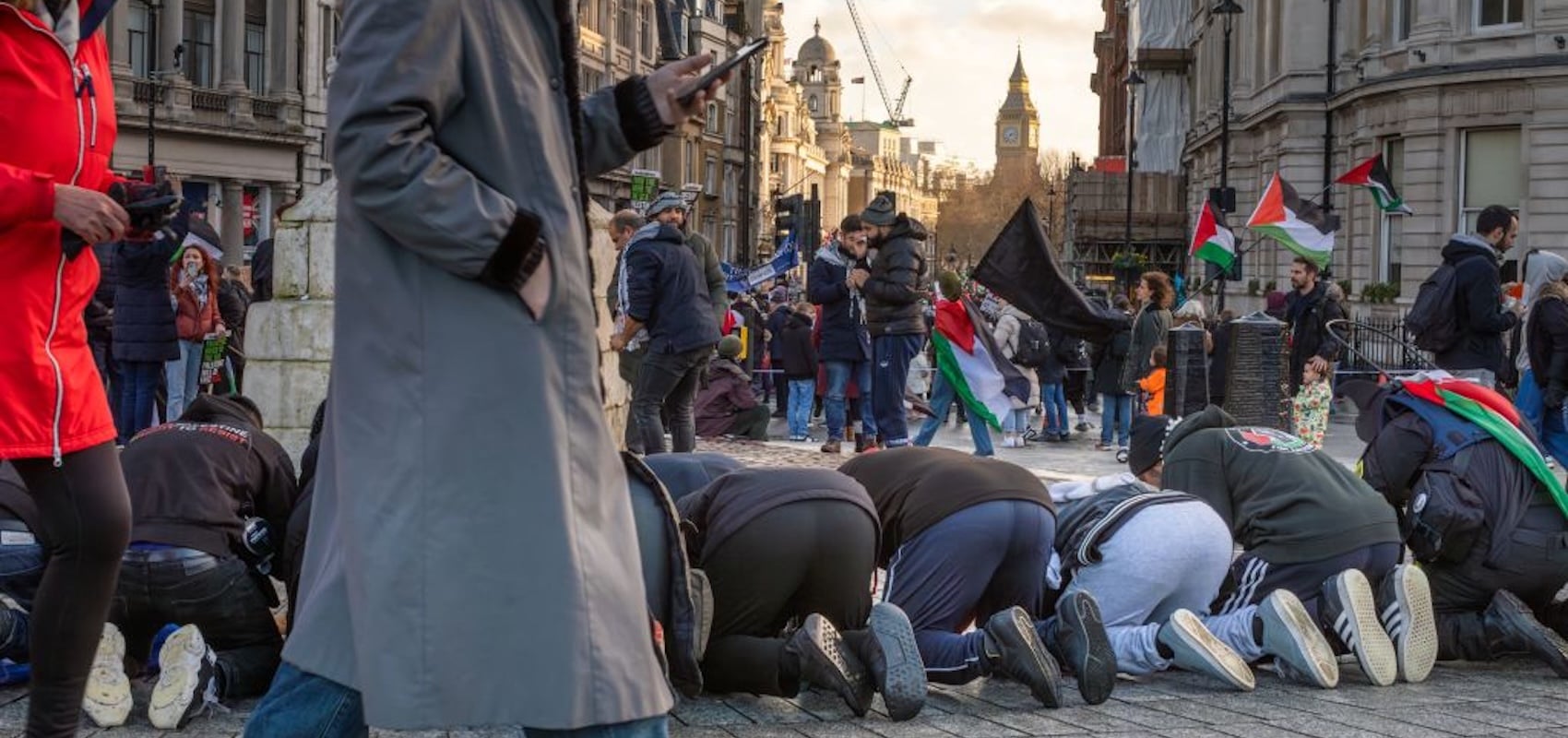
If Muslim immigration is allowed to increase dramatically, as it has in Europe, we may well see these practices spreading around the country. This conquest of public space will surely be undesirable for Westernized Muslims as well as for Christians, or, indeed, for anyone concerned with civil order. The public practice of Islam in London, for example, includes mass Friday prayers held in Trafalgar Square that have led to the intimidation of police and public officials. There is already a reluctance to prosecute criminal behavior in large Muslim communities, as has been made clear by the appalling scandal of “grooming” (or rape) gangs in Manchester and Rotherham, where the victims were predominantly white British girls. Fear of being labeled “Islamophobic” has been allowed to trump the established principles of British policing and British justice.
To give preference and privileges to the religion preferred by the majority is considered antithetical to our Constitution. But is that true? In the early years of the republic, several U.S. states sustained established churches, and this was not regarded as “unconstitutional.” Restrictions of free exercise are not the same as establishment, but here as well our history offers examples of public authorities suppressing religious practices deemed harmful to the moral character of the nation. Mormon plural marriage is the most obvious example. It may be possible to construe the First Amendment as not prohibiting individual states’ restrictions on the public practice of religion under the legal principle of the state’s “police power” to promote the public’s health, safety, morals, and general welfare.
I propose that the first step at the state level should be to prohibit the public—especially the electronically amplified—call to prayer (many Muslims now use cell-phone reminders instead) and outdoor religious ceremonies held in public spaces. Stricter permitting regulations might be introduced to keep new mosques from being built in city centers, as Denmark and Greece have recently done. Muslims could be prohibited from proselytizing in state prisons, a major site of conversion.
At the federal level, in future interpretations of the First Amendment it may be possible to distinguish between “free exercise” and “public exercise,” which is the functional distinction operative in Malaysia. There might be a general declaration from Congress that the United States of America is a Christian country, coupled with an acknowledgement of the close kinship between Christianity and Judaism, which are intertwined in our cultural inheritance. Such a declaration need not constitute “an establishment of religion” in the sense of paying clerical salaries or in other ways embroiling the state in the affairs of churches. It can be simply a formal statement of identity. Interestingly, Americans identify as Christians in approximately the same proportion as Malaysians identify as Muslim (60–65 percent). Collective identification with a dominant religion does not require unanimity. Moreover, American Christianity is rarely rigorous in its religious practices (over 50 percent of Christians in America describe themselves as either liberal or moderate), and there are no Christian parallels to Shari’a law. Any twenty-first-century measures to buttress the Christian character of America are bound to be as soft and permissive as American Christianity.
These measures will be for naught if we do not address the most profound source of the coming crisis, which concerns those entering the country. It is imperative to face reality: Large-scale Muslim immigration threatens the stability of the West. It will take courage—physical as well as moral—to advocate restrictions on immigration from Muslim-majority countries, even as we make exceptions for the many Christians now being persecuted in those same countries.
Obviously, the impediments to taking the necessary action are many. One can’t expect the commentariat and media companies to greet with cries of joy proposals to restrict the public exercise of non-Christian religions. Dark parallels will be drawn to the infamous anti-communist moral panics of the 1950s. Measures to restrict immigration on the basis of religion are sure to be met with reminders about the Asian Exclusion Act and the ugly internment of ethnic Japanese during World War II. Those centrists, “cultural Christians,” or even liberals who are willing to recognize that America’s Christianity is a great source of its strength and of civilized values will have to endure shunning from their comrades on the left.
The first step must be a public education campaign, amplified by respectable news outlets, drawing attention to the situation in the United Kingdom and elsewhere. Over the longer term, legal scholars need to think about how defenses of the Christian character of our nation can be crafted in ways consistent with our best constitutional traditions. Mainstream politicians will have to be persuaded to give firm support to proposals to restrict mass immigration.
None of this will be easy. But a glance across the Atlantic should show us all what lies in store for America if we fail to act now, while we still can.
Image by UCG via Getty Images. Image cropped.

YOU MIGHT ALSO LIKE
No Place Like Home
Who is our Odysseus? Or more precisely, who is the most Odyssean hero of American film? Matt…
Meet the Post-Religious Right
There have been many books written about the online right and the Trump movement, most by people…
New Founders Wanted
It’s now 250 years since America declared her independence and embarked on the experiment of fashioning a…
