
Studies in Machiavellian Political Philosophy
by michael anton
encounter books, 466 pages, $43.99
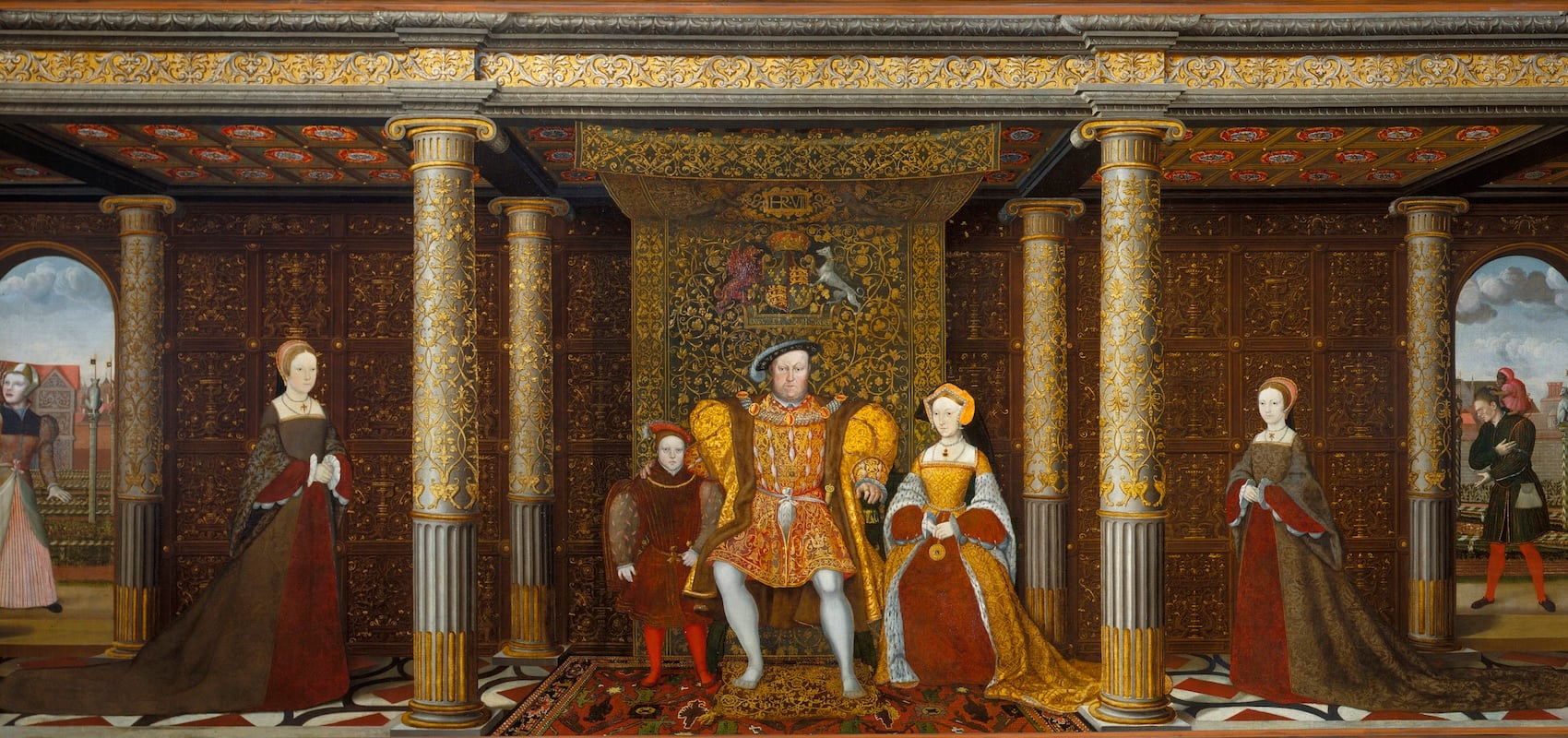
In his Apologia ad Carolum Quintum, English cardinal Reginald Pole claimed that Thomas Cromwell told him in 1529 that Machiavelli’s The Prince had inspired King Henry VIII to break with Rome. The claim is dubious (the book was posthumously published in 1532), though it no doubt aligns with Pole’s distaste for the Italian political philosopher. Pole alleged The Prince was “written by an enemy of the human race. It explains every means whereby religion, justice, and any inclination toward virtue could be destroyed.” Nevertheless, Henry Parker, 10th Baron Morley, later that decade sent Cromwell a copy, writing: “this Boke off Machiavelle de Principe ys surely a very speciall good thing for youre Lordschip.”
Historian A. F. Pollard described Henry as “Machiavelli’s Prince in action.” In his elimination of rivals, his exploitation of religion for political gain, and his obsessive cultivation of a public reputation for glory and wealth, it is not difficult to imagine the English monarch with The Prince beside his bed.
Henry ghosted the margins as I read former White House official Michael Anton’s new book, Studies in Machiavellian Political Philosophy. It’s an impressive analysis of Machiavelli’s thought. Anton argues not only that the Italian presaged post-religious modernity, but that his ideas, especially in their cynical, adversarial relationship to Christianity, are vital to understanding our contemporary sociopolitical distemper.
“Machiavelli intimates that Christianity’s promises are worse than false,” writes Anton. “Those fooled by Christianity do not receive what they are promised and end up worse off than when they started.” The Christian faith, the Italian believed, engenders weakness by persuading men to rely not on themselves but on outside forces.
Moreover, Machiavelli sees Christianity as deceiving the masses into believing that they can attain a transcendent peace and personal success that the ancients believed was reserved only for a glorious few. Anton explains:
Worst of all, Christianity promises all believers a serenity of mind or superiority to fortune that classical philosophers considered the possession of only the best of men, acquired through much effort. . . . Christianity attempts to make a simplified version of this state of mind available to all, arguably without any effort. After all, how hard is it to die when you are promised an eternity in Paradise?
For Machiavelli, this simplification not only dilutes “true” philosophy, but strips it of its potency, sophistication, and nobility. Christianity makes men complacent, resigned to a humble life disinterested in human glory. It promotes “ambitious idleness” (Machiavelli’s words), in which men do little more than pray. And, in a “pious cruelty,” it tyrannizes people into belief via threat of eternal damnation.
In a recent Washington Post op-ed, Anton argues that The Prince “is really a weapon of spiritual warfare meant to take on—and replace—the Bible and ancient philosophy. Machiavelli’s ambition was nothing less than to become a ‘new prince’ ruling over humanity posthumously through his books.” Some would say that Machiavelli’s anti-ecclesial legacy—in Anton’s estimation, “the revival of republicanism, contemporary liberal regimes, [and] modern natural science”—has been a net gain. Yet Anton agrees with Leo Strauss, who accused Machiavelli of “an enormous simplification,” and of contracting humanity’s “horizon.” “Machiavelli forgets tragedy, reduces philosophy to a handmaiden serving material wants and rules out of bounds any appeal to a higher metaphysics,” writes Anton.
More provocatively, Anton accuses Machiavelli of promoting an anti-theistic world responsible not only for empty pews but all the ills of modernity, from addictive smartphones and social media to pornography and a “desiccated academia.” A modernity antagonistic to Christianity has returned humanity not only to the glorious aspirations of the ancients but also to their many destructive vices. The ancient Romans, for all their excellences, were also guilty of terrible inhumanity, against their foes and even their own children.
In Machiavelli’s day, the institutional Church held all the power; today, Anton sees his vision realized in the academy, corporate media, and entertainment industry. Machiavelli’s monasteries, he argues, are the universities, “while the media is their church, the means of dissemination to the masses.” With no eschaton to direct our souls, our desacralized institutions make victimology into a religion.
What is modern man to do? “Our challenge is then in a sense the reverse of Machiavelli’s: to reacquaint the people with God and an intellectual elite with the Good,” writes Anton. “If we do our work wisely and well, prudence may still rule indirectly, but it will be a prudence that is better and truer—than what [we] have now, certainly.” He proposes co-opting the Italian’s (admittedly effective) political program in the service of anti-Machiavellian objectives. It’s a clever ploy, but is it a good one?
For example, Anton suggests we entertain Machiavelli’s advice to, in Anton’s words, “accept the charge of being a sinner so long as it is seen that one sins in defense of the patria.” If you are “sinning” against false and dehumanizing woke ideology, then you should indeed “sin” in defense of what is actually good, true, and beautiful. Again, channeling Machiavelli, Anton asserts: “Our enemy cannot be converted but must be defeated.” Perhaps it’s true that some ideologues are beyond persuading. But what does it mean to “defeat” them? Whatever their flaws, one’s enemies are still fellow humans bearing the imago Dei.
Thomas More, perhaps Machiavelli’s greatest humanist contemporary, offers an illuminating foil. More also penned an influential treatise in the early sixteenth century, Utopia, which, while critiquing a corrupted Christendom, also provoked much debate, given that many of his suggestions—such as easy divorce, euthanasia, and married priests—contradicted the Catholic teaching he held dear (and, indeed, died for). Regardless of whether Utopia is a satire of humanist political theorizing, More is antithetical to Machiavelli: Principles, not power, must guide the statesman; a man’s success is judged by both his effectiveness and his virtue. “Not a henchman but virtue renders a king safe,” he writes in his Epigrams.
From a materialist perspective, More’s wedding the virtuous life to public service seems a failure. In 1534, he refused to swear the Oath of Succession affirming Henry’s marriage to Anne Boleyn or to acknowledge the king as supreme sovereign over the English Church. That refusal cost More his career and his life, while Henry proceeded to remake England, dissolving the monasteries and enriching his supporters. Henry was going to get what he wanted regardless, so what good were More’s principles? Today’s England is Henry’s, not More’s.
Yet More’s is the nobler path. Men may recognize the this-worldly success of the statesman who schemes and exploits to achieve his ambitions, but he is typically hated rather than loved, his glories tarred by a destructive legacy. More’s light still shines bright, however: Not only was he principled and courageous, but he was also prudent, performing his state duties, honoring his king, and selling his property to provide for his family. His declaration from the scaffold in 1535 continues to inspire: “I die the King’s good servant, but God’s first.”
Modeling Machiavelli may achieve political objectives that are (ironically) anti-Machiavellian. Doing so, however, risks further undermining whatever virtue remains in contemporary public service. And if we are concerned about the welfare not only of the polis but of our souls, More is our man.
Dear Reader,
Can I be direct with you?
War abroad. Socialists on the rise. AI upending human life. Endless uproar online. The modern attention economy doesn’t want readers — it wants users enslaved to the tyranny of the present.
First Things is the antidote: literary excellence, timeless truths, and a fixed point of reference in a culture that has lost its bearings.
But we can’t do it without readers like you.
Our goal: Raise $150,000 by November 1 to sustain First Things in the year ahead.
Your gift anchors readers in the permanent things.
Make your Fall Campaign gift now using the button below.
If you have any questions or would like more information, please contact Giovanni Del Piero, Director of the Editor’s Circle, at gdelpiero@firstthings.com or 212-627-1985.

YOU MIGHT ALSO LIKE
How Sweden’s Immigrant Vote Toppled the Right
For decades, Sweden had perhaps the most open immigration policy and the strongest commitment to tolerance and…
The Last Statesmen?
In the latest installment of the ongoing interview series with contributing editor Mark Bauerlein, Steven B. Smith…
Forget Odysseus. Aeneas Is the True American Hero.
Who is our Odysseus? Or more precisely, who is the most Odyssean hero of American film? Matt…
