
There is a Yiddish witticism, Der Mensch tracht, un Gott lacht (“Man plans, and God laughs”), and recent events suggest the divine has a particularly puckish sense of humor. No sooner had his political lobbyists begun to gain traction with their proposals for the formation of a postliberal Catholic order than their plans were hit by an almighty twofer. First up was Donald Trump’s vulgar dismissal of Pope Leo XIV’s pronouncements on the morality of war. Then there was the sweeping electoral defeat of Hungarian prime minister Viktor Orbán, bringing to an end the pinup regime of nominally Christian postliberalism.
At first blush, the two episodes might seem unconnected. It’s hardly the first time that a pontiff and a potentate have gone toe to toe over matters doctrinal, while Orbánism is neither Catholic in character (the man himself is Reformed) nor confessionally Christian in practice (it is a secular nationalism that shares some common ground with Christian postliberalism, and even then more so in rhetoric than in operation). However, the concurrence of these events draws attention to philosophical and practical flaws in the school of thought known as integralism or, in the preferred formulation of its most prominent advocate, Adrian Vermeule, “political Catholicism.” The telos of political Catholicism is “a reasoned political order, composed of both temporal and spiritual powers in right relation to the natural and divine law,” said arrangement representing “the best way to protect and shelter the localities in which genuinely human community, imbued with grace, can flourish.”
Political Catholicism has been having a moment, as evidenced by the public profile of Vermeule and fellow integralist Patrick Deneen, author of Why Liberalism Failed. It arose in response to the perceived defunction of Reagan- and Bush-era fusionism, in which American Catholic clergy and public intellectuals made common cause with the market-oriented neoconservative right and in the process sacrificed fidelity to Catholic social teaching, which is aligned to objective, God-given, and Church-discerned truth rather than political factions left or right. As the integralist writer Kevin Gallagher has documented, with the Obama era came a reckoning that saw political liberalism turn its guns on the Catholic faith and the faithful, with the Supreme Court’s invention of a right to same-sex marriage in Obergefell and the contraceptive mandate contained in the Affordable Care Act, and the political right’s reorientation away from “social issues” and toward the anti-government and anti-immigration messages of the Tea Party and later Donald Trump.
To an American Catholicism maligned by the left and abandoned by the right, the integralists proposed a new way forward based on an old idea. Just as a faithful Catholic ought to live a unified life of devotion and obedience to God and his Church, rather than a morally fractured existence in which faith was but one discrete element, so should those Catholics who wish to participate in public affairs work toward a union of temporal and spiritual power in which ecclesiastical authority guides the laws and policies of the civil administration, ordering societal arrangements to the benefit of the common good, material and transcendent. Integralism exceeds the scope of legal moralism (legislating the suppression of vice) but falls short of theocracy, with the state and Church remaining distinct entities.
Political Catholicism has won many detractors, including those by no means averse to Catholicism. The philosopher Kevin Vallier is the author of perhaps the pithiest critical appraisal of integralism: “You can’t get there, you can’t stay there, and it’s unfair.” For Vallier, there is no feasible (or moral) means of transitioning to an integralist order, societies guided by integralism would “likely unravel owing to their own logic,” and coercion of Catholics (to say nothing of non-Catholics) is inherently unjust. Civics scholar James M. Patterson calls the integralists’ attachment to a Gelasian dyarchy, in which secular power is subordinate to pontifical authority, “an intellectualization of despair” and the consequence of an AWOL episcopacy that has exited the public square and left the duty of Catholic leadership up to an assortment of lay thinkers, ideologues, and activists. The Dominican friar James Dominic Rooney dubs the hypothetical nation-state of political Catholicism “Integristan,” and argues that “historically, integralist states have inevitably devolved either into modus vivendi regimes or liberal states.” An example of the latter would be the modern Irish state, whose constitution until 1973 recognized “the special position” of the Catholic Church as “the guardian of the Faith,” but which is now among the most secular, liberal societies in Europe.
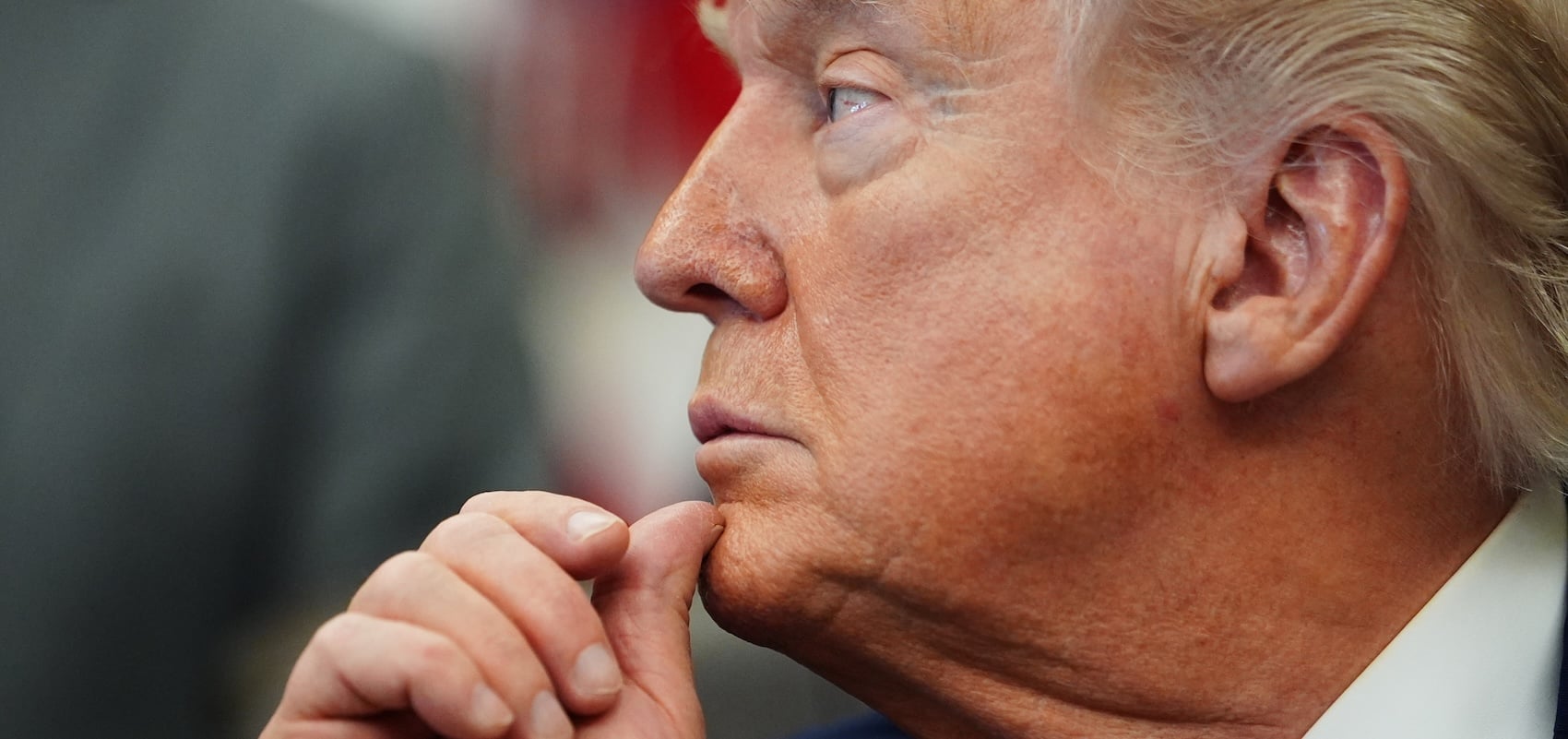
Powerful though these critiques are, none has succeeded in debunking integralism quite like the object lesson of the president versus the pope. Trump is not Catholic but his administration practices a secular variation of postliberalism that has turned the power of the state against conduct and ideas that integralists also wish to suppress, most notably transgender ideology and the exposure of minors to “gender medicine.” The president’s ill-mannered and ill-lettered denunciation of the Holy Father over his anti-war preaching might be dismissed as nothing more than “Trump being Trump,” but it illustrates how even an administration not overtly hostile to the Church can turn on Rome when its spiritual leadership conflicts with a temporal political agenda.
A wily integralist might venture that, in foregrounding the conflict between secular power and ecclesiastical authority, this dispute is evidence that postliberalism is on the march. Unfortunately for political Catholics, they are out of step. One of the most prominent Catholics in the Trump administration, Vice President JD Vance, responded to the pope in remarks that, while tonally more restrained, flatly rejected papal comment on U.S. government policy let alone the involvement of the Church in shaping policy. “In some cases it would be best for the Vatican to stick to matters of morality,” Vance said, “to stick to matters of what’s going on in the Catholic Church.” This is the logic of liberalism: The state and the papacy are in separate lanes and should stay there.
He went further, however, and challenged the pope’s understanding of just war theory, asking: “How can you say that God is never on the side of those who wield the sword?” Citing the U.S. involvement in World War II, the vice president added that it was “very, very important for the pope to be careful when he talks about matters of theology” and to “make sure it’s anchored in the truth.” There are conflicting views as to the licitness of the Iran operation under the just war tradition, but no one is likely to mistake Vance for a canon lawyer.
What is striking about his comments, and devastating for integralism, is the breezy impertinence with which he rebukes the Holy Father. Integralists wish to replace liberalism with a state that defers to the Church in spiritual affairs. Vance, a co-religionist who also wishes to replace liberalism, tells the pope not only to keep his nose out of the affairs of the state but that he is in error on Church doctrine. If this is how a postliberal Catholic, and a convert no less, speaks of the pope’s involvement in politics, the prospect of recruiting postliberal Catholic politicians, Republican or Democrat, who will agree to submit American policymaking to the magisterium of the Church is slim in the extreme.
Bear in mind, the Iran war is an issue on which American postliberals and the Church broadly agree. Wait until the quixotic utopianism of the Catholic integralists encounters the final boss of postliberal politics: immigration. While many faithful American integralists will submit to the pope’s instruction, the Catholic Church’s pronouncements on immigration attack concepts as fundamental to Republican politics today as freedom and enterprise were in the Reagan and Bush years.
Even if some accommodation could be reached between Catholic social teaching and either Republican postliberalism or Democratic economic justice, such an arrangement would be agonizingly fragile in a polity where executive power can change every four years and legislative power every two. Orbán’s illiberal democracy, which he has spent the past sixteen years embedding in the institutions and culture of Hungarian national life, looks set to be dissolved by a successor keen to embrace all the European Union diktats Orbán’s ascendancy was predicated on opposing. On how a postliberal order can be developed into a society organized around material and spiritual virtue, integralism has few convincing answers. On how such an order would be maintained against the vicissitudes of democracy, it has no answers.
Integralists will not like hearing it, but there is already a means by which to live faithfully, extol the doctrines of the Church, and contribute to the forging of a common good society. Their old enemy, liberalism, properly understood, gives the Catholic holder of public office the freedom to live a life integrated to the eternal verities and ordered to virtue, while exercising temporal power under the law with ex officio neutrality, and promoting a culture conducive to religious devotion in which the faithful are secure from coercive state secularism. It is an imperfect model, it does not always deliver victory, and its concepts and mechanisms have been directed to un-Christian and anti-Christian ends and will be again. That is all the more reason to fight for the proper understanding and application of liberalism, and thus the right and ability of the faith to flourish in “enemy” territory, rather than taking the political Catholic tradition out of the mainstream and into the coercive, authoritarian fringe.
Image by ASSOCIATED PRESS

YOU MIGHT ALSO LIKE
Who Killed the Clancy Children?
After a Massachusetts jury failed to convict Lindsay Clancy of strangling her three small children to death…
Vatican II Didn’t Kneel to Modernity
In his weekly catecheses on Vatican II, Pope Leo is now discussing Gaudium et Spes, one of…
Roger Scruton’s Eternal Youth
In this episode, First Things senior editor Dan Hitchens joins R. R. Reno on The Editor’s Desk…
