
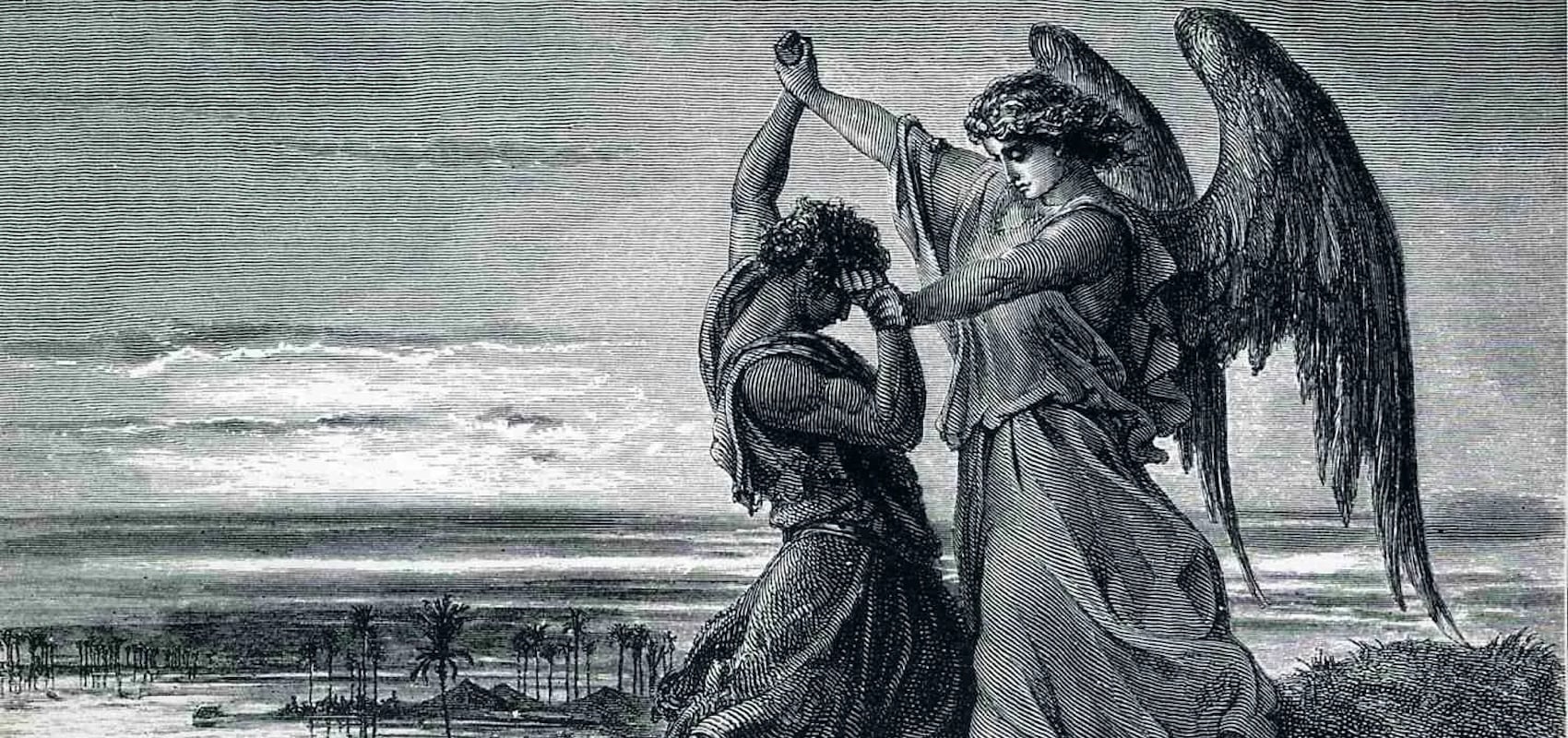
In Genesis 32:23–33, Jacob wrestles through the night with a figure Scripture describes as both man and God. The encounter ends without clean resolution: Jacob walks away with a permanent limp, a new name, and the staggering claim that he has seen God face to face and lived. The Church has read this passage as a Christophany, an appearance of the pre-incarnate Son, which is why it prefigures so much of what comes later. The God who grappled with Jacob in the dark is the same God who would take on flesh in Bethlehem, sweat blood in Gethsemane, and hang on a cross. He is not a God who supervises suffering from a distance. He enters it.
Jacob could have been a U.S. Army Ranger, caught without warning in a fight in the middle of the night. That fight could have been one Rangers experience all too often; a burst of chaos, surges of incomprehensible violence and destruction, and then a bizarre quiet and boredom that leaves you perpetually waiting for the next threat.
Whether victorious or not in any skirmish, combat inflicts a wound you feel long after the shooting stops that is strangely tied to an overwhelming and never-quite-shaken wonder at how close you came to something holy while making it out alive. Many have brothers-in-arms who never came home, and it is impossible to reason without an appeal to the Spirit why you did not meet that same fate. As a D-Day Veteran said in an anniversary speech about the beaches in France, “the heroes are still there.”
And there is also loneliness. Jacob sent his family across the stream before the fight. American soldiers in the Global War on Terror went into strange lands, leaving everything familiar behind to go alone into a contest that few people at home would ever understand.
The veteran and Jacob share more still: a particular kind of infatuation with the fight itself. Jacob received a disabling blow to his hip and refused to release his grip until he had extracted a blessing. Too many of us in uniform sought deployments, missions, and explicit combat at almost any cost, not because we were purely virtuous but because we wanted the confirmation that comes only from having been tested. We wanted the badges, the status, the standing to say we had been in a firefight, no matter how tepid the exchange. We sought proof of ourselves in a way that was only partly about duty and partly about a wound that predated the war, the wound of vainglory.
Augustine noticed something telling about Jacob’s transformation. Unlike Abraham, who never again bore the name Abram after God changed it, Jacob remained both Jacob and Israel. The new name did not simply replace the old one. Both persisted. This matters. Israel means “to strive with God,” and the fact that Jacob carried both names suggests his transformation was genuine but incomplete, a beginning rather than an arrival. Combat veterans know this condition. The fight changes you. You are not quite as insecure as you were before. But you are also not finished. You still carry the old name, the wound, the questions about whether you did enough, suffered enough, were enough.
If left to fester, the limp spreads. It shows up as a bottle, a wrecked marriage, a persistent contempt for people who will never understand. Most commonly, for veterans of the Middle East wars, it surfaces as a nagging conviction that you did not fight enough, or that there is still something left to prove through human will, an inner strength that must be summoned for a final triumph.
The problem is not that the combat was insufficient. The problem is that combat was never going to provide what you were asking it to provide. Jacob’s fight with Christ could not complete Jacob by himself. Christ marked him, named him, and sent him forward. But the striving was not finished. Now we watch a new generation step into the same darkness, and we fear not only for their lives but for their souls, that they will carry the particular kind of wound that no medal ceremony addresses and no discharge paper heals.
This is where the Trinity becomes not a doctrine to be defended but a mercy to be received. The answer to the veteran’s particular suffering is not at the VA, and it is not at an ayahuasca ceremony in the jungle. It is the recognition that the God who was present in the worst of it, who met you in the dirt and the dark like he met Jacob, is the same God who is above, waiting, drawing you toward himself. Augustine counsels us to look again at the image of Jacob’s ladder, with the Lord standing at the top. That glory toward which the ladder ascends is the same glory the veteran reached for through the wrong means in the wrong places. The Trinity does not condemn the reaching. It redirects it.
The Church, in her strange and sometimes maddening way, insists that this wound can become grace—not that the suffering was good in itself, not that the limp is a trophy, but that the God who permitted the contest and struck the blow also knows what was being sought in the darkness. He did not let go of Jacob before the blessing. He does not let go now.
For veterans, the limp never really goes away. Jacob’s story makes sense to us because it does not end with a clean victory and a rousing speech. It ends with a wound and a blessing, both permanent, both tangled together. That is closer to the truth of war than anything said at a Veterans Day ceremony.
You do not come home whole. The Trinity says you were never supposed to rely on your own wholeness. The Father is above. The Son has already been in the dirt with you. The Spirit has not left. You walk with the limp. You curse it on some days; you endure it on others. But if you keep climbing the ladder, you find that the wound is also a sign that God did not let go of you in the darkest part of the night.

YOU MIGHT ALSO LIKE
SlutCon’s Emotional Void
The tech-rationalist phenomenon “SlutCon” caused quite a stir online, perhaps predictably. SlutCon was a multi-day retreat and…
The Boys on the Brink
In the latest installment of the ongoing interview series with contributing editor Mark Bauerlein, Leonard Sax joins…
Roger Scruton’s Eternal Youth
In this episode, First Things senior editor Dan Hitchens joins R. R. Reno on The Editor’s Desk…
